
Understanding Volatility in Forex Trading
📉 Understand volatility in forex trading, learn how price swings affect your trades, and get smart risk management tips tailored for Kenyan forex investors. 🌍
Edited By
Thomas Reynolds
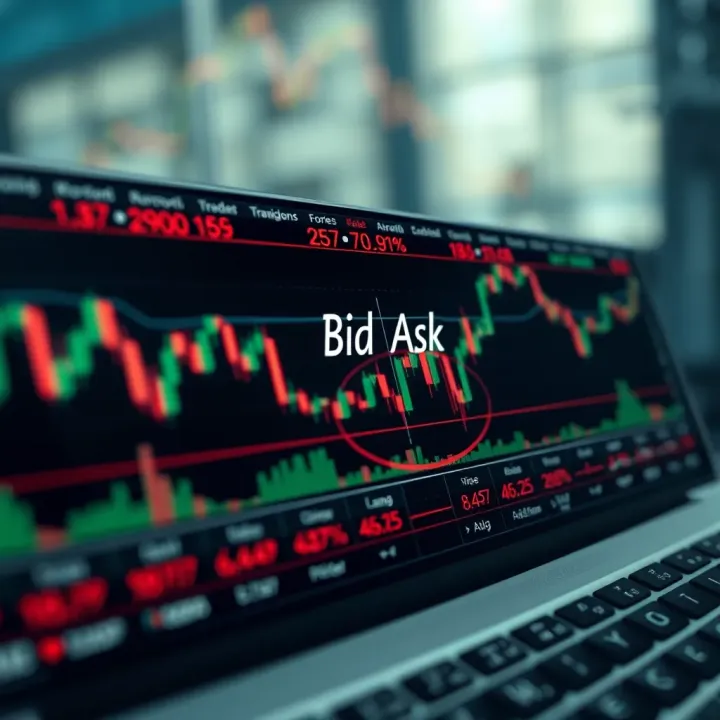
In forex trading, the spread is the main cost factor that traders need to understand well. Simply put, the spread is the difference between the price at which you can buy a currency (ask price) and the price at which you can sell it (bid price). This gap determines how much you pay just to open a position in the market.
For example, suppose the EUR/USD pair has a bid price of 1.1500 and an ask price of 1.1502. The spread here is 0.0002, or 2 pips. If you buy at 1.1502, the rate must rise above this level before you start making a profit. This cost often influences when and how traders enter or exit trades.
Understanding spreads helps you manage trading expenses effectively and avoid surprises that could affect your profits.
Spreads directly affect your trading costs. A lower spread means you spend less on each transaction, which especially matters for those who trade frequently or use high leverage. In Kenya, many forex brokers offer competitive spreads, but they can widen during volatile market hours or unexpected news events, increasing trading costs suddenly.
Fixed Spreads: These remain the same regardless of market movement. They provide predictability but might be higher than variable spreads during normal market conditions.
Variable (Floating) Spreads: These change based on market liquidity and volatility. They can be tighter during calm periods but widen sharply during news releases.
Imagine you trade USD/KES, one of the commonly followed pairs locally. If your broker offers a fixed spread of 10 pips, you’ll pay a consistent cost per trade. Alternatively, a variable spread might be 5 pips during normal hours but jump to 20 pips during market upheaval, increasing your cost.
By tracking spread changes, you can choose the right moment to trade and save on costs, for instance, avoiding major market announcements or illiquid hours in the Nairobi Securities Exchange (NSE) or other forex sessions.
Understanding the mechanics of spreads becomes key to smart forex trading. It helps Kenyan traders weigh trading costs, manage risks better, and plan strategies that fit their markets and capital.
In forex trading, the spread is the difference between the buying price (ask) and selling price (bid) of a currency pair. This gap represents the cost traders pay to enter or exit a trade immediately. Think of it as the price difference you get when buying and selling foreign currencies in the market. For instance, if the EUR/USD pair’s ask price is 1.1500 and the bid price is 1.1498, the spread is 0.0002 or 2 pips (percentage in point).
Spreads exist because currency brokers need to cover their operational costs and make profits since forex markets typically don’t charge direct transaction fees like fixed commissions. This means the spread acts as a kind of indirect fee.
Spreads directly impact the cost of trading, especially for frequent or short-term traders like scalpers. A wider spread means you pay more just to open and close your positions. For example, if the spread on USD/KES is 50 pips, you'll start trading 50 pips in the red before the market moves in your favour. This initial loss is the broker’s cut, so tighter spreads mean lower trading costs.
Imagine a trader looking to profit from small price movements on pairs such as GBP/USD. With a spread of 1 pip, they stand a better chance of making profits quickly than with a spread of 5 pips, which eats into their gains. On the other hand, long-term investors might not worry much about spreads since their positions last days or weeks, giving the market time to move significantly.
Understanding spreads helps traders select the right broker and timing for trades, reducing unnecessary costs and improving overall profitability.
In practice, traders should also note that spreads fluctuate throughout the day, affected by market liquidity and volatility. Kenyan traders dealing with currencies like the dollar, euro, and shilling can benefit from observing these spread changes around Nairobi or London market hours for better trading decisions.
Ultimately, knowing what spreads are and how they influence costs sharpens your approach to forex trading, making it both more predictable and efficient.
Understanding the different types of forex spreads helps traders choose the right approach and broker. Spreads influence trading costs directly, so knowing how fixed, variable, and raw spreads work can lead to smarter decisions and better control over expenses.

Fixed spreads remain constant regardless of market conditions. Most brokers offering fixed spreads set them around 2-3 pips for major currency pairs like USD/KES or EUR/USD. The thing is, fixed spreads provide certainty — you know the exact cost of opening a trade beforehand. This is especially helpful during volatile periods when markets might suddenly swing. However, fixed spreads may be wider on average, so while you avoid surprises, you could pay more during stable market times.
For example, if a broker offers a fixed spread of 3 pips on USD/KES, you pay the same cost whether the market is calm or volatile. For a trader with a smaller account, this steadiness can be comforting.
Variable spreads change depending on market liquidity and volatility. During busy trading hours, spreads tighten; during low volume or news events, they widen. This type aligns closely with real market conditions.
A trader might see a spread as low as 0.5 pips on EUR/USD in peak hours but then notice it widen to 5 pips during an economic announcement. Variable spreads can be cheaper over time but come with the risk of unexpected costs. These spreads suit experienced traders who monitor market hours and avoid trading during spike periods.
For instance, a scalper aiming for quick positions must watch for sudden spread changes, else their profits could erode quickly.
Raw spreads show the true market-rate difference between bid and ask prices without any markup from the broker. Usually, brokers charge a separate commission per trade alongside raw spreads, unlike fixed or variable spreads that bake costs in.
Raw spreads often start from as low as 0.1 pips during peak periods, attracting professional traders and institutions. The major benefit is transparency; you pay what the market offers plus a clearly stated fee.
Take the example of a broker offering raw spreads on USD/KES with a KS0 commission per lot. Here, the trader enjoys tight pricing and knows exactly what the costs are—no hidden charges.
Choosing the right spread type depends on your trading style, risk appetite, and capital. Fixed spreads promise stability, variable spreads offer potential savings during calm markets, and raw spreads serve traders looking for cost transparency.
Understanding these spread types gives traders the edge to manage their trading expenses and select brokers aligned with their goals.
Understanding what affects forex spread levels is key for any serious trader. Spreads, which represent the difference between the bid and ask prices, can fluctuate widely due to several factors. Knowing these can help you anticipate trading costs and decide the best moments to trade.
Market liquidity is one of the main forces shaping forex spreads. When a currency pair is highly liquid, it means many buyers and sellers are actively trading, allowing tighter spreads. For instance, the USD/KES pair is usually more liquid during Nairobi’s business hours, so spreads tend to be narrower. Conversely, exotic pairs like KES/NGN often suffer from low liquidity, leading to wider spreads. Low trading volume means fewer market participants, so brokers widen spreads to cover the risk of holding positions.
Volatility refers to how much a currency’s price swings over a short period. Highly volatile pairs, such as USD/TRY or GBP/ZAR, often experience wider spreads as prices jump quickly and unpredictably. For example, during times of political tensions or market shocks, spreads on volatile pairs can double or triple. Traders should account for this because wider spreads mean higher costs and can eat into profits, especially for short-term trading strategies like scalping.
Spread levels vary depending on the time of day and economic announcements. The forex market follows global financial centres’ opening hours. The overlap between the London and New York sessions usually sees the tightest spreads due to increased activity. At night or during off-market hours in Kenya, spreads widen because of reduced trading activity. Moreover, scheduled economic news releases—such as the US Non-Farm Payroll or CBK monetary policy announcements—often cause spreads to surge temporarily. Traders need to keep an eye on the economic calendar to avoid unnecessary costs or take advantage of volatility when appropriate.
Tight spreads help reduce trading costs, but they don’t stay fixed throughout the day. Recognising when and why spreads change lets you make smarter trades.
Liquidity: More liquidity narrows spreads; less liquidity widens them.
Volatility: Stable pairs have tighter spreads; volatile pairs see wider spreads.
Timing: Trading during active market hours or avoiding major economic news reduces spread costs.
By understanding these influencing factors, Kenyan forex traders can better plan their trades and manage costs. For instance, choosing to trade the US dollar pairs during the London session or avoiding high-impact news releases can save thousands in spread-related expenses over time.
Knowing how to calculate and interpret forex spreads is vital for traders aiming to understand their trading costs and make smarter decisions. Spread essentially represents the gap between the bid (selling price) and ask (buying price) of a currency pair. This difference directly affects your cost of entering and exiting the market—especially for Kenyan traders who keenly watch every shilling to keep costs low.
The bid price is the highest price a buyer is willing to pay for a currency, while the ask price is the lowest price a seller will accept. The spread is the difference between these two. For example, if USD/KES is quoted with a bid of 110.20 and an ask of 110.25, the spread is 0.05 KSh. This gap is effectively the broker’s charge before you even place a trade.
Bid and ask prices fluctuate constantly, influenced by market liquidity, news, and the time of day. Tight spreads usually indicate active trading, like in major pairs such as USD/KES or EUR/USD during Nairobi trading hours. Wider spreads often happen during low liquidity or after major economic announcements.
Imagine you want to buy USD/KES where the bid is 110.20 and the ask is 110.25. You pay the ask price (110.25 KSh) to enter the position. If you immediately sell back, you receive the bid price (110.20 KSh). The difference (0.05 KSh) is your immediate loss to the spread.
If you traded 10,000 USD, this spread cost translates to 10,000 × 0.05 = KSh 500. That is why understanding spreads helps you factor in the real cost per trade, preventing surprises when you check your balance.
Some brokers offer spread-only models, embedding their fee within the spread. Others charge a commission separate from the spread. For example, a broker might have a tight raw spread of 0.01 pips but add a KSh 300 commission per trade.
Kenyan traders should compare the total cost: a low spread with commission might be cheaper than a wider spread without commission. Also, commissions ensure more transparent pricing, especially if you use scalping or high-frequency strategies.
Always calculate your total trading cost by adding spreads and commissions. This way, you assess which broker truly saves you money over time.
Understanding how to read and calculate spreads arms you to make better trading choices. It’s not just about picking the smallest number but knowing how spreads, commissions, and market conditions combine to affect your bottom line.
Effectively managing forex spreads can make a big difference in your trading profits. Since spreads represent the cost of each trade, reducing these costs helps you retain more of your earnings. This section discusses how to approach spreads wisely, focusing on choosing the right broker, smart trading strategies, and the technology tools that keep you informed.
Selecting a broker offering tight, competitive spreads is key for active traders. For example, brokers like Pepperstone and FXTM tend to provide spreads as low as 0.1 pips on popular pairs like EUR/USD and USD/JPY. Kenyan traders should check if the broker is regulated by the Capital Markets Authority (CMA) for added security. Also, consider brokers that offer raw spreads plus transparent commissions — this structure often costs less overall for high-volume trading.
Don't just go for low spreads; look at execution speed, platform reliability, and customer support. Brokers with slow execution might end up widening effective costs regardless of their listed spreads. Nairobi-based traders can benefit from brokers with local deposit options and M-Pesa payments for smoother fund transfers.
Some trading styles naturally reduce exposure to high spreads. Scalping, for instance, requires very tight spreads because you enter and exit trades quickly, aiming for small profits. Yet, not all brokers allow scalping, so check their policies.
Another approach is trading during times when spreads tighten, usually during overlapping market hours like London and New York sessions. For a Kenyan trader, this means active trading between 4 pm and 11 pm EAT when liquidity is highest.
Longer-term traders can also avoid spread stress by holding positions over days or weeks since spread costs become negligible relative to potential profits. Moreover, avoid low-liquidity currency pairs during off-hours when spreads can balloon unexpectedly.
Technology offers traders an edge in monitoring and managing spreads. Many trading platforms, such as MetaTrader 4 or 5, display real-time bid-ask spreads clearly. Kenyan traders should learn to customise charts to highlight spread fluctuations during news releases — economic reports from the US or Eurozone can widen spreads fast.
Additionally, some online tools and apps alert traders when spreads exceed certain thresholds, allowing them to pause or exit trades to avoid excessive costs. Keeping an eye on automated notifications can prevent unexpected losses.
Managing spreads is not just about cutting costs but about timing your trades and choosing the right tools and brokers. By doing this, you position yourself to make smarter, more profitable trading decisions.
In short, understanding and managing spreads involves picking brokers with fair pricing, adopting strategies fit for your trading style, and using technology to stay aware of spread movements. Kenyan traders who master these elements gain better control over their trading expenses and improve their bottom line.
📉 Understand volatility in forex trading, learn how price swings affect your trades, and get smart risk management tips tailored for Kenyan forex investors. 🌍
📈 Discover how forex indices work, their impact on currency pairs, risk factors, and practical trading tips tailored for Kenyan forex traders to boost your strategy.
📊 Understand forex sentiment's role in currency trading, learn tools to read market mood, and see how Kenyan traders can use it to manage KSh risks effectively.
💹 Learn how forex binary trading works, the risks and gains, choosing trusted platforms, plus practical tips for Kenyan traders to manage funds safely in KSh.
Based on 6 reviews