
Forex Trading Basics for Kenyans
📈 Learn how to start forex trading in Kenya with practical tips on choosing platforms, understanding basics, managing risk, and using M-Pesa safely for your trades.
Edited By
Amelia Watson
Starting forex trading using your phone has become one of the easiest ways to participate in the global financial markets. With a simple smartphone and internet connection, you can buy and sell currencies from anywhere in Kenya, whether you are in Nairobi, Kisumu, or Mombasa. However, before you jump in, it's vital to build solid foundations and understand how the process works.
Forex trading, short for foreign exchange trading, involves buying one currency while simultaneously selling another. The goal is to profit from changes in exchange rates. For instance, if you expect the US dollar to strengthen against the Kenyan shilling (KSh), you might buy USD/KES and sell when the rate rises.
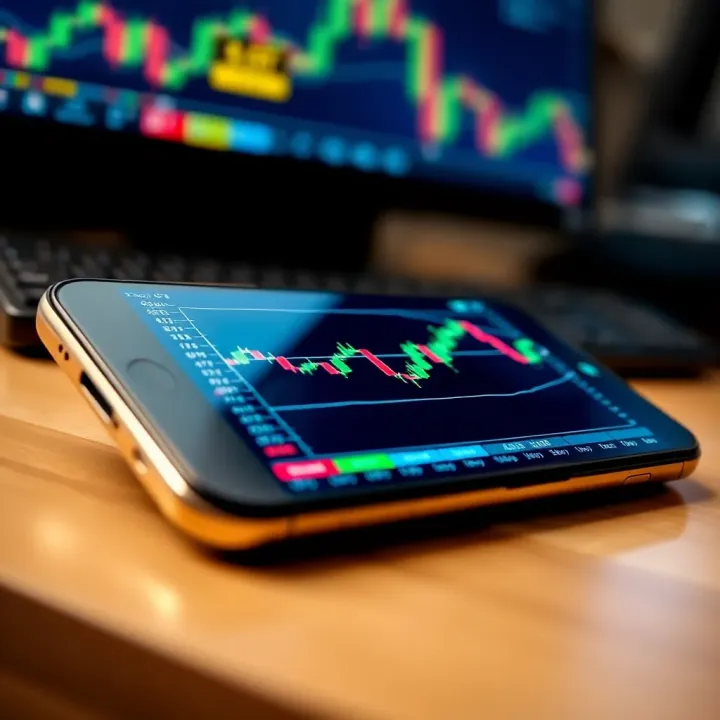
Remember: forex trading carries risks like any investment. Managing those risks is key to protecting your money.
Not all trading apps are made equal, so selecting one that suits your needs is critical. Look for apps that are:
Regulated or licensed in Kenya or internationally – this ensures some level of protection.
User-friendly interface, especially if you are just starting.
Offers straightforward ways to deposit and withdraw funds, like M-Pesa integration.
Provides real-time market data and charts.
Has educational resources to help you understand trading concepts.
Popular choices among Kenyan traders include MetaTrader 4, MetaTrader 5, and apps from brokers like FXPesa and Exness.
Familiarise yourself with key terms before making your first trade:
Pip: The smallest price move in a currency pair, usually 0.0001.
Leverage: Borrowed funds from your broker to increase your trade size, but use cautiously – this can amplify losses.
Spread: The difference between buying and selling price, which is your trading cost.
Lot: The standard size of a trade. Micro and mini-lots allow smaller investments.
Create a demo account to practice without risking real money.
Study the currency pairs you want to trade, focusing on economic news in Kenya and globally.
Apply risk management rules: never risk more than 1-2% of your capital on a single trade.
Start small when moving to a live account, to get comfortable with the app and market movements.
Trading forex on your phone gives you flexibility, but success depends on learning, discipline, and careful money management. With the right approach, it can be a rewarding side hustle or even a full-time venture.
Grasping the basics of forex trading is essential before you start using your phone to trade. Without a solid foundation, you risk making costly mistakes or falling prey to tempting but risky schemes. Understanding key concepts like currency pairs, trading hours, and common terms helps you make informed trades and manage your risk better.
Definition of forex trading: Forex trading, also known as foreign exchange trading, means buying and selling currencies. It's the world’s largest financial market where traders exchange one currency for another, hoping to profit from changes in exchange rates. For example, if you believe the US dollar will strengthen against the Kenyan shilling, you might buy USD/KES expecting to sell it later at a higher price.
How currency pairs work: In forex, currencies are always traded in pairs, such as EUR/USD or GBP/JPY. The first currency is called the base currency, and the second is the quote currency. If EUR/USD is trading at 1.10, it means one euro costs 1.10 US dollars. If you think the euro will gain strength, you buy the pair; if you expect it to weaken, you sell.
This pairing system ensures you are always speculating on the value relationship between two currencies, not just one. It's critical to understand this so you can predict market movements effectively.
Trading hours and market accessibility: Unlike stock markets that have fixed hours, forex trading runs 24 hours a day from Monday to Friday. The market cycles through major financial centres—Tokyo, London, New York—allowing traders from Kenya to engage at convenient times. This means you can trade early in the morning or late at night via your mobile phone, fitting trading around your daily schedule.
Pips, lots, and leverage: A pip is the smallest price movement in forex, typically the fourth decimal place, like 0.0001. If the USD/KES rate moves from 108.5000 to 108.5100, that's a 1 pip move. Lots refer to the size of your trade; a standard lot is 100,000 units of the base currency, but many brokers allow mini or micro lots suitable for smaller accounts.
Leverage lets you control a larger position with a smaller deposit, say 1:100. While leverage can multiply profits, it can also increase losses, so it requires caution. For instance, with KSh 10,000 and 1:100 leverage, you could control KSh 1,000,000 worth of currency.
Bid, ask, and spread: The bid price is what buyers are willing to pay, and the ask price is what sellers want. The difference between them is called the spread, which is effectively a cost you pay to the broker. For example, if USD/KES bid is 108.50 and ask is 108.55, the spread is 5 pips. Narrow spreads reduce trading costs, so it's smart to choose brokers with competitive spreads.
Long and short positions: Going long means buying a currency pair hoping its value will rise; going short means selling expecting the price to fall. Suppose you believe the British pound will strengthen against the US dollar, you go long GBP/USD. Alternatively, if you think it will weaken, you go short. This flexibility allows profit opportunities whether markets rise or fall.
Getting comfortable with these forex basics will make your mobile trading more confident and less risky. Knowing what the terms mean and how the market operates is like having a map before venturing out on the shamba.
Understanding these fundamentals sets you on the right path to trading forex professionally right from your phone without guesswork or unnecessary risks.
Choosing the right mobile platform and broker is one of the most important decisions you will make when starting forex trading on your phone. Your choice affects how smoothly you trade, the fees you pay, and how safe your money and personal data remain. A reliable app ensures quick and clear access to trading tools, while a trustworthy broker helps you avoid scams and offers fair terms tailored to Kenyan traders' needs.

Kenyan traders commonly use apps like MetaTrader 4 (MT4), MetaTrader 5 (MT5), and AvaTradeGo due to their global reputation and ease of use. These platforms offer smooth mobile interfaces allowing you to monitor currency movements in real-time and place trades without delays. For example, MT4 is popular because of its wide compatibility with many brokers and features like automated trading.
When choosing an app, look for features such as real-time price charts, access to multiple currency pairs, and quick order execution. Notifications for price alerts and economic news can help you react promptly to market changes. A user-friendly interface matters too — complex navigation can slow you down while spotting trading opportunities.
App security and smooth user experience should top your list. A strong app encrypts your data, uses two-factor authentication, and regularly updates its software to fix vulnerabilities. An app that crashes or hangs during trading sessions can cost you dearly, especially in fast-moving forex markets. Practical examples include apps that use biometric login, which prevents unauthorised access even if your phone is lost.
Regulatory oversight is crucial when choosing a broker in Kenya. Look for brokers licensed by bodies such as the Capital Markets Authority (CMA) of Kenya, the Financial Sector Conduct Authority (FSCA) from South Africa, or the UK’s Financial Conduct Authority (FCA). These regulators ensure brokers follow rules protecting Kenyan traders' funds and promote fair trading practices.
Broker fees and commissions vary widely. Some brokers charge a spread — the difference between buy and sell prices — while others add commissions per trade. Choose brokers with transparent costs and competitive fees to avoid being eaten up by charges. For Kenyan beginners, this makes a big difference; paying lower fees means more money stays in your trading account.
Convenience in deposits and withdrawals is essential. Many Kenyan traders prefer brokers accepting M-Pesa, the leading mobile money service here. M-Pesa-enabled brokers allow quick, low-cost fund transfers directly from your phone without the hassle of bank delays. Besides M-Pesa, options like bank transfers, Airtel Money, or credit cards widen accessibility. Confirm your chosen broker supports convenient payment methods to keep your trading activities smooth.
Remember, the best forex app and broker combination balances usability, security, cost, and local payment options — helping you trade confidently from your mobile.
Before diving into forex trading on your phone, it is essential to prepare thoroughly. Setting up your trading account correctly and practising with demo accounts build a solid foundation. This preparation helps you avoid costly mistakes and gain confidence while familiarising yourself with the trading platform.
Setting up a trading account on mobile usually involves downloading a trusted trading app, like MetaTrader 4 or 5, then registering with your personal details. The process is designed to be straightforward—filling in information such as your name, email, and phone number. After signing up, the broker will ask you to verify your identity by submitting official documents like a national ID or passport, which can be done by uploading photos directly from your phone.
Verification is not just a formality but a crucial step required under KYC (Know Your Customer) rules. These rules help prevent fraud and money laundering, ensuring your money and personal data are secure. Kenyan brokers and international ones serving Kenyan clients typically follow KYC procedures, so having your documents ready speeds up the process and grants you full access to all trading features.
Linking local payment options is another key step. Most Kenyan traders prefer using M-Pesa for deposits and withdrawals because it’s fast and widely accessible. Some brokers also accept bank transfers or cards, but M-Pesa remains the easiest to manage through your phone. Linking it involves connecting your M-Pesa number to the trading account in the app, allowing direct transactions without third-party steps. This convenience lets you fund your account or withdraw profits smoothly, which is vital for active trading.
Demo accounts simulate real trading with virtual money, providing a risk-free environment to practise. They help you understand how the market moves and how your trading app responds before staking actual shillings. Kenyan beginners often face losses by rushing live trades without practising; demo accounts protect you from that pain while you sharpen your skills.
With a demo account, you can try out simple strategies like trend following or setting stop-loss orders to protect funds. You can experiment with different currency pairs, learn to read charts, and observe what affects price changes. This hands-on approach builds the muscle memory needed to make quicker, better decisions when you trade live.
Transitioning from demo to live trading should be gradual. Once you feel comfortable executing trades and managing risks in the simulation, start live trading with small amounts to keep losses manageable. Patience at this stage pays off; jumping in with large sums often leads to emotional decisions rather than rational ones. Remember, live trading involves real money and emotions, so start slow and increase your trade volume as you gain confidence and experience.
Practising with a demo account and correctly setting up your trading account, including linking local payment methods, are practical steps that save you from common pitfalls and prepare you for real market action.
By following these steps, you make your mobile forex trading journey smoother and more secure, giving yourself a better shot at success in the forex market.
Starting forex trading without a clear strategy or risk management plan is like driving in Nairobi traffic blindfolded—you might move fast, but chances of an accident are high. For beginners using their phones to trade, mastering simple strategies and understanding risks help protect your capital and build confidence.
A straightforward strategy to try first is trend following. This means you observe the overall direction of the market—whether prices are mostly going up (an uptrend) or down (a downtrend)—and trade in that direction. For instance, if the USD/KES pair has been steadily rising for days, it’s smarter to go with the flow rather than against it. Support and resistance levels act like invisible floors and ceilings where price movements often pause or reverse. Suppose the EUR/USD has struggled to rise above 1.1000 several times; that’s a resistance level. Buying near support and selling near resistance can limit risks and increase the chance of a successful trade.
Stop-loss and take-profit orders are your safety nets on mobile trading apps. A stop-loss order automatically sells your position if the price falls to a certain level, helping you avoid big losses. Conversely, a take-profit order locks in profits once the price hits your target. Imagine buying GBP/USD at 1.2600 and setting a stop-loss at 1.2550 and take-profit at 1.2700. If the market reverses, the stop-loss caps your loss at 50 pips; if it moves in your favour, the take-profit secures a 100-pip gain. Using these orders prevents the need to watch the market constantly, which is crucial when trading on the go.
Many new traders fall into traps like trading without a plan, chasing losses, or risking too much on a single trade. A common pitfall is increasing your leverage beyond comfort because winning trades can flood your wallet in theory. But high leverage magnifies losses too, wiping your account quickly. Another mistake is reacting emotionally—closing a trade too soon after a small loss or holding on too long out of hope. Stick to your strategy and risk limits instead of letting your mood decide.
Leverage lets you control a large position with a small amount of capital but works both ways. Using 100:1 leverage, a 1% adverse move could wipe out your entire investment. That’s why preserving your capital matters most when starting. Better to use lower leverage, say 10:1 or 20:1, until you’re comfortable. This approach limits the chance of a sudden blowout, especially when markets shift unexpectedly due to news or geopolitical events.
Proper trade size means not risking a large chunk of your capital on one position. A good rule is risking only 1-2% of your trading capital on each trade. For example, with a KSh 50,000 account, risk KSh 500–1,000 per trade. Diversifying by trading different currency pairs or spread trading times reduces exposure to shocks affecting a single market. Think of it like Kenya’s jua kali artisans: not putting all skills in one job keeps income steady even when one sector slows down.
Forex trading on your phone, where you can react to market moves anytime, demands strong emotional control. Resist the urge to enter trades impulsively after a big win or loss. Discipline means following your trading plan strictly—even if the temptation is to stray after a few successes or failures. Keeping a trading journal on your phone can help note what went right or wrong. This habit sharpens decisions and avoids repeating avoidable mistakes.
Risk management isn’t just about avoiding losses—it’s about ensuring you remain in the game long enough to learn and succeed. Start small, trade smart, and keep emotions in check.
By combining simple strategies like trend following with solid risk management, you can make forex trading on your phone a practical and manageable activity rather than a risky gamble.
Making your very first forex trade using your phone is a key step that brings all your forex learning and preparation into practical action. Mobile trading lets you react quickly to market moves, especially when you are out and about, meaning you can seize opportunities without needing a laptop or desktop. This is crucial in Kenya, where many traders rely heavily on mobile devices and mobile money like M-Pesa for deposits and withdrawals.
Start by choosing a currency pair that you feel comfortable trading. For beginners, pairs that include the US dollar, like USD/KES or EUR/USD, tend to be more stable and have lower spreads, making them easier to manage. Your trading app will display real-time prices and trends for these pairs, helping you decide which suits your strategy.
Trade volume, or lot size, determines how much money you risk on a trade. On mobile apps, you can usually select this with a simple slider. Starting small is wise, especially if you’re testing live trading for the first time. For example, trading a mini lot (0.1 lots) instead of a full lot lets you limit the potential loss if the trade doesn’t go your way.
These are protection tools built into the trading platform. Stop-loss sets a cut-off point where your trade will automatically close if the price moves against you, limiting your losses. For instance, if you buy USD/KES at 110, setting a stop-loss at 108 means the trade will close if the rate drops to 108, so you won’t lose more than you planned.
Take-profit works the opposite way: it closes your trade once it hits a target profit. Say you aim to sell USD/KES when the price reaches 112; the take-profit order ensures your trade locks in gains automatically, helping you avoid the temptation to hold on for too long and lose profits.
Once you’ve set your currency pair, volume, stop-loss, and take-profit, most apps let you quickly review this summary before confirmation. Execution is typically immediate, but network quality at your location can affect this — make sure your mobile internet connection is stable to avoid delays.
After placing the trade, monitoring is key. Mobile platforms provide live charts, price alerts, and notifications that keep you updated. For example, if your stop-loss is close to being hit, the app might alert you, giving you a chance to adjust the trade or close early.
Most trading apps offer built-in tools to analyse your past trades. You can view metrics such as win/loss ratio, average profit, and trade duration. This overview helps you see patterns — maybe a particular currency pair performs better for you, or certain times of day are more favourable.
This insight is vital for refining your approach. Rather than guessing what works, you have numbers to guide your decisions, making you a more disciplined, data-driven trader.
Trading isn't static — you must adapt. Suppose you notice consistent losses when trading large volumes during volatile market hours; adjusting to smaller trades or avoiding those times might save money. On the other hand, repeating profitable strategies on USD/EUR might signal focus areas.
By reviewing outcomes regularly, you fine-tune your risk levels, trading times, and currency choices. This ongoing adjustment improves your odds of success over the long haul.
A trading journal is simply a record where you note down each trade’s details — entry point, exit point, profit or loss, and what you felt at the time. For example, you might write that you were nervous and made a quick exit on your first trade.
Journals help with emotional control by bringing self-awareness. It’s one thing to lose KSh 500 on a trade but another to realise that impatience or fear caused a poor decision. Over time, the journal becomes a mentor of sorts, helping to break bad habits and reinforce good ones.
Starting your trading journey on your phone combines convenience with real-time action. By carefully placing trades and learning from each outcome, you build your confidence and skill up efficiently, no matter where you are.
📈 Learn how to start forex trading in Kenya with practical tips on choosing platforms, understanding basics, managing risk, and using M-Pesa safely for your trades.
📘 Learn forex trading basics and smart strategies tailored for Kenya. Use PDF guides to master local regulations and trade confidently with practical tips.
📈 Learn how to start forex trading in Kenya with practical tips on the market, keys to currency pricing, popular platforms, managing risks, and local legal guidelines.
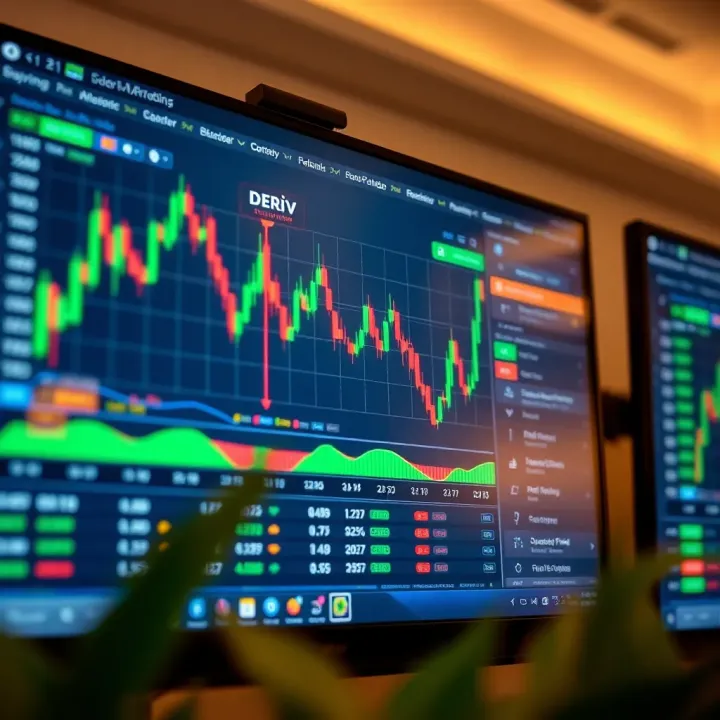
Explore Deriv Forex trading in Kenya 🇰🇪 with this detailed guide. Learn key features, smart strategies, risk tips, and regulatory insights for local traders 📊💡
Based on 11 reviews