
Deriv Forex Trading Guide for Kenyan Traders
Explore Deriv Forex trading in Kenya 🇰🇪 with this detailed guide. Learn key features, smart strategies, risk tips, and regulatory insights for local traders 📊💡
Edited By
Sophie Clarke
Forex trading, or foreign exchange trading, is the buying and selling of currencies to make a profit. In Kenya, more people are taking interest in forex because it offers a way to participate in global markets from the comfort of home or office.
The forex market is open 24 hours a day, five days a week, making it possible to trade at any time that suits your schedule. Major currency pairs like USD/KES, EUR/USD, and GBP/USD are commonly traded by Kenyans, thanks to their liquidity and availability on most trading platforms.
Before jumping in, it’s essential to grasp the basics like pips (the smallest price movements), lots (standard size of a trade), and leverage (using borrowed money to increase trade size). For example, with a leverage of 1:100, a KSh 1,000 deposit lets you control KSh 100,000 worth of currency. While tempting, leverage increases both potential gains and losses.
Choosing a reliable trading platform is critical. Kenyan traders often prefer brokers regulated by reputable authorities such as the Capital Markets Authority (CMA) of Kenya or international bodies to ensure safety of funds and fairness. Platforms like MetaTrader 4 or 5 are popular due to user-friendly interfaces and strong analytical tools.
Always confirm that your broker supports M-Pesa for deposits and withdrawals — it’s the most convenient and secure payment option in Kenya.
Starting with a demo account helps you practice without risking real money. Once confident, begin with small trades, gradually increasing as you learn.
Here are practical steps to begin:
Open an account with a CMA-regulated or globally trusted broker supporting Kenyan traders
Verify the broker enables M-Pesa payments
Use a demo account to understand trading mechanics
Familiarise yourself with key forex terms and concepts
Develop a simple trading plan, focusing on risk management
Risk management should never be ignored. Setting stop-loss orders limits potential losses, while keeping your investment size manageable protects your capital from big shocks. Avoid chasing losses or trading based on emotions.
In Kenya’s context, also consider time zone differences when trading international pairs and stay updated on local financial news that could influence the Kenya shilling.
By taking these practical steps, you’ll build a solid foundation for forex trading that fits the Kenyan market realities and your personal goals.
Grasping the fundamentals of forex trading is key to becoming a confident trader. Without understanding basic concepts like how currency pairs work or what terms such as pips and leverage mean, you risk making decisions that may lead to losses. For example, a Kenyan trader who buys USD/KES without knowing how the exchange rate moves may end up losing money when the Kenya shilling strengthens unexpectedly.
Forex trading involves buying and selling currencies to profit from changes in exchange rates. It’s the largest financial market worldwide, with daily trade volumes surpassing $6 trillion. In Kenya, this market is accessible online, allowing you to trade major pairs like USD/KES or EUR/USD anytime from your phone or laptop.
Currency trading isn't limited to just pairs; it reflects economic health, political stability, and market sentiment across countries. For instance, if US economic data is stronger than expected, the US dollar might strengthen compared to the Kenyan shilling, impacting your trades.
Currency pairs always come in pairs because you are exchanging one currency for another. The first listed currency is the base, and the second is the quote currency. For example, in GBP/USD, the British pound (GBP) is the base, and the US dollar (USD) is the quote. If GBP/USD is at 1.30, it means 1 British pound costs 1.30 US dollars. When you trade, you’re essentially betting on the direction this ratio will move.
The forex market is open 24 hours a day, five days a week, which means Kenyan traders can engage in markets from Asia to London or New York seamlessly. Trading happens over-the-counter (OTC) through global networks of banks, brokers, and financial institutions instead of a central exchange.
This continuous operation allows you to react to economic news releases in real-time. For example, if the Central Bank of Kenya changes its interest rate during the night, forex brokers update prices immediately, letting you take quick advantage or minimise risks.
Understanding some key terms is a must. A pip is the smallest price move a currency pair can make, usually 0.0001 for most pairs, except for those involving the Japanese yen. A lot is the size of your trade; the standard lot equals 100,000 units of the base currency. The spread is the gap between the bid (buy) and ask (sell) prices and represents the cost of trading. Leverage lets you control a large position with a small deposit but amplifies both profits and losses.
For example, if you buy USD/KES with a leverage of 50:1, you only need KS,000 to control a trade worth KS00,000. However, even a small move against your position could wipe out your deposit.
The bid price is the highest price someone is willing to pay for a currency pair, while the ask price is the lowest a seller will accept. The difference between these two is crucial when entering or exiting trades because it affects your overall costs.
Finally, long and short positions define your market view. Going long means buying a currency pair expecting its value to rise, while going short means selling it anticipating a drop. For instance, if you expect the Kenyan shilling to weaken against the US dollar, you would go long on USD/KES.
Starting forex trading without knowing these basics is like driving without knowing the traffic rules—you're more likely to get into trouble. Mastering these fundamental concepts helps you trade smarter and manage risks effectively.
Getting started with forex trading in Kenya means knowing how to pick the right broker and setting up your trading account correctly. This section covers these important steps, helping you avoid common pitfalls while taking advantage of local features like funding options.
Regulation matters because it protects your money and ensures fairness. A regulated broker follows rules that prevent fraud and malpractice. For instance, brokers licensed by the Capital Markets Authority (CMA) in Kenya must comply with transparent reporting and client fund segregation. This reduces the risk of losing your deposits due to shady dealings.
When choosing between local and international brokers, consider regulations and services. Local brokers under CMA offer ease of access, local banking options, and easier dispute resolution. However, international brokers may provide a wider range of currency pairs, advanced trading platforms, and sometimes better spreads. Still, working with an unregulated offshore broker can expose you to fraud or difficulties withdrawing funds.
Beyond regulation, look at broker features such as trading platform support, customer service, and transaction costs. Popular platforms like MetaTrader 4 and 5 are common and reliable. Check if the broker supports M-Pesa or bank transfers for deposits and withdrawals, which is crucial in Kenya. Also, ensure their spreads and commissions align with your trading style and that they offer leverage reasonable enough to manage risks effectively.
Opening a trading account typically requires identification documents such as your national ID or passport, proof of address like a utility bill, and sometimes proof of income or source of funds. Registration is done online on the broker’s website and usually takes a day or two for verification. Kenyan brokers often integrate with M-Pesa for verification and funding, making the process smoother.
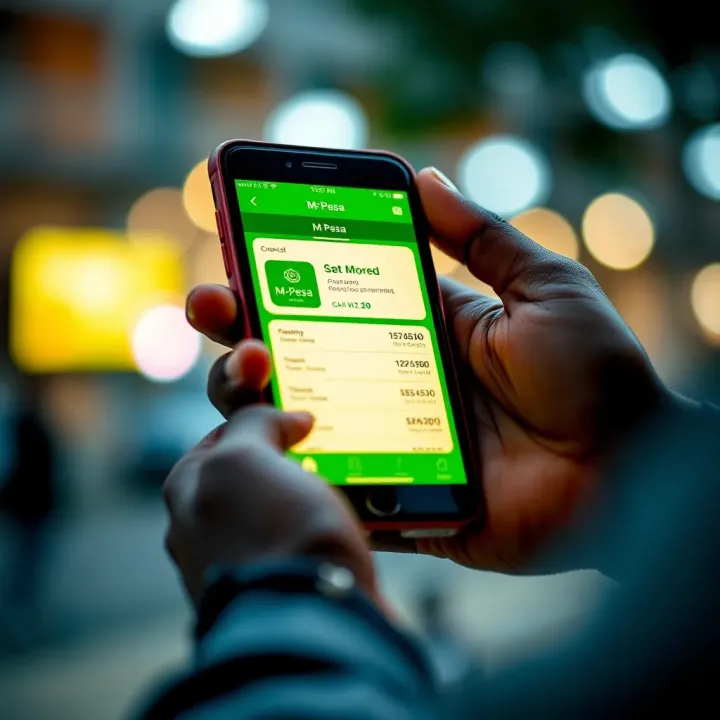
Funding your account in Kenya is most convenient via M-Pesa, given its widespread use. Many brokers allow you to send money directly from your M-Pesa wallet to your trading account without extra bank charges. Other options include bank transfers, mobile money services like Airtel Money, or debit cards. Make sure your broker clearly outlines deposit and withdrawal procedures, fees, and processing times to avoid surprises.
Practice using demo accounts before risking real money. Nearly all brokers offer demo accounts that simulate real trading with virtual funds. This lets you get familiar with the platform’s features, test trading strategies, and understand market movements without losses. Using a demo helps build confidence and sharpens skills so that when you start live trading, you make decisions based on experience rather than guesswork.
Starting forex trading rightly sets the foundation for success. Choosing a regulated broker and using local payment methods like M-Pesa make trading safer and more accessible in Kenya. Taking time to practise on demo accounts prepares you for the real market.
Using simple yet effective trading strategies helps new forex traders make sense of the market without getting overwhelmed. The forex market can be quite fast and complex, so starting with basic techniques like trend following and range trading can build your confidence and improve your chances of success. These methods teach you how to spot when to buy or sell based on price movements and market behaviour.
Trend following means you look for a currency pair that is moving consistently in one direction over time. If the price is steadily rising, you consider buying (going long); if it’s consistently falling, you might sell (going short). This shows how traders aim to ride the momentum rather than predict sudden reversals. For example, if the USD/KES pair shows an upward trend due to US dollar strength, a trader might enter a buy position, holding it as long as the trend lasts.
The practical edge here is that you set clear entry and exit points based on visible trends instead of guessing. Tools like moving averages help confirm the trend direction. It’s a straightforward way to engage the market without needing in-depth knowledge of complex indicators.
Range trading is about recognising when a currency pair’s price moves within a defined high and low, bouncing between these levels without breaking out. Traders buy near the support level (bottom of the range) and sell near resistance (top of the range). For instance, if EUR/USD trades repeatedly between 1.10 and 1.12 over days, you could buy at around 1.10 and sell near 1.12, aiming to profit from these predictable swings.
This method suits markets without strong directional momentum and helps protect you from sudden losses by setting clear boundaries. It requires keeping an eye on price behaviour and being ready to adjust when a breakout or trend starts.
Charts are the heart of forex trading, showing past price action a trader uses to make decisions. Candlestick charts are popular as they reveal open, close, high, and low prices within a time frame. For beginners, learning to spot simple patterns such as "double tops," "head and shoulders," or trend lines helps predict possible price moves.
For example, noticing a bouncing price from a support line marked by previous lows might signal a buying opportunity. Reading charts well reduces guesswork and makes your trading decisions more grounded in actual market behaviour.
Fundamental analysis looks beyond charts to how news and data influence currency values. Events like the US Federal Reserve’s interest rate decision, Kenya’s inflation reports, or Brexit talks can cause sharp price changes. Understanding when these events happen and their potential effect helps you manage risk and seize trading chances.
Say, if Kenya releases stronger-than-expected economic growth figures, the Kenya shilling might strengthen, reflecting in forex pairs like USD/KES. Staying updated with reliable news sources and economic calendars allows you to anticipate these moves rather than react late.
Successful forex trading blends these simple strategies with continuous learning and adapting to market shifts. Starting small and practising consistently will help you build the skills needed in the Kenyan forex market.
Focus on clear entry and exit points
Use tools like moving averages to confirm trends
Watch key support and resistance levels in range trading
Learn basic chart patterns such as candlesticks and trend lines
Follow global and local economic indicators closely
By mastering these fundamentals, Kenyan traders can approach forex trading methodically, improving their chances of making sound decisions and protecting their investment.
Managing risks is critical when trading forex, especially for beginners in Kenya. Forex markets move fast, and without proper risk control, losses can mount quickly, wiping out your capital. This section explains key concepts and tools that help traders protect their investments and trade wisely.
Leverage allows you to control a larger position with a smaller amount of money, known as the margin. For example, with 1:100 leverage, a deposit of KSh 10,000 lets you control KSh 1,000,000 in the market. While this can boost your profits, it also magnifies losses at the same rate. If the market moves against you, a small price change might wipe out your margin quickly, resulting in bigger losses than your initial deposit.
Margin is the security you provide to open and maintain your trading positions. Brokers require this to cover potential losses. If your account equity falls below a certain margin level, you'll get a margin call, where the broker demands you to add funds. If you don’t, the broker may close some or all your positions at stop-out levels to prevent further losses.
Margin calls and stop-outs work as safety nets to keep losses within manageable limits. Kenyan traders should check their broker’s margin call and stop-out policies, as these differ. Some brokers might close positions quickly, while others give more room to recover. Understanding your broker’s terms helps avoid surprises and keeps you in control during volatile moments.
Stop loss orders are essential tools for protecting your investment. They automatically close a trade once it reaches a specified loss level. This helps you limit losses without needing to watch the market all the time. For example, if you buy USD/KES at 110 and set a stop loss at 108, your position will close to protect you if the shilling strengthens beyond that point.
Take profit orders work the opposite way—they close your trade once it hits a desired profit level. This locks in gains before the market can reverse. Using these orders together encourages disciplined trading and removes emotions from decision-making.
Setting realistic targets means avoiding overly ambitious goals that tempt you to hold trades too long or risk too much. For instance, aiming to double your account in one week usually leads to reckless choices. Instead, setting modest profit targets that reflect current market conditions helps you build steady growth and stay in the game longer.
Wise risk management, including proper use of leverage, margin, stop loss, and take profit orders, is what separates consistent forex traders from those who lose it all. Always trade within limits you can afford to lose.
By mastering these risk controls, you’ll protect your trading capital, reduce stress, and improve your chances of long-term success in the Kenyan forex market.
Having practical tips and reliable resources is key for Kenyan traders stepping into the forex market. Given how fast forex trading can be, having access to trustworthy information and the right tools makes a difference between making informed decisions and going blind. In Kenya, local realities such as the availability of M-Pesa for funding accounts, the prevalence of scams, and regulatory aspects come into play, so being well-prepared with the right knowledge and networks is essential.
Reliable forex news sources are crucial for staying ahead of market moves. Kenyan traders should prioritise sources that provide timely data on currency movements, economic announcements, and geopolitical events. International platforms like Reuters or Bloomberg are useful, but also paying attention to local financial news outlets helps to understand regional factors impacting currencies, such as trade deals within the East African Community (EAC). For example, knowing about country-specific inflation numbers or central bank decisions by the Central Bank of Kenya (CBK) can shape trading decisions.
Popular trading platforms and mobile apps serve as the front line for your trades. In Kenya, platforms like MetaTrader 4 (MT4) and MetaTrader 5 (MT5) remain popular due to their ease of use and extensive tools for charting and technical analysis. Mobile apps matter a lot because many traders rely on smartphones rather than desktop computers. Apps like MT4 for mobile or broker-specific apps with M-Pesa integration (such as those offered by local brokers) make deposits and withdrawals straightforward. Using well-reviewed platforms with local customer support can save you plenty of hassle.
Managing emotions and overtrading is one of the biggest challenges Kenyan forex beginners face. It’s easy to get caught up in the excitement of quick gains or panic when the market turns against you. Overtrading – making too many trades too quickly – can drain your account fast. Sticking to a clear trading plan with defined entry and exit points helps to keep emotions in check. For example, setting daily loss limits or allocating only a small percentage of your account to each trade can protect you from unnecessary risks.
Spotting forex scams is critical, especially with many unregulated brokers targeting naive traders. Be suspicious of guarantees of huge profits or pressure to deposit large amounts quickly. Verify that your broker is licensed by Kenya’s Capital Markets Authority (CMA) or reputable international regulators. Avoid schemes that promise insider information or automatic trading bots without transparency. Trustworthy brokers will have clear terms and responsive customer service. Remember, if it looks too good to be true, it usually is.
Using free online courses and tutorials can build your forex skills without extra cost. Many reputable platforms, such as BabyPips or educational sections on broker websites, offer beginner-friendly content covering chart reading, risk management, and trading psychology. As a Kenyan trader, you can also find webinars or training sessions arranged by local brokers or the CMA, which help you understand forex within the Kenyan context.
Joining Kenyan forex communities offers support and practical advice from fellow traders. Kenyan groups on platforms like Facebook, Telegram, or WhatsApp often share local market tips, warn about scams, and discuss strategies. These communities provide a valuable space to learn from others’ experiences and avoid common pitfalls. Engaging actively can sharpen your understanding, especially if you discuss local regulatory updates or payment options like M-Pesa.
Staying informed, cautious, and connected will help you navigate the forex market confidently while avoiding costly mistakes.
Explore Deriv Forex trading in Kenya 🇰🇪 with this detailed guide. Learn key features, smart strategies, risk tips, and regulatory insights for local traders 📊💡
Explore deriv trading in Kenya 📈: Learn types, strategies, risks & how to start safely with trusted platforms like Deriv. Ideal for beginners & pros!

Explore practical tips for Kenyan investors on cryptocurrency trading 📈 Understand key strategies, risks, and local regulations to trade confidently in Kenya 🇰🇪
Explore binary trading in Kenya 🇰🇪: Understand how it works, weigh risks & rewards, learn smart strategies, and pick trusted platforms for safer investing 📈💡
Based on 6 reviews