
Forex Trading in Kenya: A Practical Guide
📈 Learn how to start forex trading in Kenya with practical tips on the market, keys to currency pricing, popular platforms, managing risks, and local legal guidelines.
Edited By
George Palmer
Forex trading offers an exciting opportunity for traders and investors looking to tap into the world’s largest financial market. Yet, for beginners in Kenya, stepping into forex can be daunting without clear guidance. This section outlines the basics every new trader should understand to navigate forex confidently.

Forex (foreign exchange) trading involves buying and selling currencies to profit from their changing values. Unlike the stock market, forex operates 24 hours a day during weekdays, enabling traders to respond quickly to global economic events. For example, a trader in Nairobi can take advantage of market movements anytime from Monday morning in Asia to Friday evening in New York.
Currency Pairs: Trading involves pairs like USD/KES (US dollar against Kenyan shilling), EUR/USD, or GBP/JPY. Each pair shows how much one currency costs relative to another.
Leverage: Forex brokers often offer leverage, letting you control larger positions using smaller capital. While this boosts potential profits, it also increases risks.
Pip and Spread: Pips represent the smallest price change in currency pairs. The spread is the broker’s fee, the difference between buy and sell prices.
Before risking real money, beginners should use demo accounts offered by brokers like FXPesa and AvaTrade. These simulate forex markets without financial risk. Studying PDF guides that break down concepts like technical analysis, chart reading, and entry/exit strategies can help too.
Avoid rushing to trade large sums. Many novices chase quick profits and overlook risk management. For instance, not setting stop-loss orders (automatic trade exit points) can lead to heavy losses. Managing your trading capital wisely is crucial.
Starting with clear knowledge and practical tools like PDF tutorials and demo accounts builds a solid foundation that can prevent costly errors.
Once you grasp these basics, you’ll be better placed to explore more complex strategies and refine your trading style, increasing your chances of sustainable success in forex.
Understanding the forex market is essential for anyone looking to trade currencies effectively. This market, which operates 24 hours a day across the globe, governs how currencies are valued against each other. Knowing how it works helps traders predict price movements and make informed decisions, which can protect their capital and improve chances of profit.
Forex trading means exchanging one currency for another with the aim of making a profit from the changes in exchange rates. For example, if a trader believes the US dollar will strengthen against the Kenyan shilling, they might buy USD/KES. If the rate moves in their favour, they sell the dollars later at a higher rate to earn a gain. This activity underpins international commerce and investment flows.
The major currencies traded on the forex market include the US dollar (USD), euro (EUR), Japanese yen (JPY), British pound (GBP), Canadian dollar (CAD), Australian dollar (AUD), and Swiss franc (CHF). These currencies, often called major pairs, dominate the market due to their stability and economic importance. Recognising these helps traders know which pairs usually have the most liquidity and small spreads, affecting transaction costs.
Exchange rates fluctuate constantly due to supply and demand, economic news, geopolitical events, and market sentiment. For instance, a change in Kenya's economic outlook or shift in US Federal Reserve rates can impact USD/KES prices. Such fluctuations create trading opportunities but also risks, so understanding the factors behind these movements can help traders anticipate the market better.
Retail traders are individual investors like you who trade through brokers. They usually trade smaller amounts and often rely on technical analysis or economic news. On the other hand, institutional players include banks, hedge funds, corporations, and governments. They trade much larger volumes and influence price directions with their activities.
Banks and central banks play a pivotal role. While commercial banks facilitate transactions, central banks manage their country’s currency supply and monetary policy. For example, the Central Bank of Kenya may intervene in the market to stabilise the shilling if there is too much volatility. Such actions affect exchange rates and can cause sharp, short-term price moves.
Kenyan retail investors have grown in forex participation, mainly through online brokers offering platforms accessible via mobile phones. Many use M-Pesa to fund their accounts, making it convenient to enter the market. Still, it’s critical for Kenyan traders to understand the risks and avoid scams, as some platforms may not be properly regulated. Education and practical guides help new traders navigate these challenges.
A sound grasp of who moves the market and why helps you avoid pitfalls and plan trades with a clearer view of the playing field.
This foundation in the forex market prepares you to engage with confidence and understand the bigger picture behind currency trading.
Starting your trading journey on the right foot is essential to navigate the complex forex market confidently. This section focuses on practical steps and critical considerations for beginners to effectively enter forex trading. The choices you make here, especially regarding your broker and account setup, directly influence your trading success and safety.
Choosing a broker regulated by recognised authorities is the first step towards securing your funds and trades. In Kenya, brokers authorised by the Capital Markets Authority (CMA) offer an extra layer of protection. A regulated broker must adhere to strict rules, including segregating client funds and transparent reporting. For example, selecting a non-regulated broker might expose your money to unnecessary risks, as they could operate without oversight or proper safeguards.
A good broker provides a reliable trading platform that fits your style and needs. Common platforms like MetaTrader 4 (MT4) or MetaTrader 5 (MT5) are popular because they support mobile and desktop use, offer technical analysis tools, and allow automated trading options. For instance, Kenyan traders often prefer MT4 because it’s user-friendly and supports various charting features. Also, consider if the broker’s platform allows easy deposits via M-Pesa or bank transfer, which simplifies funding.
Forex trading involves costs beyond just the market price. Brokers usually charge spreads—the difference between buy and sell prices—or commissions per trade. Look for brokers with competitive spreads because expensive spreads can erode your profits, especially if you trade frequently. For example, while some brokers offer fixed spreads, others provide variable spreads that widen during volatile market hours. Being aware of these fees helps you plan your trades better and avoid surprises.
Opening a forex account has become straightforward and digitised. Usually, you start by choosing the account type (standard, mini, or demo) on the broker’s website, provide identification documents such as your national ID or passport, and complete a Know Your Customer (KYC) process. For example, a Kenyan beginner might choose a demo account first to practise without risking real money, then easily upgrade when confident. Following this step ensures a smooth start without delays.
Funding your trading account through M-Pesa is common in Kenya due to its convenience and widespread availability. Many brokers now accept deposits via M-Pesa, making instant payments possible without going to a bank. Bank transfers also remain a reliable option, especially for larger amounts. For instance, you might start with a KS0,000 deposit via M-Pesa and later add funds through your local bank when scaling up. Understanding these options ensures you can manage your trading capital flexibly.
Leverage allows you to control a larger position with a smaller amount of money, while margin is the money you need to open a trade. For example, a leverage of 1:100 means for every KS,000 you have, you can trade KS00,000. While leverage can amplify profits, it also increases risk dramatically. Kenyan traders should be cautious and start with lower leverage until they fully understand the implications. Using margin wisely helps prevent rapid losses and preserves your capital.
Starting forex trading requires thoughtful preparation, from selecting a trusted broker to grasping how your money works with leverage. Taking these steps carefully can help you build a solid foundation and avoid unnecessary pitfalls.
Understanding core forex concepts is vital for new traders to navigate the market confidently. These concepts provide the foundation upon which all trading decisions rest, making it easier to interpret market movements and manage risks. For instance, knowing what pips and lots represent helps you quantify profits and losses accurately, avoiding costly mistakes that can happen from misreading these terms.
A pip refers to the smallest price change a currency pair can make, usually the fourth decimal place. For example, if the USD/KES exchange rate moves from 109.4500 to 109.4600, that's a one-pip movement. Understanding pips helps traders calculate potential gains or losses precisely. A lot is the unit size of a trade; standard lots are 100,000 units, while mini and micro lots are smaller. Choosing lot size affects your exposure and risk in the market. The spread is the difference between the bid and ask price and represents the broker's commission. A narrower spread means lower trading costs, which matters especially for beginners managing small capital.
The bid price is the rate at which you can sell a currency pair, while the ask price is where you buy. These prices are always close but never the same due to the spread. For example, if the EUR/USD bid is 1.1800 and the ask is 1.1803, you pay 1.1803 to buy but only receive 1.1800 when selling. Knowing bid and ask prices helps you time your trades better and understand immediate costs.
Going long means buying a currency pair expecting its value to rise, while going short means selling it anticipating a decline. Suppose you expect the GBP/USD to strengthen; you open a long position. If you predict it will weaken, you open a short position. Understanding these positions allows you to profit in both rising and falling markets, so you’re not limited to only buying currencies.
Technical analysis involves studying past price movements to predict future trends. It relies on chart patterns, volume, and other indicators rather than company fundamentals. For beginners, this means learning to read charts like candlestick patterns or support and resistance levels. For example, spotting a double top pattern could warn you of a possible price reversal, helping you avoid losses.
Charts provide a visual history of price action, while indicators offer signals based on calculations from price data. Common tools like Moving Averages smooth out price fluctuations, making trends clearer. Relative Strength Index (RSI) can help spot overbought or oversold conditions. Combining charts with indicators guides decisions about when to enter or exit trades. For example, if RSI is below 30, a currency pair might be oversold, signalling a buying opportunity.
Beginner traders should focus on clean entry and exit points rather than overcomplicating decisions. This means identifying clear signals such as breakouts above resistance or reversals at support levels. Setting stop-loss orders to limit potential losses and take-profit points to secure gains is key. For example, if you buy USD/JPY at 110.00, placing a stop loss at 109.50 can protect you from bigger losses if the market moves against you.
Mastering these core concepts helps beginners move from guesswork to informed trading, making it easier to develop confidence and discipline in the forex market.
Managing risks in forex trading is a key skill any trader must master to protect their capital and sustain profits over time. Forex markets can be volatile, and without strong risk controls, even a promising strategy can lead to heavy losses. This section focuses on practical techniques like setting stop loss and take profit levels plus cultivating trading discipline—all crucial to limit downsides and keep your trading on track.
Protecting your capital is the foundation of risk management in forex. A stop loss order automatically closes your position when losses reach a set point, shielding your account from drastic downturns. For example, if you buy EUR/USD at 1.1000 and set a stop loss at 1.0950, your position closes if the price drops 50 pips, capping your loss. This prevents small losses from turning into larger blows that could wipe your balance.
How to set realistic levels means understanding the typical market swings for the currency pair you trade. Setting stops too tight leads to being stopped out by normal price noise, while too wide stops expose you to high losses. Checking daily price ranges or average true range (ATR) indicators helps determine reasonable stop loss distances. For instance, if USD/KES usually moves 100 pips daily, placing a 10 pip stop loss may be unrealistic.
Examples in practice clarify these points. Suppose you enter a buy trade on GBP/USD at 1.3500 aiming for a 100 pip profit. You might place a take profit at 1.3600 and a stop loss at 1.3460 (40 pips below your entry), reflecting that a loss beyond 40 pips is unacceptable. This setup offers a risk-reward ratio of 1:2.5, encouraging disciplined exits while guarding your investment.
Avoiding emotional decisions means sticking to your plan instead of reacting impulsively to market swings. Emotions like fear or greed often push traders to exit too early or hold losing positions hoping for a turnaround. Maintaining calm and following predefined entry, exit, and risk rules keeps losses manageable and wins more consistent.
Maintaining a trading journal helps instil trading discipline by tracking every trade’s reason, outcome, and lessons learned. Over time, you spot patterns in your behaviour—like chasing losses or ignoring stop losses—and adjust accordingly. For Kenyan traders, using simple spreadsheets or apps to log trades provides clarity and accountability.
Sticking to your plan means resisting the urge to deviate even when the market feels uncertain or exciting. A trading plan outlines your strategy, risk limits, and goals upfront. Without it, trades become guesswork or gambling. Review your plan regularly and trust it, even when faced with losing streaks; that’s the only way to build long-term success.
Managing risks isn’t just about avoiding losses but about sustaining your ability to trade through ups and downs. Properly set stop losses, clear profit targets, and ironclad discipline protect your capital so you can seize opportunities with confidence.
Using PDF guides is a practical way of learning forex trading, especially when you want clear, step-by-step instructions without distractions. PDFs are easy to download, access offline, and revisit whenever necessary. For Kenyan traders, they provide a cost-effective resource to familiarise with market concepts and trading strategies without needing continuous internet connection.
Reliable PDF guides typically come from well-known brokers, recognised financial education platforms, or forex experts with a proven track record. Kenyan traders often trust materials from global brokers like IG or local ones regulated by the Capital Markets Authority (CMA). Government portals or accredited institutions offering forex courses can also provide trustworthy guides. The key is choosing PDFs associated with clear author credentials and positive user feedback.
A solid forex trading PDF should cover the basics clearly—explaining trade mechanics, currency pairs, and key terms like pips and lots. It must also include examples relevant to Kenyan traders, such as funding accounts through M-Pesa or using demo accounts. Guides with practical tips on controlling risks, setting stop losses, and maintaining trading discipline stand out as very useful for beginners.
Forex markets shift rapidly, so it’s vital your guide contains the latest info, especially about regulations, technology, and market conditions. Look for recent publication dates or editions revised within the last year. Outdated PDFs might recommend strategies losing relevance or miss recent broker changes affecting Kenyan clients. Cross-check facts with current market news to confirm accuracy.
When reading forex PDFs, create notes as you go and highlight sections on strategies or risks. Schedule short but regular study sessions instead of cramming; forex concepts stick better with gradual learning. Try explaining concepts back in your own words or teaching a friend—this deepens understanding more than passive reading.
Don’t just read—practice what you learn with demo trading accounts. Many brokers, including local Kenyan ones, offer free demo accounts where you can trade using virtual money. Practice helps you get familiar with trading platforms, test strategies from PDFs, and fine-tune your decision-making without risking real cash.
PDF guides give solid foundation, but combining them with videos and live tutorials enriches your learning. Watching traders explain charts or trade live reveals nuances hard to capture in text alone. Kenyan platforms like ZA Forex Academy or local broker webinars complement PDFs by providing interactive experiences that clarify tricky ideas.
Using multiple learning tools together accelerates grasping forex trading essentials. PDFs give you structured knowledge, while practical demos and live sessions build confidence and sharpen skills.
By approaching forex PDFs thoughtfully and practising regularly, you develop stronger trading habits and reduce costly early mistakes.
📈 Learn how to start forex trading in Kenya with practical tips on the market, keys to currency pricing, popular platforms, managing risks, and local legal guidelines.
📈 Learn how to start forex trading in Kenya with practical tips on choosing platforms, understanding basics, managing risk, and using M-Pesa safely for your trades.
📘 Learn forex trading basics and smart strategies tailored for Kenya. Use PDF guides to master local regulations and trade confidently with practical tips.
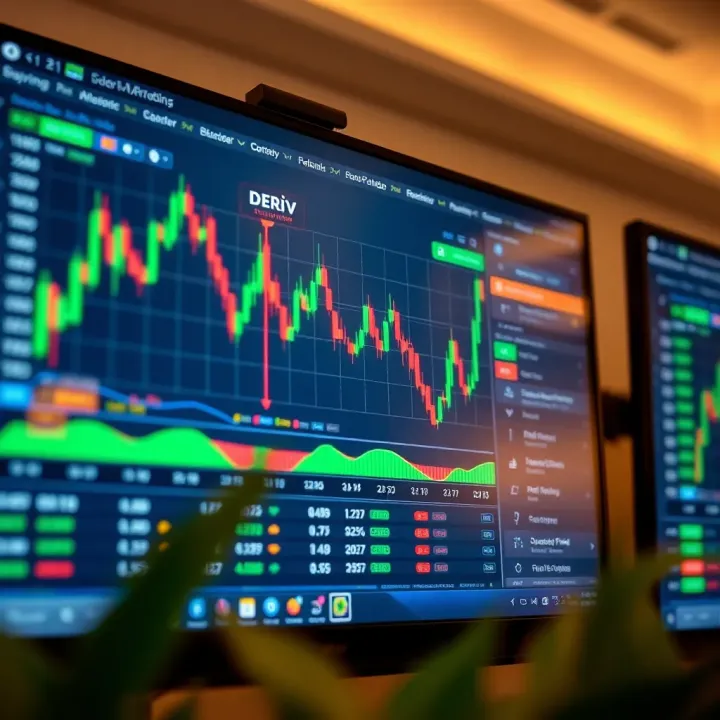
Explore Deriv Forex trading in Kenya 🇰🇪 with this detailed guide. Learn key features, smart strategies, risk tips, and regulatory insights for local traders 📊💡
Based on 12 reviews