

Robot Trading in Financial Markets: What Kenyans Should Know
🤖 Explore how robot trading automates investment decisions in Kenyan financial markets, benefits traders with speed and precision, challenges, plus future trends to watch.
Edited By
Oliver Bennett
The volatility index, often known simply as the "VIX", provides a snapshot of how nervous or confident investors feel about the market's future. Rather than just showing price levels, it estimates how much prices might swing in the coming weeks based on options activity. For traders, investors, and portfolio managers in Kenya and across the world, understanding this index offers valuable insight into potential risks and opportunities.
Unlike typical share prices, the volatility index doesn't track an asset's value but measures expected price fluctuations — essentially the market's mood. When the VIX rises, it signals growing fear or uncertainty, often seen during times of economic stress or unexpected shocks. Conversely, a low level usually reflects calm and steady investor sentiment.
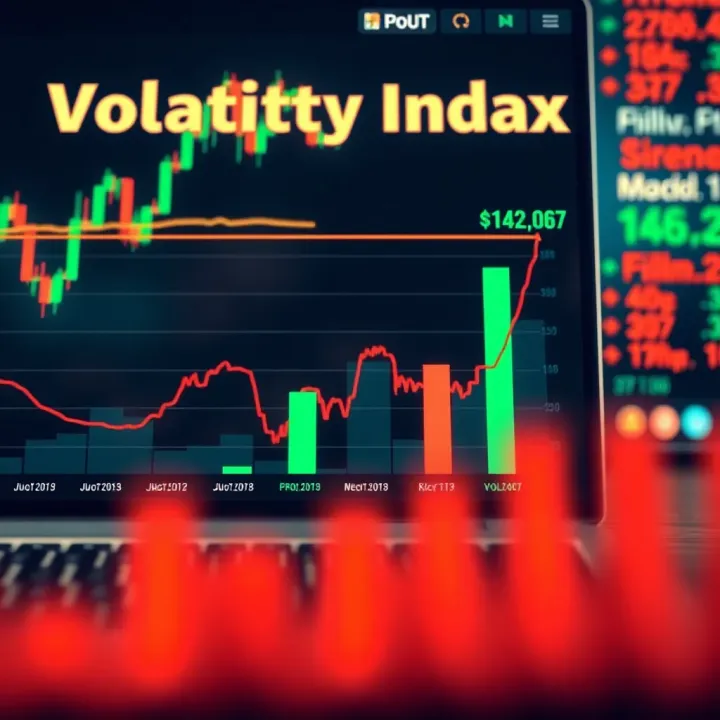
The volatility index acts like a financial barometer, indicating when markets may become stormy or remain clear.
The VIX is based on prices of options on major stock indices, like the S&P 500 in the US. Options contracts give holders the right to buy or sell assets later at set prices, so their premiums reflect investors’ expectations of future market moves. By analysing these option prices across different strike points and maturities, the index estimates the expected volatility over the next 30 days.
Risk Management: Knowing when volatility is set to spike helps traders adjust strategies, tighten stop-loss levels, or reduce exposure.
Market Timing: Some investors use the index as a contrarian signal—high volatility could mean oversold conditions and potential for rebounds.
Portfolio Protection: Futures and options on volatility indices enable hedging against sudden market drops, an important tool for asset managers.
Imagine a Kenyan investor holding shares in banks listed on the Nairobi Securities Exchange (NSE). If global markets turn shaky and local volatility rises, the investor might expect wider price swings locally too. By checking the VIX or related volatility measures, they can decide whether to hedge or hold steady.
Understanding this index is not just for Wall Street; it can complement local market insights and help Kenyan market participants manage uncertainty more confidently.
The volatility index is more than just a number; it provides a snapshot of how much prices in the financial markets are expected to fluctuate in the near future. Unlike a stock price or a market index reflecting value, the volatility index estimates market stress and uncertainty. For traders and investors in Kenya and beyond, it offers a practical gauge of risk appetite and investor mood, helping to shape decisions about buying, selling, or hedging positions.
Market volatility refers to the degree of variation in asset prices over time. Simply put, it captures how wildly prices swing — whether calmly nudging up or down or jumping sharply within short periods. In times of stability, such as a steady economic phase, volatility tends to be low. However, during political uncertainty or economic shocks, prices can swing dramatically, reflecting higher volatility. This matters because higher price swings increase risk for investors, while lower volatility generally suggests a smoother market environment.
For example, when Kenya's election period approaches, volatility often spikes as investors react to possible changes in government policies affecting businesses. Understanding these movements helps investors plan their strategies effectively.
The volatility index measures implied volatility, which is derived from the prices of options linked to a market index like the S&P 500. These option prices indicate how much traders expect prices to fluctuate moving forward, usually over the next 30 days. In other words, the volatility index is a forward-looking indicator, reflecting collective investor fears or confidence.
If the index shoots up, it means investors expect rough waters ahead—more price swings or possible market declines. If it falls, investors seem more confident or calm about the near future. In Kenya, where market information flows might be less efficient compared to major markets, keeping an eye on regional volatility indexes can help anticipate global risk sentiment that eventually affects local markets.
The VIX, often called the "fear gauge", is the most well-known volatility index and is based on the S&P 500 options market in the US. It tracks implied volatility for the next month and is an important barometer of global market risk. When the VIX rises sharply, it usually signals rising uncertainty or fear about economic prospects and can often lead to sell-offs.
International investors, including those active in Nairobi Securities Exchange (NSE), often monitor the VIX to gauge broader risk sentiment, as it influences capital flows and trading volumes locally.
Besides the VIX, many other regions have their own versions tailored to local markets. For example, Europe uses the VSTOXX, based on the Euro Stoxx 50 index, while Asia has started developing indexes reflecting volatility in markets like Japan and Hong Kong. Even though Kenya doesn’t yet have an established volatility index, emerging interest and increasing sophistication among local investors suggest such tools could soon become more mainstream.
Similarly, cross-border trade and investments through East African Community (EAC) markets mean that local investors should keep watch on these regional indicators. Spikes in volatility indexes abroad often ripple back home, affecting currency, bonds, and stocks.
Knowing what the volatility index represents helps you understand market sentiment beyond price charts—revealing investor psychology and expected risk that can guide smarter trading and investment decisions both in Kenya and internationally.
Understanding how the Volatility Index is calculated helps demystify what the numbers represent and why they matter to investors and traders. This calculation relies largely on market expectations of future price swings rather than just past price movements. The resulting index provides a quick gauge of the level of fear or confidence prevalent among market participants.

Options, which are contracts granting the right to buy or sell stocks at set prices within a specific time, play a crucial role in calculating the Volatility Index. The index uses prices of options on stock indexes because they embed market expectations about future volatility. When options prices rise, it signals that traders anticipate larger price swings ahead.
For instance, if investors expect turbulence in the NSE 20 stock index, the premiums on its options will increase. These elevated option prices feed directly into the formula that calculates the volatility index, making the index a forward-looking measure rather than a backward one.
The Volatility Index is based on implied volatility, which reflects the market's forecast of future fluctuations implied by current option prices. That differs from historical volatility, which simply tracks how much prices moved over a past period.
Implied volatility tends to react faster to news or upcoming events. For example, during an election period in Kenya, implied volatility might spike in anticipation, even before any price changes occur. Historical volatility, in contrast, might show a smooth or delayed change since past prices don’t immediately reflect expectations about new developments.
Different levels on the Volatility Index tell us about market mood. A low index value generally means calm markets with investor confidence. When the index moves higher, it signals increased uncertainty and fear, reflecting that traders expect more significant price swings.
For example, if the VIX (US Volatility Index) goes above 30, markets are often in a state of worry, while readings below 20 suggest steadier conditions. In the Nairobi context, though direct volatility indexes may be less common, traders follow international volatility trends to draw parallels for local sentiment.
The Volatility Index acts as a proxy for market risk. A rising index warns investors that asset prices might become more unpredictable soon. This knowledge can prompt portfolio managers to adjust hedge positions or traders to be more cautious.
In effect, the index works like an early warning system. When volatility spikes, it reflects uncertainty about economic policies, corporate earnings, or external shocks—risk factors that can drive sudden market moves. Recognising these signals in time can protect investments and optimise trade timing.
The Volatility Index is less about where prices are and more about how much they could wiggle — crucial insight for anyone managing financial risk or spotting market opportunities.
By understanding these calculation details and what index levels indicate, market participants gain a sharper edge in navigating financial markets, both locally and globally.
The volatility index serves as a handy tool for investors and traders aiming to manage risk and improve their market timing. It offers insights into expected market unpredictability, helping people prepare better strategies whether they are buying, selling, or holding assets. In Kenya’s evolving financial markets, understanding how to use the volatility index can make a notable difference in portfolio performance and risk exposure.
The volatility index is crucial for hedging, which means taking steps to protect your investments from sudden losses. For example, if the VIX (the well-known US volatility index) shows a sharp rise, it signals growing investor anxiety and potential large price swings ahead. Investors can respond by buying options or other instruments that gain value when volatility spikes, effectively acting as insurance against a market downturn. Kenyan investors might apply this by balancing their equity holdings with protective options or diversifying into less volatile assets during such times.
Investors also monitor the volatility index to decide when to enter or exit the market. Lower index values generally point to calmer markets, making it safer for long-term investments. Meanwhile, high volatility indicates uncertainty, which might signal caution or the chance to sell before bigger losses occur. However, sharp spikes can also present buying opportunities once market fears ease. This approach requires paying close attention to volatility trends alongside other market signals to avoid premature moves.
Beyond investment decisions, the volatility index is the basis for several financial products like volatility futures and options. These derivatives let traders bet directly on changes in market volatility without owning the underlying stocks. Such tools can be valuable in Kenya's growing derivatives market, enabling active traders to profit from expected swings or hedge other positions. For example, a forex trader might use volatility-based contracts to buffer against sudden currency moves linked to political or economic shocks.
Speculators use volatility indexes to capitalise on market inefficiencies. When the index price diverges from actual market volatility, opportunities arise to buy low and sell high or exploit price gaps between related securities—a practice called arbitrage. This strategy requires sophisticated timing and market insight but can yield profits even when the general market is steady. In Kenya, such tactics are mostly favoured by experienced traders who combine volatility signals with other financial data to identify short-term gains.
The volatility index is more than a mere number; it’s a versatile element of market strategy that, when used wisely, helps navigate uncertainty and improve decision-making in both investment and trading activities.
By understanding these practical applications, market participants in Kenya and beyond can better manage risk, time their trades, and explore new financial instruments that respond to market sentiment. This knowledge is particularly useful given the dynamic nature of markets today, influenced by global events and local developments alike.
Understanding the limitations and criticisms of the Volatility Index is key for investors and traders who rely on it to gauge market sentiment. While the index provides useful insights about expected price swings, it is not flawless and can present challenges when used as a sole indicator for market decisions.
Potential for misleading signals
The Volatility Index can sometimes give misleading signals. For instance, a sudden spike in the index might suggest rising market fear, but the surge could be driven by short-term speculation rather than actual changes in market fundamentals. A trader relying solely on the VIX might react hastily to this noise, mistaking it for a sustained downturn. This is often seen during moments of political uncertainty or after unexpected economic releases when panic temporarily inflates implied volatility.
The practical issue here is that the Volatility Index reflects expectations based on option prices, which can be influenced by market sentiment and trader behaviour rather than objective economic data alone. So, relying on it without cross-checking with other indicators can lead to poor timing of trades or inadequate risk management.
Impact of sudden market events
Sudden shocks such as geopolitical tensions, unexpected policy announcements, or natural disasters can cause abrupt spikes in the Volatility Index. These events tend to create sharp but often short-lived panic-driven moves in the market. The VIX reacts quickly, but this reaction may overshoot actual risk levels, giving a false impression of prolonged volatility.
For example, the outbreak of COVID-19 in early 2020 sent the VIX soaring above 80, reflecting extraordinary uncertainty. However, some markets recovered quickly as governments intervened with stimulus. Kenyan investors who interpreted such spikes without patience risked exiting their positions prematurely, missing out on rebounds.
Limited access to volatility products
Kenyan investors face practical barriers in using the Volatility Index effectively due to limited access to volatility-related financial products. Unlike some global markets where products like VIX futures and options are actively traded, Kenyan exchanges do not offer direct instruments that track volatility.
This restricts investors from hedging market risk directly through volatility products. Instead, they must rely on indirect methods such as stock portfolios or derivatives, which might not perfectly correlate with volatility measures. Consequently, the utility of the Volatility Index for risk management in Kenya is somewhat constrained.
Market liquidity and infrastructure issues
Liquidity is another hurdle for Kenyan traders looking to engage in volatility strategies. The relatively low trading volumes on Nairobi Securities Exchange (NSE) and less developed derivatives markets make it difficult to execute timely trades without significant price impact.
Infrastructure gaps, including delays in trading platforms and slower access to real-time data, also hinder rapid responses to volatility changes. These factors reduce the effectiveness of using volatility measures for short-term trading or speculative opportunities. Investors and portfolio managers must, therefore, adapt by combining volatility insights with local market realities to avoid unexpected losses.
While the Volatility Index remains a valuable tool to gauge market uncertainty, Kenyan investors should be aware of its limits—both in terms of interpretative challenges and practical accessibility—before integrating it fully into their trading strategies.
The Volatility Index offers a unique lens compared to traditional market indicators. While stock indexes such as NSE 20 show actual price movements of stocks, the Volatility Index reflects expected fluctuations and investor sentiment. Comparing these indicators helps traders and investors get a holistic view of market conditions.
Stock market indexes like the NSE 20 track the current prices of a selected group of shares and reflect overall market performance. For instance, when NSE 20 rises, it usually signals growing investor confidence and economic optimism. However, this index doesn't reveal how uncertain investors are about future price swings.
In contrast, the Volatility Index measures market fear or confidence by gauging expected price swings through option prices. A low Volatility Index suggests calm markets with steady trends, while a rising index signals growing nervousness, despite the current prices. This difference lets you anticipate possible turbulence even when stock prices look stable.
The practical use here is clear: relying solely on price indexes might give a false sense of security. Investors who watch the Volatility Index alongside indexes like NSE 20 can better time their decisions — for example, selling off stocks before sharp drops flagged by rising volatility.
The Volatility Index works as a thermometer for investor mood. Unlike price measures which show what has happened, it projects how investors feel about risk ahead. If the index climbs sharply, it reveals unease or expectation of market swings, often triggered by political events, economic reports, or global shocks.
For Kenyan investors, tracking the Volatility Index can provide early warnings. Say political uncertainty surges before an election; the Volatility Index will likely spike before the NSE 20 reflects any price change. This early signal helps portfolio managers adjust positions to shield gains or exploit volatility-driven trading opportunities.
The Volatility Index often correlates with inflation and interest rates, which influence market expectations. High inflation or rising Central Bank of Kenya (CBK) rates tend to increase uncertainty about economic stability, pushing the Volatility Index higher. This reflects more cautious investor behaviour and increased hedging.
Understanding this link helps investors predict how macroeconomic trends affect market mood. For example, if inflation rises unexpectedly, the Volatility Index may spike before stock prices fall, signalling a shift in market sentiment.
Changes in the Volatility Index impact asset prices by altering investor risk appetite. Rising volatility often leads to lower demand for equities and higher interest in safer assets such as government bonds or cash. This shift can affect liquidity and pricing across markets.
Investment flows react accordingly: during spikes in volatility, foreign investors might pull funds from Kenyan equities, increasing pressure on the stock market. Local investors who understand these dynamics can adjust strategies, such as diversifying into less volatile sectors or waiting for a more stable environment before committing more capital.
Watching the Volatility Index alongside other indicators gives a fuller picture — from market performance to investor sentiment and economic signals — helping you make smarter, timely decisions in Kenya's markets.
🤖 Explore how robot trading automates investment decisions in Kenyan financial markets, benefits traders with speed and precision, challenges, plus future trends to watch.
📉 Discover how the Volatility 75 Index measures market swings and explore smart trading tactics tailored for Kenyan traders to manage risks and grab opportunities.
📉 Discover how the Volatility 100 Index works, risks involved, and smart strategies tailored for Kenyan investors keen on profiting from market swings without buying stocks.
📉 Understand volatility in forex trading, learn how price swings affect your trades, and get smart risk management tips tailored for Kenyan forex investors. 🌍
Based on 10 reviews