
CFD Trading Explained: A Guide for Kenyan Traders
Learn all about CFD trading in Kenya 🇰🇪: its key concepts, market options, smart strategies, risk tips, and how to start confidently today!
Edited By
James Thornton
The Volatility 100 Index is gaining attention from Kenyan investors who want to tap into market swings without owning actual stocks. Unlike traditional stock trading, this index represents the expected market volatility in the next 30 days, measured by price movements rather than asset value. This makes it a unique financial tool, especially for those looking to profit from fluctuations rather than the direction of the market.
Trading the Volatility 100 Index doesn’t require you to buy shares of any company. Instead, you speculate on how volatile the market will be. For example, during times of economic uncertainty, like when Central Bank of Kenya announces major policy changes or when global markets react to geopolitical events, volatility tends to climb. This creates trading opportunities without the usual concerns of dividends or company fundamentals.
Keep in mind, the Volatility 100 Index reflects price variability, not real ownership, so it behaves differently from typical shares listed on the Nairobi Securities Exchange (NSE).
Here’s what Kenyan traders should understand:
How volatility is measured: The index calculates expected market fluctuations by analysing price ranges within a set period, offering a snapshot rather than actual asset prices.
Trading features: It’s available on various trading platforms offering contracts for difference (CFDs), letting you open positions based on volatility predictions with leverage.
Risks involved: Volatility trading can be fast-paced and requires strong risk management, especially considering leverage amplifies both gains and losses.
For a Kenyan investor keen on diversifying beyond usual stocks or forex, the Volatility 100 Index presents an alternative to capitalise on market movements. It fits traders comfortable with short-term strategies, technical analysis, and managing high-risk instruments. In the following sections, we'll explore how this index operates, practical tips to trade smartly, and how to align strategies with local market conditions and regulations.
Volatility indices measure market fluctuations by tracking the expected price swings rather than actual asset prices. The Volatility 100 Index is a synthetic index designed to reflect the expected volatility in equity markets, but unlike typical stock indices, it does not track company shares. Instead, it focuses on how much prices are expected to move within a certain period. This makes it a useful tool for traders who want to profit from market uncertainty without owning the underlying stocks.
Unlike traditional stock indices such as the NSE 20 or S&P 500, which represent a basket of real companies, the Volatility 100 Index represents expected market swings. While the NSE 20 tracks corporate performance through share prices, the Volatility 100 fluctuates based on investor expectations of turbulence in the market. This key difference means the Volatility 100 serves as a barometer for fear or confidence rather than company value.
Traders use the Volatility 100 to take advantage of fast price changes that often accompany market unrest. For instance, during times of political uncertainty or economic disruptions, the index tends to show sharp increases, signalling higher market risk. Kenyan investors can use this to diversify strategies, especially because volatility trading requires no ownership of physical shares but offers opportunities to gain from price movement itself.
Market uncertainty and investor sentiment play major roles in driving the Volatility 100. When investors doubt future market conditions, their behaviour reflects increased caution, pushing the index up. For example, if upcoming elections or policy changes generate jitters among traders, volatility spikes as participants price in the unknown.
Global economic events also shape the index’s movement. Events like central bank announcements by the US Federal Reserve or geopolitical tensions across regions ripple through markets worldwide. Since the Volatility 100 uses global market sentiment, these developments affect the index even for Kenyan traders, who must stay alert to such news to understand sudden price jumps.
The index pricing relies heavily on implied volatility, which estimates how much the market expects prices to swing in the future. Implied volatility is derived from options prices and reflects forward-looking uncertainty rather than past movements. This is critical because it allows the index to anticipate upcoming shocks or calm periods, giving traders a timely signal to act.
The Volatility 100 Index doesn’t track company value but measures expected market swings, making it a unique tool for Kenyan traders aiming to profit from unpredictability without stock ownership.
Volatility indices measure expected price swings, not actual asset prices.
Unlike traditional indices, Volatility 100 reflects market sentiment and uncertainty.
Global events and investor mood strongly influence index movements.
Implied volatility underpins the index, providing forward-looking market insight.
Understanding what the Volatility 100 represents sets the stage for Kenyan investors to engage with this tool effectively, recognising the risks and rewards of trading on market fluctuations.
Understanding how volatility is measured helps Kenyan traders make more informed decisions when dealing with the Volatility 100 Index. Unlike normal stocks, this index reflects the expected price swings of a market rather than direct stock values, so grasping how volatility is calculated and displayed is key to managing risk and spotting trading opportunities.
Implied volatility shows the market’s forecast of how much price movement to expect over a specific period. It’s not based on past prices but rather the prices of options—financial contracts that give traders the right to buy or sell an asset at a set price. Traders calculate implied volatility using complex models that back out expected fluctuations from current option prices.
For Kenyan investors, implied volatility is useful because it offers a sense of market sentiment without waiting for historical data. For example, if implied volatility rises sharply ahead of an economic event, this signals that traders expect bigger price swings.
Historical volatility, on the other hand, looks back at how much prices have actually moved in the past. It’s a simple measure, calculated from past price data, showing real fluctuations over a certain time. While historical volatility gives insight into how volatile an asset has been, it does not predict the future and can lag market changes.
Knowing the difference helps you understand why implied volatility often moves ahead of market events, while historical volatility confirms patterns that have already played out.
Options prices play a central role in volatility indices. Since options become more expensive when market uncertainty is high, changes in these prices directly affect volatility indicators. Traders watch option prices closely because they reflect collective expectations of risk. In Kenya, platforms offering CFDs (Contracts for Difference) on the Volatility 100 Index use these prices to calculate the index value, letting traders essentially bet on market swings without owning underlying assets.
Volatility index values can swing widely. Low volatility readings usually indicate calmer markets with steady price movements. High readings mean the market expects larger, more unpredictable moves. For instance, a low reading around 10 might suggest stable conditions, while a spike above 50 signals nervousness and potential turbulence.
These readings serve as market sentiment signals. When volatility is low, it often indicates confidence among traders or a wait-and-see attitude. High volatility reflects fear or uncertainty—typical during political unrest, economic data releases, or global crises. Kenyan traders can use this knowledge to adjust their strategies, avoiding overexposure during volatile times.
Sudden spikes in volatility are worth paying close attention to. They often signal upcoming shocks or shockwaves already underway. For example, unexpected announcements from the Central Bank of Kenya or sudden swings in global markets can push the Volatility 100 Index sharply higher. Traders may see such spikes as warnings to tighten risk controls, use stop-loss orders, or consider short-term trades that profit from volatility itself.
Volatility readings are not just numbers—they're early signs of market mood changes. Learning to read them gives you a practical edge in managing trading risks and opportunities.
In summary, knowing how implied volatility is derived, how it differs from historical data, and how to interpret the index values will help Kenyan investors navigate the Volatility 100 Index more confidently and avoid surprises in this dynamic market.
Trading the Volatility 100 Index offers Kenyan investors a unique opportunity to benefit from market fluctuations without owning the underlying stocks. Understanding the specific features and platforms involved is critical to navigating this type of trading successfully. This section explains how to access the index, account requirements, trading hours, and how market conditions affect your positions.
Contracts for Difference (CFDs) are the primary way most traders in Kenya access the Volatility 100 Index. A CFD is a derivative contract where you speculate on the price movement of the index without owning it directly. Essentially, you agree to pay or receive the difference between the opening and closing price — no need to buy shares or assets physically. This flexibility allows traders to go long (betting on a rise) or short (betting on a fall), making CFDs suitable for volatile products like the Volatility 100.
Popular trading platforms catering to Kenyan investors include IQ Option, Deriv, and Binomo, all of which offer CFD access to the Volatility 100 Index. These platforms are known for their user-friendly interfaces and support for M-Pesa deposits and withdrawals, which is convenient for local traders. They also provide demo accounts to practice before committing real money. Choosing a platform that is regulated and has good customer support is crucial to avoid unnecessary risks.
Regarding account requirements, most platforms set a relatively low minimum deposit, ranging from KSh 1,000 to KSh 5,000. This makes it accessible for many Kenyan traders just starting out. However, be aware of trading costs like spreads, commissions, and overnight fees, which can significantly affect profitability, especially in volatile markets. Margin requirements vary, but leverage allows you to control larger positions with smaller capital — a double-edged sword that needs careful risk management.
One of the advantages of the Volatility 100 Index is its near round-the-clock trading availability. Platforms usually keep the market open 24/7, which suits Kenyan traders who might be active outside traditional office hours. This flexibility allows you to react instantly to price swings, whether before work or late in the evening.
Trading during off-hours, however, can be tricky. Liquidity tends to drop, leading to wider spreads and more erratic price movements. For example, a sudden movement driven by low participation might trigger stop-loss orders unnecessarily. Kenyan traders should always check the specific platform's trading schedule and be cautious when placing trades outside peak activity times.
Global news heavily influences the Volatility 100 Index. Economic events such as US Federal Reserve announcements, Brexit updates, or unexpected geopolitical tensions often cause sharp volatility spikes. Since the index reflects implied volatility, these events tend to amplify price swings. Staying updated with international news through sources like Bloomberg or Reuters and local financial media can help you anticipate these shifts and adjust your strategies accordingly.
Remember, trading the Volatility 100 requires not only understanding the instrument but also selecting the right platform, managing hours of activity, and staying alert to global news influences. Such awareness helps protect your capital and improves your chances to profit in fast-moving markets.
By mastering these features and platform nuances, Kenyan investors can approach Volatility 100 trading with insight and confidence.
Trading the Volatility 100 Index carries unique risks that Kenyan investors must understand before committing their funds. Given the index is based on market fluctuations rather than actual stocks, price movements can be sudden and severe. Being aware of these risks helps traders protect their capital and avoid costly mistakes.
The Volatility 100 Index is notorious for sharp price swings. These large movements can quickly eat into trading positions, especially if you're near your margin limits. For example, if a sudden market event causes the index to spike, a trader holding a short position might face significant losses within minutes. This volatility means you must be ready to react fast or risk losing more than expected.
Most trading platforms offering the Volatility 100 Index allow leverage, meaning you trade with more money than you deposit. While leverage can multiply profits, it also amplifies losses. A small adverse move could wipe out your entire deposit quickly. For instance, with leverage of 1:20, a 5% market move against you could equate to 100% loss of your trading capital. Kenyan traders often underestimate this, leading to margin calls or forced liquidations. It’s key to use leverage cautiously and understand margin requirements.
Unexpected global news or economic reports can trigger rapid shocks in the Volatility 100 Index. Such shocks often come without warning and result in gaps—moments when the price jumps or drops drastically between trades. These gaps can bypass your stop-loss orders, causing bigger than planned losses. For example, a sudden geopolitical event or bank failure might cause volatility to surge sharply, affecting your position instantly. Kenyan investors must acknowledge that even with the best preparation, sudden shocks can shake the market.
One of the best tools to manage volatility risks is the use of stop-loss orders. These automatically close your position at a pre-set price, limiting potential losses. Suppose you buy the Volatility 100 Index expecting a rise but set a stop-loss 3% below your entry; if the price falls sharply, your losses end there. Setting reasonable risk limits per trade helps maintain capital for long-term success, a critical point for Kenyan traders working with modest funds.
Putting all your funds into the Volatility 100 Index can backfire due to its unpredictable swings. Diversifying into other assets like forex pairs, commodities, or NSE-listed equities spreads risk. For example, a trader blending volatility products with safer government bonds or blue-chip stocks in Kenya can soften the blow from sudden market moves. Diversification reduces dependence on one instrument’s behaviour, which is especially useful when the market experiences extreme turbulence.
Volatility indexes react quickly to global and local events. Staying updated with major economic news, company results, or political developments can give you a heads-up on possible market moves. For Kenyan traders, following sources like Business Daily, Nation, or international news relevant to global markets helps anticipate volatility spikes. Using mobile alerts ensures you don’t miss key developments during trading hours or even off-hours.
Managing risks in the Volatility 100 Index is not about avoiding loss entirely but controlling how much loss you take. Smart risk management combined with staying well-informed keeps you trading another day.
Understanding these risks and strategies equips Kenyan investors to navigate the Volatility 100 Index more confidently, protecting capital while seeking profit from market swings.
Trading the Volatility 100 index requires more than just understanding the market; it demands practical skills and careful choices, especially for Kenyan investors. This section offers focused advice on selecting platforms, crafting strategies, and keeping up with market dynamics to trade confidently and reduce unnecessary risks.
Platform reliability and regulation matter a lot. Kenyan investors should opt for platforms regulated by recognised authorities such as the Capital Markets Authority (CMA) in Kenya, the Financial Conduct Authority (FCA) in the UK, or the CySEC in Europe. A regulated platform ensures a level of safety for your funds and fairness in pricing. Avoid platforms without regulation, as they may expose you to scams or unfair trading conditions.
Ease of deposit and withdrawal with M-Pesa is a key convenience for Kenyan traders. Since M-Pesa is widely used and trusted in Kenya, platforms that allow depositing and withdrawing funds directly via M-Pesa save time and reduce transaction costs. For example, platforms integrated with M-Pesa allow you to fund your trading account instantly, which is crucial in the fast-moving volatility market where timing matters.
Access to educational resources and customer support is vital. Before committing real money, check if the platform offers tutorials, webinars, or market analysis targeted at volatility trading. Also, responsive customer service that communicates in English and Swahili can help solve issues quickly, keeping your trading experience smooth.
Learning to read volatility signals is foundational. For instance, spikes in the Volatility 100 Index often indicate moments of market uncertainty, which may offer short-term trading opportunities. Kenyan traders should watch for these signals to decide entry or exit points rather than relying on guesswork.
Combining technical and fundamental analysis provides a fuller picture. Technical analysis involves reading charts and indicators, while fundamental analysis looks at macroeconomic factors like interest rate changes or geopolitical events affecting markets. If a major US Federal Reserve meeting is due, this information can be critical alongside chart patterns.
Practising with demo accounts before real trading helps you understand market behaviour without risking money. Most platforms offer demo accounts with virtual funds. Use these to test your strategies on the Volatility 100 Index and gain confidence before trading live.
Following global economic indicators like inflation data, employment reports, and GDP growth helps predict market moves. For example, a sudden rise in global inflation might lead to increased volatility, influencing the index's price swings.
Using local financial news sources like the Business Daily or The Standard keeps you informed of how global events impact Kenyan investors and the broader economy. Being aware of these developments can sharpen your market timing.
Leveraging mobile alerts for timely decisions is practical in today’s fast-paced trading world. Setting up price alerts or news notifications on your phone ensures you catch important market changes immediately, helping you react quickly in the volatile trading environment.
Practical trading requires preparation and smart choices. Picking the right platform, developing solid strategies, and staying informed are your best tools for navigating the Volatility 100 Index as a Kenyan trader.
Learn all about CFD trading in Kenya 🇰🇪: its key concepts, market options, smart strategies, risk tips, and how to start confidently today!
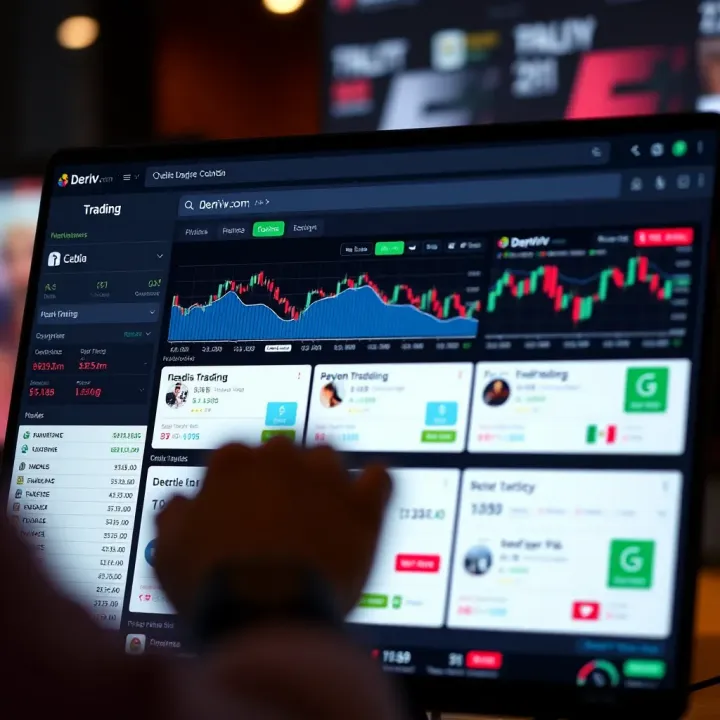
Explore Deriv.com’s features, trading options, and user experiences 🌍. Get insights tailored for Kenyan traders, including risks and tips for smart trading 📈.

Explore crypto trading in Kenya 🇰🇪 with tips on wallets, exchanges, market analysis, and managing risks. Perfect for beginners and traders alike 📊💼

Explore copy trading in Kenya 🌍: learn how it works, pros & cons, top platforms, regulations, and tips to match your investment goals 🚀📊.
Based on 14 reviews