
Deriv Trading in Kenya: A Simple Guide
Explore deriv trading in Kenya 📈: Learn types, strategies, risks & how to start safely with trusted platforms like Deriv. Ideal for beginners & pros!
Edited By
Sophie Mitchell
Robot trading, also known as automated or algorithmic trading, refers to the use of computer programs to buy and sell financial assets without human intervention. These systems operate by following predefined rules or algorithms that analyse market data and execute trades based on set conditions. For example, a robot trading system might be programmed to buy shares on the Nairobi Securities Exchange (NSE) when specific technical indicators align, such as moving averages crossing.
Automated trading systems are increasingly popular among Kenyan traders and investors for their ability to process vast amounts of data quickly and execute trades faster than any human could. This speed advantage is critical in volatile markets where timing can significantly affect profits and losses. By eliminating emotional decisions, these systems provide consistency and discipline in trading strategies.
Some well-known platforms supporting robot trading include MetaTrader 4 and 5, used widely in forex and CFD trading, and proprietary systems offered by brokers like HF Markets and Sanlam Investments Kenya. These platforms allow traders to customise or select existing trading robots and back-test their strategies using historical market data.
Automated trading is not just for big institutions; individual traders in Kenya are also adopting this technology to improve efficiency and reduce the time spent analysing markets.
Key benefits of robot trading include:
Faster execution: Robots can place orders within milliseconds, capturing opportunities that might be missed manually.
24/7 operation: Automated systems can monitor and trade markets around the clock, useful especially for forex and global indices.
Emotion-free decisions: Robots stick to the plan, avoiding panic selling or impulsive buying that often affect human traders.
However, there are challenges too. The technology requires reliable internet connectivity and stable power supply—factors that can be inconsistent in some parts of Kenya. Additionally, poorly programmed algorithms can lead to significant losses if market conditions change unexpectedly. Traders need to monitor and update their systems regularly.
Understanding the nuts and bolts of robot trading is essential for those looking to integrate automation into their investment approach. As financial markets in Kenya become more accessible and digital, automated trading offers a practical edge, but one that comes with responsibilities to manage risks properly.
Robot trading, also known as automated or algorithmic trading, refers to the use of computer programmes to execute trades in financial markets automatically. This technology is particularly relevant in modern trading environments where speed, accuracy, and the ability to handle vast data simultaneously are vital for success. Instead of relying solely on human decisions, robot traders use predefined rules encoded in computer systems to identify and act on trading opportunities.
Understanding robot trading is crucial for anyone involved in markets such as equities, forex, or commodities, especially in Kenya where access to automated platforms is growing. For example, a forex trader using a robot can execute orders faster than manual trading, capturing small price movements multiple times throughout the day without the fatigue or emotional bias that often affects humans.
At its core, robot trading involves three key ideas: algorithms, market data, and execution mechanisms. Algorithms are sets of mathematical rules or instructions that guide the system on when to buy or sell an asset. Market data provides real-time information about price changes, volumes, and other market indicators. Execution mechanisms perform the actual trades by connecting to exchanges or brokers. Together, these components work continuously to manage trades according to specified strategies.
Trading algorithms form the brain of robot trading. They analyse market trends, price patterns, and other indicators to make informed decisions. Traders can programme these algorithms with various rules — for example, buying a stock when its price crosses above a moving average. This reduces the guesswork and allows quick, repeatable responses to changing market conditions.
Market data inputs feed the algorithms with timely and accurate information. Without reliable data, the system cannot function effectively. This includes live prices from exchanges, order book depth, news feeds, and sometimes even social media sentiment. In practical terms, a robot trader must receive these inputs without delay to spot opportunities early – a delay of even milliseconds can affect profitability.
Execution mechanisms are the systems responsible for placing orders in the market. Once a trading signal is generated, the execution mechanism sends the order to the exchange or broker. In Kenya, this often involves connecting through platforms like MetaTrader with brokers who support local payment options such as M-Pesa. Fast, reliable execution is essential to take advantage of small price differences or arbitrage opportunities.
Trend following strategies involve identifying a clear market direction and placing trades accordingly. For example, if the Kenyan shilling against the US dollar shows an upward trend, the robot may buy USD/KES pairs to ride the movement. This method works well in markets with sustained moves but can suffer losses during sideways or highly volatile periods.
Arbitrage exploits price differences for the same asset across different markets or exchanges. Suppose a stock listed on the Nairobi Securities Exchange is trading slightly cheaper than on an international platform; a robot could buy on the cheaper market and sell on the pricier one simultaneously, locking in risk-free profit. While arbitrage opportunities are rare and short-lived, automated systems can spot and act on them faster than manual traders.
Mean reversion strategies assume that prices will return to their average over time. If a stock price spikes unusually high, the robot might sell expecting a drop back to the mean price. This method relies on statistical analysis of historical price ranges and can help capitalise on temporary market overreactions.
In essence, robot trading merges technology with financial insight to respond quicker and more consistently than human traders, but understanding its workings is key to making the most of this tool.
Automated trading systems offer several distinct benefits that appeal strongly to both experienced traders and newcomers in the Kenyan financial markets. By executing trades based on predefined rules, they bring efficiency, consistency, and the ability to handle large volumes of data — something manual trading struggles with. These advantages translate into practical improvements in speed, emotion-free decisions, and the capacity to keep an eye on multiple markets or assets at the same time.
Robot trading operates at speeds far beyond human capacity. Once the trading algorithm spots an opportunity, it can place orders within milliseconds, seizing price differences before they disappear. For example, in Kenya's NSE, where price changes can be quick during peak trading hours, the robot can instantly execute a buy or sell order, avoiding delays caused by manual input or connection slowdowns. This rapid reaction is crucial for strategies like arbitrage, where timing is everything.
Moreover, the system can monitor real-time market data non-stop without breaks, weekends, or fatigue. This continuous operation ensures no opportunity slips by just because the trader is away or asleep. Often, human traders might miss an optimal entry point or delay executing due to distractions; robots don’t.
One of the biggest challenges for human traders is emotion. Fear and greed often lead to impulsive decisions like holding on too long or exiting early. Automated systems strip away these psychological traps by strictly following predetermined rules regardless of market noise or news headlines. This is especially helpful in Kenya, where sudden political or economic events can trigger sharp market reactions leading traders to panic.
For instance, during volatile phases, an automated system will stick to the plan, while a human might second-guess or hesitate. The result is more disciplined risk management and consistent outcomes over time. Robots don’t suffer from fatigue or stress, so they maintain the same standards day after day.
Manual traders often limit themselves to a few assets they can track carefully. On the other hand, robot trading systems can analyse and execute trades across numerous markets at once. This multi-tasking ability is a game-changer.
Imagine a trader interested in tracking both the NSE equities and forex pairs like USD/KES simultaneously. Human capacity would struggle to monitor the real-time shifts in both markets without missing key signals. Automated systems, however, can scrape live data feeds and react instantly on all fronts, increasing chances of capturing profitable trades in diverse markets.
Robot trading offers a practical edge by combining high-speed execution, emotion-free decision making, and broad market surveillance — all vital for navigating competitive and fast-moving financial markets.
In Kenya’s investing ecosystem, where market conditions can shift rapidly due to local and global events, these advantages make automated trading worth considering for those who want to stay ahead without missing a beat.
Automated trading systems offer benefits like speed and emotion-free decisions, yet they come with significant challenges that traders must understand. Being aware of these risks helps investors protect their capital and make informed choices when adopting robot trading strategies.
Technical glitches remain a key risk in robot trading. Software bugs, server downtime, or internet disruptions can cause orders to be delayed or missed entirely. For instance, if a trading platform crashes during a volatile session, a sequence of buy or sell instructions might never be executed, leading to missed opportunities or unintended losses. Traders relying on automated systems need robust backup plans, including manual intervention options and redundant connections, to minimise damage from such failures.
Markets can change direction rapidly due to news, political events, or sudden shifts in investor sentiment. Automated algorithms may not always adapt well to unusual conditions outside their programmed parameters. In Kenya, for example, unexpected policy announcements by the Central Bank or political developments around general elections can trigger sharp price swings. Robots, following rigid rules, might enter losing positions or fail to close trades promptly. This highlights the necessity for constant monitoring and the integration of safeguards like stop-loss orders in any automated strategy.
Many robot trading algorithms are created by testing on past market data, a process known as backtesting. However, overfitting happens when a system performs exceptionally well on historical data but fails when faced with new market conditions. This results from the model being too specifically tailored to past quirks rather than general market behaviour. For example, a forex robot optimised for trends seen in previous years might struggle in today’s environment if the market regime has shifted. To avoid this, traders must regularly re-evaluate their robots' performance and use diverse datasets during development.
Successful robot trading is not set-and-forget; it demands awareness of technical and market risks, plus ongoing adaptation.
Understanding these challenges equips Kenyan traders and investors to use algorithmic trading wisely, balancing automation advantages with prudent risk controls.
In Kenya, access to effective robot trading platforms is essential for investors aiming to automate their trading strategies. These tools not only enhance precision but also accommodate local market dynamics and payment methods. Knowing which platforms fit your needs can save you time and reduce costly errors.
MetaTrader is by far the most popular platform among Kenyan traders, especially those involved in forex trading. Its two main versions, MetaTrader 4 and 5, support automated trading through Expert Advisors (EAs), allowing users to run their custom algorithms without constant supervision. Its user-friendly interface and compatibility with numerous Kenyan brokers make it a practical choice. Many traders appreciate how MetaTrader integrates with real-time market data and offers backtesting to improve strategies.
Moving beyond forex, TradeStation caters well to traders interested in stocks, futures, and options. Although it's more favoured in international markets, some Kenyan investors use TradeStation's advanced charting and scripting tools to build complex automated strategies. The platform’s strength lies in its proprietary EasyLanguage coding environment, which allows traders to customise algorithms with relative ease. Plus, TradeStation supports fast order execution, a key factor for high-frequency trading.
ZuluTrade and similar platforms provide a social trading experience, enabling retail traders in Kenya to follow and copy trades from experienced investors worldwide. This is handy for those who want automation without heavy technical knowledge. ZuluTrade converts expert strategies into automated trades on your account, simplifying market participation. Another advantage is its compatibility with M-Pesa and other Kenyan payment systems, making deposits and withdrawals straightforward.
M-Pesa compatibility is a huge plus for Kenyan traders. Platforms that support M-Pesa allow users to fund their trading accounts quickly without needing international bank transfers or credit cards, which might be inaccessible to many. For example, some brokers integrated with MetaTrader or ZuluTrade accept deposits via M-Pesa, providing convenience and speed. This accessibility encourages broader participation, especially from retail traders.
Besides mobile money, bank transfer options remain important. Many platforms support direct transfers from Kenyan banks like Equity Bank, KCB, or Co-operative Bank. These methods are suitable for larger transactions and provide stronger security assurances. Having both M-Pesa and bank transfer options gives traders flexible ways to manage their funds.
Mobile apps access is increasingly vital since many Kenyan investors rely on smartphones. Leading platforms offer mobile versions allowing traders to monitor algorithms, execute trades, and adjust parameters on the go. For instance, MetaTrader’s mobile app lets users track live price charts and receive alerts, ensuring they stay connected even while away from computers. Smooth mobile access makes robot trading more practical for Kenyans juggling busy schedules.
For Kenya’s growing investor community, choosing robot trading platforms that blend advanced automation with seamless payment integration is a smart move. Solutions like MetaTrader, TradeStation, and ZuluTrade stand out for offering powerful tools while embracing Kenya’s unique payment and mobile usage landscape.
Easy automation with programmable algorithms
Fast execution via reliable platforms
Flexible deposit and withdrawal methods including M-Pesa
Mobile access for real-time control
Selecting platforms tuned for Kenyan traders ensures your robot trading experience is both effective and tailored to local realities.
Automated trading offers many benefits, but it also comes with specific challenges and risks that traders must understand before diving in. Having a clear grasp on market dynamics, technical limitations, and regulatory requirements is essential to safeguard your investments. Starting robot trading without this foundation is like driving at night without headlights — you might get somewhere, but the chances of mishaps grow.
Market conditions can change rapidly, and even the best trading algorithms can struggle during high volatility or unexpected events. For instance, a sudden announcement from the Central Bank of Kenya altering interest rates can cause unpredictable price swings that confuse robot strategies relying on historical patterns. Technical glitches, such as internet outages or software bugs, can also disrupt automated systems unexpectedly. A trader using a popular platform like MetaTrader may experience trade execution delays if their internet disconnects or if the server faces downtime.
To manage these risks, it’s wise to monitor your trading bot regularly rather than letting it run unchecked. Many platforms offer alert systems to notify you when trades don't execute as intended or when abnormal market conditions arise. Having a backup plan for manual intervention is equally important.
Robot trading isn’t a magic solution for making quick money. It’s a tool that, if used wisely, can improve efficiency and discipline. Traders should set achievable goals, like steady growth over months rather than expecting huge profits overnight. Remember, many bots perform well only under specific market conditions. For example, a trend-following algorithm thrives during a stable upward market but may incur losses in sideways markets.
Before investing significant funds, test your chosen robot with small amounts or on demo accounts. This approach helps you understand its behaviour without risking too much. Also, be prepared for periods of losses and avoid chasing quick recoveries, which can lead to bigger problems.
Kenya’s Capital Markets Authority (CMA) oversees market activities to protect investors. If you plan to use robot trading, ensure the platform and broker you engage with comply with CMA regulations. The CMA requires transparency and fair trade practices, which means your automated system should operate within these boundaries to avoid legal issues.
Platforms registered with CMA provide some level of assurance that your funds are safer and that disputes have a place for resolution. Working with unregulated brokers or systems can expose you to fraud or unfair practices.
Tax implications are also an essential factor. Profits made from automated trading in Kenya are subject to income tax, and you should keep accurate records of all trades and earnings. Declaring these gains during tax season ensures compliance with Kenya Revenue Authority (KRA) requirements and avoids penalties.
Legal compliance extends beyond tax and market rules. If your robot trading involves foreign forex brokers, verify the legality of cross-border trading services in Kenya. Compliance with anti-money laundering laws and ensuring your personal data protection are additional considerations. Legal advice or consulting with financial professionals within Kenya can clarify these points and help maintain your trading activities on the right side of the law.
The financial markets in Kenya are increasingly turning towards automated systems to improve trading efficiency and decision-making. Understanding the future of robot trading here is key for anyone involved in investment and portfolio management. The growth of technology, combined with the expanding pool of retail investors, is shaping how trades are executed and markets behave.
Artificial intelligence (AI) and machine learning (ML) are driving the next phase of robot trading. These technologies enable trading systems to learn from vast amounts of data, adjust strategies dynamically, and identify subtle market signals that humans might miss. In Kenya, some platforms are integrating AI tools to scan news from local media and social networks, which can influence stock prices or forex rates. This allows the systems to react faster to sudden political developments or macroeconomic changes, such as Central Bank of Kenya interest rate announcements. For Kenyan traders, this means potentially smarter automated trades tailored to local market conditions.
The rise in smartphone use and improved internet connectivity have made robot trading more accessible to ordinary Kenyans. Platforms like MetaTrader and ZuluTrade are becoming popular among retail investors, especially those in Nairobi and other urban areas with reliable connectivity. Retail traders can now set up and customise robots to their risk appetite using mobile apps and fund accounts easily via M-Pesa or local bank transfers. This growing adoption is not limited to forex; Kenyan investors are also experimenting with automated strategies in NSE equities and commodities markets. As education and awareness improve, more investors without formal finance backgrounds are likely to embrace these tools.
Automated trading has the potential to boost liquidity in Kenyan markets, making it easier to buy or sell shares or currencies quickly without affecting prices much. Robot traders often operate continuously and monitor multiple assets simultaneously, ensuring faster matching of buy and sell orders. This can narrow bid-ask spreads, which benefits all investors through lower transaction costs. However, increased automation also brings challenges. Sudden spikes in market volatility triggered by algorithmic trades can add unpredictability, especially in relatively thin markets like some NSE stocks. Proper regulation and safeguards by bodies like the Capital Markets Authority (CMA) will be important to balance liquidity gains against systemic risks.
For Kenyan investors, the future of robot trading promises smarter, faster, and more accessible ways to engage with financial markets, but it requires measured adoption and understanding of both opportunities and risks.
Overall, robot trading in Kenya is set to become a bigger part of the investment landscape as technology evolves and more traders join the scene. It makes sense for market participants to keep up with these trends and prepare accordingly.
Explore deriv trading in Kenya 📈: Learn types, strategies, risks & how to start safely with trusted platforms like Deriv. Ideal for beginners & pros!
Explore detailed derivatives trading strategies tailored for Kenyan traders 📈. Learn risk management and key tactics with a handy PDF guide for easy learning 📘.
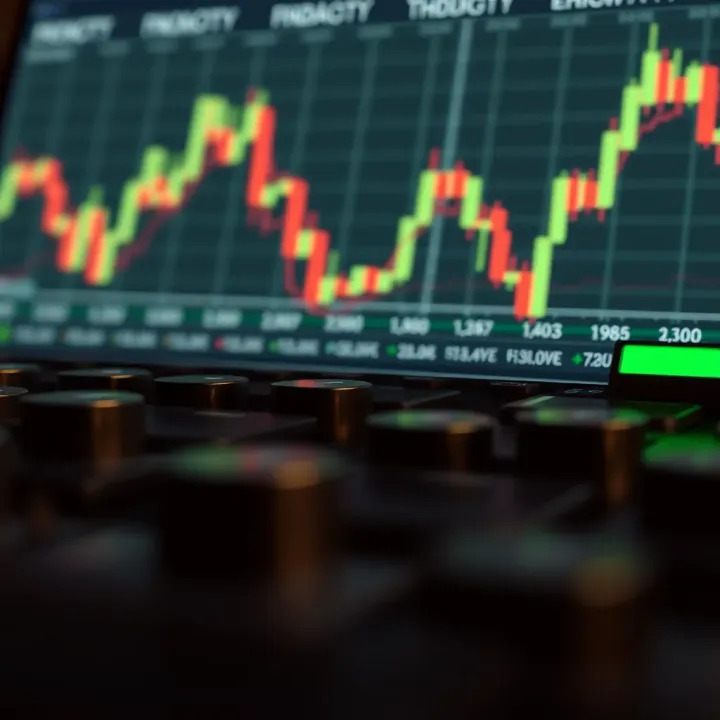
📈 Learn how derivative trading works in Kenya—covering types, benefits, risks, and local rules. Expand your investment tools today! 🇰🇪
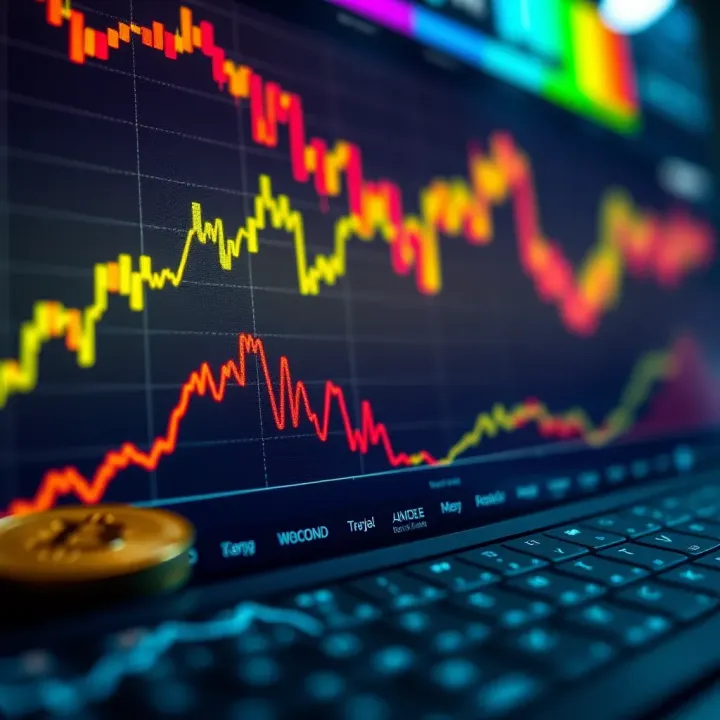
Explore practical tips for Kenyan investors on cryptocurrency trading 📈 Understand key strategies, risks, and local regulations to trade confidently in Kenya 🇰🇪
Based on 14 reviews