

Robot Trading in Financial Markets: What Kenyans Should Know
🤖 Explore how robot trading automates investment decisions in Kenyan financial markets, benefits traders with speed and precision, challenges, plus future trends to watch.
Edited By
Matthew Reed
Volatility indices offer a snapshot of how much market prices are expected to swing over a set period. Instead of watching individual stocks or commodities, these indices give you a broader view of market mood — whether calm or jittery. For investors and traders in Kenya, understanding volatility indices is especially helpful when thinking about risk and timing trades.
Typically, these indices derive from options prices on major stock indices like the S&P 500. For instance, the well-known VIX index shows the anticipated fluctuations of the US market in the coming 30 days. While Kenya’s NSE does not yet have a dedicated volatility index, the concept remains relevant since local stocks react to global shifts reflected in international volatility measures.
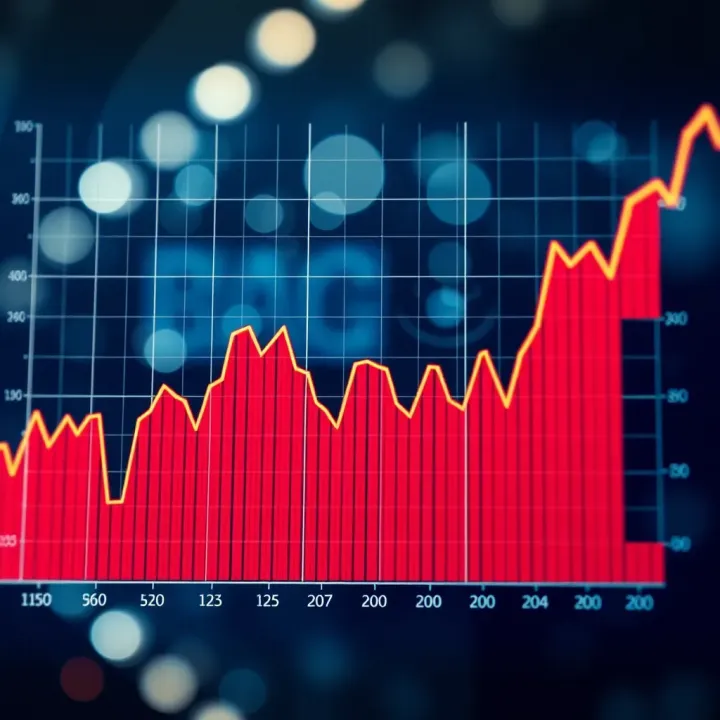
Volatility indices act like a barometer, measuring fear or confidence among market participants. When the index spikes, it usually signals higher uncertainty or risk ahead.
Measure market expectations: They’re based on how options traders price risk for the future, rather than past price moves.
Offer timely signals: Sudden rises in volatility indices often coincide with increased market stress or big news events.
Help manage risk: Kenyan investors can use these indices indirectly by monitoring global markets to protect their portfolios.
Support trading strategies: Some traders even use volatility indices for hedging, speculation, or arbitrage.
For example, if the VIX suddenly jumps, it often means investors expect bigger price changes ahead. Kenyan fund managers or individual traders can interpret this as a cue to adjust asset allocation or hedge against potential losses.
In short, appreciating how volatility indices work arms you with a sharper toolkit for navigating unpredictable markets. It shifts focus beyond price charts to what the market feels or fears, which is just as valuable when planning investments or forex trades.
This article will unpack how these indices function, their impact on global and local markets, and practical tips for Kenyan investors eager to stay ahead of risks and seize opportunities.
Volatility indices capture market expectations about how much prices are likely to fluctuate over a certain period. In other words, they give investors and traders a snapshot of anticipated market uncertainty or risk. Understanding what these indices represent helps in making more informed decisions, especially when planning risk management or investment strategies.
Volatility itself is about the speed and size of price changes in financial markets. For example, a share price swinging between KSh 100 and KSh 110 frequently shows higher volatility than one steadily moving from KSh 100 to 102. High volatility often signals uncertainty or fear among investors, whereas low volatility suggests a stable market mood.
Many Kenyan investors experience this indirectly during times when the NSE 20 share index moves sharply up or down within days, affecting portfolio values quickly. This unpredictability influences how much risk people are willing to take.
Volatility indices act like barometers for market risk by aggregating investor expectations from options prices. These indices translate complex market data into a single figure, reflecting how much fluctuation traders expect. For instance, when the VIX spikes, it usually indicates that traders foresee bigger price swings ahead, hinting at caution or panic.
For portfolio managers, this helps adjust asset allocations—shifting funds from riskier stocks to safer options like bonds or cash equivalents when volatility trends upwards. It acts as an early warning, guiding risk control and strategy tuning.
The VIX is the most well-known volatility index, measuring expected 30-day volatility of the US S&P 500. Nicknamed the ‘fear gauge,’ it tends to rise when investors get nervous about stock market declines. For instance, during global shocks like the 2008 financial crisis, the VIX hit record highs as uncertainty peaked.
Though it tracks US markets, Kenyan investors watch the VIX closely because of the interconnectedness of global markets. Big swings in the VIX can signal that international risk appetite is dropping, which may eventually affect Nairobi's market.
Apart from the VIX, countries with active stock markets often have their own volatility indices, such as the VSTOXX in Europe or the Nikkei Volatility Index in Japan. These play similar roles, offering market-specific risk sentiment.
Kenyan investors interested in global diversification might monitor these indices alongside the VIX to get a fuller picture of worldwide market moods.
Currently, Kenya lacks a dedicated volatility index for its stock market, meaning that risk measurement relies on more general tools or foreign indices. This gap can make it harder for local investors to get a clear read on market uncertainty specific to the Nairobi Securities Exchange (NSE).
Without a local volatility metric, portfolio managers and traders in Kenya often depend on NSE share price movements and economic news to gauge risk. Establishing a Kenyan volatility index would improve local risk assessment by providing faster, more relevant insights tailored to the market's dynamics.
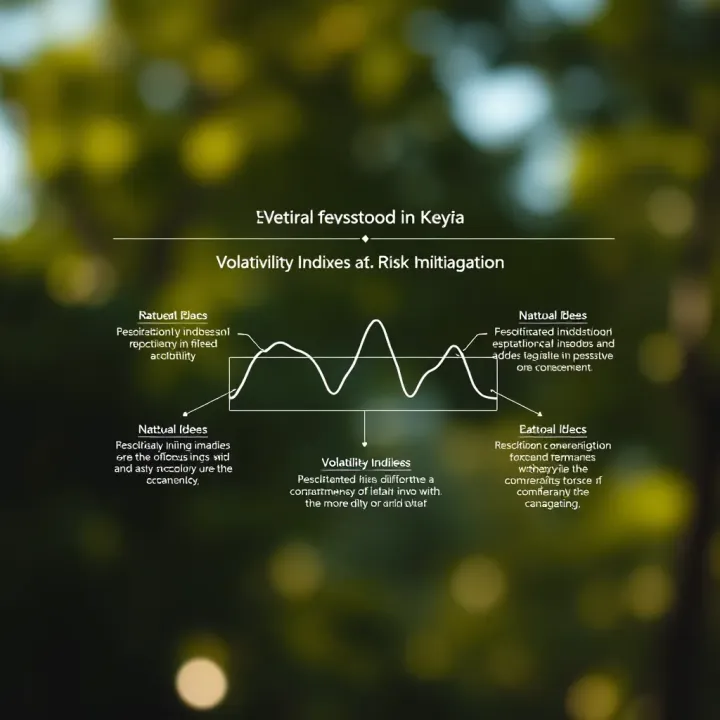
Volatility indices transform complex market uncertainty into actionable insight, helping investors and managers anticipate risk and adjust strategies accordingly.
Understanding how volatility indices are calculated helps investors grasp what these numbers truly represent and how to use them effectively. These indices don’t just appear out of thin air; they emerge from the prices of option contracts traded in the market. The calculation process reflects market sentiment and expectations about future price swings.
Option pricing basics: Options give traders the right, but not the obligation, to buy or sell an asset at a set price before a certain date. The cost of these options depends on several variables, one of which is the expected volatility of the underlying asset. For example, if investors expect the price of a stock to fluctuate wildly, the option prices tend to be higher; that’s because uncertainty raises the premium for insurance against big price moves.
In the context of volatility indices, the prices of many options across different strike prices are used to estimate how volatile the market expects the underlying asset to be. This approach allows the index to reflect future risk and not just past realised changes.
Implied volatility versus realised volatility: Implied volatility is drawn from option prices and indicates the market's forecast of future volatility over a specific period. Realised volatility, on the other hand, measures the actual price changes seen historically. For Kenyan investors, understanding the difference is key. Implied volatility can spike on fears or rumours even before any real damage occurs, much like how Nairobi matatu fares spike during sudden rains before traffic delays happen. Meanwhile, realised volatility gives the cold, hard facts after the event.
Recognising these distinctions helps investors decide when to react to market fear and when the risk may have already been priced in by historical moves.
Weighted averages of option volatilities: To build a meaningful volatility index, it’s not enough to average all option volatilities equally. The calculation assigns more weight to options nearer to the current market price and those with higher trading volumes. This weighting reflects the most relevant information from the market’s active participants. Think of it as listening more carefully to the ‘busy buses’ rather than the quiet side streets when gauging public mood.
This method smooths out the calculation, ensuring the index reflects realistic expectations rather than being skewed by outliers or thinly traded contracts.
Time horizons considered in calculation: Volatility indices usually represent an expected level of fluctuation over a fixed period, commonly 30 calendar days. The calculation combines option data that expire at different times and then interpolates to this standard horizon. This approach allows consistent comparison of volatility indices over time.
For instance, traders in Nairobi SEEDEX futures might consider how volatility changes over the next month to manage their portfolios, so having a uniform 30-day forecast helps align their strategies.
Volatility indices use a blend of option prices and carefully weighted maths to mirror market expectations of future price swings over a set time frame. Understanding this process is key for investors wanting to interpret or trade based on these indices.
In summary, the calculation of volatility indices hinges on option pricing models, distinguishing implied from realised volatility, applying weighted averages, and standardising the time frame to 30 days. These technical steps turn market chatter into a useful gauge for financial decision-making.
Volatility indices offer a snapshot of market mood, reflecting investor anxiety or confidence at any given moment. They provide essential insights into how investors perceive risk, which can guide decisions on trading and portfolio management. These tools help market participants understand the likelihood of sharp price movements, helping them navigate uncertainties effectively.
Risk perception by investors is often mirrored in volatility indices like the VIX, known as the ‘fear gauge’. When the VIX rises sharply, it signals that investors expect bigger swings in stock prices, usually linked to increasing uncertainty or negative news. For instance, during periods of political tension or economic shocks, market players tend to become cautious, pushing volatility indices higher. In Kenya, although there is no local volatility index, traders watching global indices can still gauge risk appetite, which often spills over into local markets, especially for stocks listed on the Nairobi Securities Exchange (NSE).
Relationship with market downturns and rallies is quite direct. Generally, spikes in volatility indices coincide with market downturns, as panicked selling increases price swings. Conversely, falling volatility signals calmer markets or bullish sentiment, often seen during sustained rallies. For example, during the global market crash triggered by the COVID-19 pandemic in March 2020, the VIX jumped to historical highs while many stock markets tanked. Meanwhile, as recovery set in, volatility eased. Kenyan investors tracking such indices can better time entry and exit points or hedge their exposure in anticipation of market moves.
Risk management strategies benefit greatly from volatility indices. Portfolio managers use them to adjust hedging techniques, such as buying options or diversifying assets, to cushion against expected turbulence. Kenyan investors applying these strategies might combine local equities with safer government bonds or foreign assets during times of high volatility, reducing potential losses. Volatility data therefore acts as a warning sign, prompting protective shifts before markets become unstable.
Adjusting asset allocation based on volatility expectations is a practical way to align investments with market risk conditions. When expected volatility is low, investors may increase equity holdings to chase growth, while high forecasted volatility encourages a tilt towards fixed income or cash equivalents. For example, an investor managing a balanced portfolio may reduce exposure to NSE blue-chip stocks when volatility indices suggest upcoming turmoil, reallocating funds to more stable sectors or money-market instruments. This approach helps preserve capital while keeping some growth potential intact.
Using volatility indices as part of market analysis equips Kenyan investors and fund managers with a clearer understanding of when to be cautious or adventurous, improving decision-making amid the complex world of financial markets.
Volatility indices provide critical insights for traders and investors looking to understand market uncertainty and adjust their strategies accordingly. By tracking expected price fluctuations, these indices help participants anticipate market sentiment swings and potential risks, especially during turbulent conditions. This section explores specific investment products tied to volatility and practical strategies that Kenyan investors can use.
Volatility futures and options are derivative contracts that allow investors to trade based on expected future market volatility. Volatility futures are agreements to buy or sell a volatility index at a set price on a future date, offering a direct way to speculate or hedge market uncertainty without owning the underlying asset. For instance, the VIX futures let traders position themselves ahead of events expected to shake the market, such as central bank announcements or geopolitical tensions.
Parallel to futures, volatility options provide contracts where investors hold the right—but not obligation—to buy or sell volatility at a predetermined price. These options serve as tools to protect portfolios from sudden spikes in price swings or to speculate on changes in market anxiety. Their pricing is complex, reflecting both the expected magnitude and speed of market moves, so understanding them requires some experience.
Exchange-traded products (ETPs) linked to volatility indices offer simpler access for investors wanting exposure to volatility without dealing with the complexities of futures or options. These include exchange-traded funds (ETFs) and exchange-traded notes (ETNs) that either track the volatility index directly or use derivatives to replicate its movements. Products like the iPath S&P 500 VIX Short-Term Futures ETN have global popularity but are mostly unavailable in Kenya. However, Kenyan investors partnering with international brokers may access such products to gain portfolio diversification or hedge against local market shocks.
Hedging against market risk using volatility tools can help investors protect themselves from downside risks in volatile times. For example, if a Kenyan equity investor senses rising global uncertainties that might depress stock prices, buying volatility futures or options offers a sort of insurance. When markets fall and volatility spikes, gains from the volatility instrument can offset losses in equities. This approach is particularly useful given Kenya’s integration with global markets, where external shocks can impact NSE-listed stocks.
On the other hand, speculating on market movements via volatility instruments involves using volatility products to profit from anticipated shifts in investor fear or complacency. If you expect an upcoming event, say political elections or major economic reports, to unsettle markets, you might buy volatility options to gain from the expected jump in market anxiety. These speculative plays are riskier and require careful timing and understanding since volatility can remain subdued for long periods before suddenly spiking.
Trading volatility instruments demands a firm grasp of their behaviour and risks. For Kenyan investors, starting with simpler products and gradually advancing to futures and options is advisable to manage exposures effectively.
Overall, volatility trading and investment open new avenues for managing risk and capitalising on market dynamics, complementing traditional Kenyan equity and fixed income portfolios.
Volatility indices provide valuable insight into market expectations but come with certain limitations and risks that investors and traders must understand. Misinterpreting these indices or relying too heavily on them can lead to poor decision-making, while trading volatility products carries unique challenges and potential for losses.
False signals and market noise often complicate the reading of volatility indices. These indices may spike or dip due to short-term events or rumours that do not affect long-term market trends. For example, an unexpected political announcement in Kenya might cause the VIX or global volatility measures to jump temporarily without signalling a sustained market downturn. Relying solely on such spikes can lead investors to make hasty moves, like selling off shares prematurely.
Moreover, volatility spikes tend to be temporary. Volatility indices frequently show sharp increases during crisis moments—like a sudden currency devaluation or a global economic scare—but markets usually calm down after initial shocks. Kenyan investors who panic during these spikes without factoring in the temporary nature risk missing out on recovery opportunities. It’s practical to combine volatility data with other indicators and fundamental analysis rather than viewing it as a standalone market truth.
Volatility products like futures, options, and exchange-traded notes are often complex and not straightforward. Understanding how implied volatility impacts prices requires in-depth knowledge. Mistaking the direction or duration of volatility shifts can quickly erode capital. For instance, buying VIX futures expecting a long-term rise when volatility instead stabilises can lead to losses. Kenyan traders should approach such products cautiously and seek education or professional advice before engaging.
The potential for significant losses in volatility trading is real and often underestimated. These products can amplify market swings, especially given their leverage nature. A wrong bet on volatility can wipe out substantial portions of an investment within days or hours. This high-risk environment means only those with strong risk management and capital buffers should participate. For many Kenyan investors, focusing on volatility as a supplementary market measure rather than a direct trade opportunity may be safer.
Volatility indices offer insight but are no crystal balls. Wise investors use them alongside other tools and maintain caution with volatility-based products.
Understanding these limitations ensures Kenyan investors avoid common pitfalls and use volatility indices effectively without exposing themselves to unnecessary risks.
Using volatility measures alongside data from the Nairobi Securities Exchange (NSE) helps investors get a clearer picture of market risks. While NSE provides price and volume information of equities and bonds, adding volatility metrics highlights the expected fluctuations in price, helping investors make smarter decisions. For example, if volatility indicators signal rising uncertainty in global markets, Kenyan investors can anticipate potential ripple effects on NSE-listed shares, particularly export-oriented firms.
A practical approach is to observe periods when volatility spikes globally and correlate those with NSE market movements. This helps in adjusting portfolios ahead of downturns or taking advantage of short-term price swings. Local fund managers may also use volatility data to complement traditional risk parameters such as beta and Sharpe ratios, improving the robustness of their risk-return analysis.
Enhancing risk assessment in Kenyan portfolios relies heavily on recognising not just past price changes, but forward-looking risk signals. Volatility indices provide this by reflecting market sentiment about the future. Incorporating these metrics enables a more proactive stance in risk management. For instance, during times of political tension or economic uncertainty in Kenya, volatility metrics can serve as early warning signs to rebalance asset allocation or increase cash holdings.
Such integration is particularly useful for diversified portfolios that combine equities, fixed income, and alternative assets. Understanding volatility trends helps traders and portfolio managers decide when to hedge or increase exposure. This can reduce unexpected losses during turbulent times, making portfolios more resilient.
Accessing reliable information about volatility indices has become easier with local platforms offering market data and analysis. Platforms like the NSE website and financial news outlets provide updates on global volatility measures, which Kenyan investors can use for context. While there isn't a widely followed local volatility index yet, international indices like the VIX are regularly reported and provide valuable insight.
For those seeking more in-depth data, subscription-based financial services and brokers often offer volatility analytics tools bundled with NSE market information. This allows investors and traders in Nairobi and other urban centres to monitor volatility indicators alongside local market data in real time.
Training and awareness about volatility concepts among Kenyan investors are crucial for meaningful use of these tools. Organisations such as the CMA (Capital Markets Authority) and NSE conduct workshops and seminars to help investors grasp how volatility affects asset prices and portfolios. Local universities and financial training institutions are also including risk management modules that cover volatility measures as part of their finance curriculum.
These educational efforts help demystify volatility for retail investors and small fund managers who may otherwise find volatility products complex. More awareness equips Kenyan investors with practical strategies—such as using volatility signals to time entry and exit points or hedge downside risks—thus improving overall market participation.
Volatility indices are not just abstract numbers; for Kenyan investors, they are practical tools that, when understood and applied correctly, can enhance decision-making and portfolio resilience in an ever-changing market environment.
🤖 Explore how robot trading automates investment decisions in Kenyan financial markets, benefits traders with speed and precision, challenges, plus future trends to watch.
📈 Discover how derivatives work in finance, their role in managing risk and boosting investments, plus their impact on Kenya’s financial markets and regulations.
📊 Understand the Commitment of Traders Report, how it impacts Kenyan markets, and learn strategies to make informed trading decisions with clear insights.

Explore how app derivatives shape Kenya's fintech scene 📱💹 Understand trading risks, regulations, and their role in smart investment strategies.
Based on 12 reviews