
Best Trading Apps for Kenyans: A Practical Guide
📱 Looking for the best trading app in Kenya? Discover top choices, key features, and safe trading tips to boost your mobile trading experience today!
Edited By
Sophie Bennett
In Kenya, the rise of mobile money, especially M-Pesa, has transformed how people handle everyday transactions. Recently, this convenience has extended into the world of trading through various apps that integrate directly with M-Pesa. This means you can buy and sell stocks, forex, and even cryptocurrencies right from your phone without needing a bank transfer or cash withdrawal.
The integration of trading apps with M-Pesa is a practical solution for Kenyan investors and traders looking for faster, more accessible ways to participate in financial markets. These apps link your trading account to your M-Pesa wallet, allowing instant deposits and withdrawals. This removes traditional delays and extra charges often involved in bank-to-bank transfers.
Many of the popular trading apps provide straightforward processes for linking your M-Pesa number. For example, when funding a trading account, you initiate an M-Pesa payment using the app’s till number or paybill. Once confirmed, the funds reflect immediately in your trading balance, ready for use. When you sell assets, you can withdraw profits directly to M-Pesa, making it convenient to reinvest or use the cash.
Integrating M-Pesa with trading platforms cuts down on paperwork and time, offering a simple, efficient way to join Kenya’s growing investment scene.
Speed: Transactions through M-Pesa are nearly instant, enabling quick market moves and timely trades.
Ease: Most Kenyans already have M-Pesa and know how to use it, meaning less hassle with learning new payment systems.
Security: M-Pesa’s PIN and transaction confirmations add a layer of protection for trading deposits and withdrawals.
Stocks: Investing in NSE-listed companies using apps connected to M-Pesa is now more accessible.
Forex: Currency trading benefits from swift M-Pesa funding and withdrawals, suiting the fast-moving forex market.
Cryptocurrencies: Buying and selling Bitcoin and other digital coins through apps linked to M-Pesa is increasingly common, with local platforms adapting to this trend.
For Kenyan traders and investors, using trading apps integrated with M-Pesa bridges the gap between traditional financial services and modern investment tools. It’s proof that local mobile money systems can support sophisticated financial activities, driving broader participation across the country.
Integration between trading apps and M-Pesa is at the heart of Kenya's mobile trading boom. M-Pesa, as the dominant mobile money platform, enables easy, fast, and secure cash flows between users and trading platforms. For traders and investors, this connection removes barriers to entry, allowing unfussy deposits and withdrawals without the need for bank accounts or cards. The practical benefits range from quick funding of stock or forex accounts to immediate access to profits via mobile money.
M-Pesa handles millions of transactions daily, from buying airtime loading to paying for utilities and shopping. It’s woven into the fabric of everyday Kenyan life. This ubiquity makes it a natural choice for trading apps looking to reach a vast user base comfortable with mobile money payments. Rather than relying on traditional bank transfers that might take days and incur higher costs, M-Pesa offers instant, low-cost transactions directly from phones.
Why does this matter? Because many traders, especially those in rural areas or without formal banking, can participate conveniently without worrying about paperwork or bank charges. M-Pesa essentially acts as a bridge connecting cash-based users to digital financial markets.
Trading platforms in Kenya must accommodate popular payment options, and M-Pesa’s dominance means it’s a must-have for customer retention and growth. Without M-Pesa, apps would miss the bulk of Kenyan users who prefer or only have access to it. This integration also assures users of security and reliability since M-Pesa is regulated under the Communications Authority of Kenya and backed by Safaricom's robust network.
Moreover, M-Pesa’s extensive agent network helps in cashing out profits and managing funds easily. Traders can deposit money from anywhere, even remote villages, and withdraw earnings just as smoothly. So, trading apps that integrate M-Pesa meet market demand and create smoother customer experiences that build trust.
M-Pesa Deposits and Withdrawals
Most trading apps allow users to fund accounts using M-Pesa Paybill or Till numbers. Depositing involves sending the desired amount from one’s M-Pesa wallet straight into the trading app account. Withdrawals work in reverse, with profits sent back to the M-Pesa account instantly or within a few hours depending on the platform.
This simplicity reduces waiting times significantly—no bank queues or paperwork. For instance, a forex trader in Kisumu can send KSh 10,000 via M-Pesa Paybill to a platform and start trading within minutes.
Real-time Payment Confirmations
Instant alerts are key in fast-moving markets. M-Pesa integration allows real-time confirmation of deposits and withdrawals directly on the trading app. Users see their balances update without delay, helping them seize timely trading opportunities.
Consider a stock trading app where a user deposits cash after market opening. The moment M-Pesa confirms payment, the trade account reflects the funds, letting the trader act promptly. This reduces frustration and increases confidence in the platform.
Mobile Money and App Account Linking
Linking an M-Pesa number to a trading account streamlines transactions further. Instead of manual deposits each time, some apps allow auto-debit or easy transfers from the linked M-Pesa wallet.
This linking often requires user consent and secure authentication, helping prevent fraud or incorrect transactions. By keeping accounts connected, traders avoid typing errors in Paybill numbers or delays, making regular trading activities smoother and hassle-free.
Proper M-Pesa integration in trading apps not only opens access but also supports a trustworthy, efficient trading environment suited to the Kenyan market's unique cash-to-digital transition.
By connecting seamlessly with M-Pesa, trading apps empower more Kenyans to participate actively in financial markets, creating a more inclusive trading ecosystem.
Trading apps that integrate with M-Pesa have opened up easier access to financial markets for many Kenyans. These apps allow users to deposit and withdraw funds seamlessly using their mobile money wallets, removing traditional barriers like bank accounts or long processing times. In Kenya’s bustling digital economy, this connectivity makes trading more accessible and convenient for everyone, from casual investors to professional traders.
Stock trading platforms that support M-Pesa typically offer user-friendly interfaces tailored for mobile use. Take Nairobi Securities Exchange (NSE) online brokers like Bamboo or Chaka, which allow direct funding via M-Pesa. This permits investors to quickly top up their accounts to buy shares without delays. These platforms often provide real-time market data, portfolio tracking, and even educational materials, serving both new entrants and savvy traders.
What stands out is the ease of funding and account management through mobile devices. Instead of visiting banks or using cards, users perform deposits through straightforward M-Pesa paybill or till number transactions. This reduces friction and encourages higher participation in stock trading across Kenya.
Fees on stock trading platforms linked with M-Pesa tend to be competitive but vary between brokers. Usually, there are small charges for M-Pesa deposits, often in the range of KSh 10 to KSh 50 per transaction, depending on the amount. Broker fees for trades themselves might hover around 0.05% to 0.1% of the trade value, often including government taxes.
Transaction speeds are a major plus here. M-Pesa deposits reflect in accounts almost instantly, allowing traders to seize market opportunities without waiting. Withdrawals back to M-Pesa also happen quickly, often within a few minutes to a couple of hours, compared to bank transfers which can be slower.
Several forex brokers serving Kenya have adopted M-Pesa as a payment method. Apps like XM and Exness support M-Pesa funding, which suits Kenyan traders who prefer fast, local payment methods. These apps give access to currency pairs like USD/KES, EUR/USD, and JPY/USD, appealing to those looking to take advantage of forex volatility.
Ease of access and the ability to fund accounts quickly using M-Pesa reduce barriers for forex trading. Traders appreciate that they don’t need complicated bank procedures, which can delay margin calls or limit timely trading during market volatility.
Cryptocurrency trading apps like Binance and Yellow Card now support M-Pesa payments for buying crypto assets. This integration is essential because many Kenyans use M-Pesa as their main money storage and transaction tool. M-Pesa funding lets them buy bitcoins, Ethereum, or stablecoins like USDT directly from their mobile wallets.
Apart from local convenience, these platforms offer strong security measures and easy conversion between fiat and crypto. The flexibility attracts both novice and experienced crypto traders, particularly for quick deposits and withdrawals.
Forex and crypto apps differ in the currencies they support and their spread costs, which affect how much traders pay to enter or exit positions. For forex, platforms like IC Markets offer tight spreads on major pairs, sometimes as low as 0.1 pips, while others might offer higher spreads for less popular currencies.
In crypto trading, platforms supporting M-Pesa usually allow transactions in major coins plus shilling-backed stablecoins. Spread costs vary but typically range between 0.1% and 0.5%, depending on market liquidity and currency pair.
Choosing the right app involves balancing supported currencies, trading fees, and payment convenience. For Kenyan traders, apps that combine quick M-Pesa funding, low fees, and access to relevant financial instruments offer the best practical value.
By focusing on these factors, you can pick trading apps that really fit your style and financial goals without unnecessary hassles or hidden charges.
Using M-Pesa to fund and withdraw from trading apps has become a lifeline for many Kenyans engaging in stocks, forex, or cryptocurrency trading. The convenience and wide acceptance of M-Pesa simplify moving money between your mobile wallet and trading platforms. This ease of transfer makes funding your trading account quick and seamless, enabling you to act fast when markets shift and opportunities pop up.
Firstly, most trading apps require that you link your M-Pesa number to your trading account to enable smooth deposits. This usually involves entering your phone number during registration or in your profile settings and verifying it with a code sent via SMS. Linking ensures funds go directly into your trading wallet without hassle, reducing manual errors like typing the wrong number.
Depositing funds through M-Pesa tends to be straightforward but safety is key. Always confirm you’re sending money to the correct Paybill or Till number provided specifically by the trading app. Avoid sharing your M-Pesa PIN with anyone and double-check transaction details before confirming the payment. Keeping your phone’s security tight and using official apps reduces risks of fraud or phishing.
Deposits made via M-Pesa to trading apps usually process instantly or within a few minutes, allowing traders to jump into action quickly. In rare cases, delays might occur due to network issues or app server loads, but such waiting times seldom stretch beyond an hour. Prompt notifications confirm your deposit is successful, so you know when your funds are ready.
Withdrawing your gains is just as important as funding your account. Most apps provide a simple withdrawal option where you specify the amount to transfer back to your linked M-Pesa number. After submitting the request, the app processes it, sending your money straight to your mobile wallet. Some platforms may require a verification step for large withdrawals to protect your account.
Kenyan trading apps usually have withdrawal limits set for daily or monthly transactions—often influenced by regulations or the app’s policies. Additionally, expect small charges either from M-Pesa for the mobile money transfer or the trading platform’s transaction fees. For example, withdrawing KSh 50,000 might attract a charge ranging from KSh 50 to KSh 150, depending on the provider.
To avoid unnecessary waiting, always keep your KRA PIN and identity information updated in your trading app profile, as this is commonly needed for withdrawal approval. Timing withdrawals during peak M-Pesa service hours (usually 7 am to 9 pm) also helps, since transfers initiated late at night may pause until the next business day. Maintaining good internet connection during withdrawal requests safeguards against incomplete or duplicated instructions.
Efficiently using M-Pesa for your deposits and withdrawals can save you time and reduce costs, ensuring you stay agile and in control of your trading activities in Kenya’s dynamic markets.
In Kenya's fast-growing digital trading scene, security is never something to take lightly. Using M-Pesa with trading apps offers convenience, but the integration also brings risks if proper safeguards aren't in place. Ensuring you choose trustworthy platforms protects your funds and personal data from fraud or theft. This section breaks down how to spot legitimate trading platforms and practical ways to secure your M-Pesa and trading accounts.
Regulatory oversight in Kenya
Kenya's Capital Markets Authority (CMA) regulates most trading platforms, especially those handling stocks, forex, or derivatives. A legitimate trading app should be registered with CMA and comply with its standards. This means they have met baseline requirements on capital adequacy, client fund segregation, and operational transparency. You can often verify registration details directly from CMA publications or trusted financial websites.
Platforms under regulatory oversight tend to offer better consumer protection, including dispute resolution and transparent fee structures. For example, platforms like EGM Securities and CMC Markets Kenya operate within CMA regulations, giving traders extra confidence when linking their M-Pesa accounts.
User reviews and reputation
Checking feedback from other users is a practical way to assess reliability. Look for consistent comments on app performance, deposit and withdrawal speeds, and customer support responsiveness. A trading app with thousands of positive reviews that mention smooth M-Pesa transactions suggests a well-established operation.
Don't just focus on star ratings; read through user experiences to spot recurring complaints or praise. For instance, a pattern of delayed withdrawals or unexplained charges in reviews is a red flag even if the app has regulatory approval. Platforms with active user communities on social media or forums often provide more immediate warnings about issues.
Recognising potential scams
Scammers often set up fake trading apps promising sky-high returns to lure users. These may not have any regulatory approval and rely on pushing M-Pesa deposits quickly, making it hard to recover funds once lost. Common warning signs include unsolicited messages promoting guaranteed profits, poor or no website presence, and requests for upfront fees beyond normal transaction costs.
Be wary of platforms that lack clear contact information, avoid answering questions about compliance, or pressure you to increase deposits hastily. Legit apps usually provide user education and disclaimers about risks, which fake ones tend to skip.
Strong password and PIN practices
Creating unique, complex passwords for your trading app accounts is the first line of defence. Avoid using easily guessed words like your name or birthdate. Combine letters, numbers, and symbols, and change passwords regularly. Consider a password manager to keep track without repeating passwords across sites.
Similarly, protect your M-Pesa PIN by never sharing it or writing it down where others can find. M-Pesa’s system locks you out after multiple incorrect attempts, so keep your PIN secure to avoid lockouts or unauthorised access.
Avoiding phishing and fraud
Phishing schemes to steal M-Pesa or trading app login details are common. These often come as SMS or email messages claiming to be from Safaricom, your trading app, or even KRA asking you to confirm sensitive information.
Always confirm official messages by contacting customer support directly through the app or official numbers. Never click on suspicious links or provide your PIN, OTP (one-time password), or passwords to anyone. If an offer looks too good to be true, it probably is.
Using app-based security features
Modern trading apps and M-Pesa both offer extra layers of protection, such as two-factor authentication (2FA). This means a login not only requires a password but also a temporary code sent to your phone. Activating 2FA reduces the risk of unauthorised access even if your password is compromised.
Some apps allow biometric logins using fingerprints or facial recognition, which add convenience and security. Always enable such features where available. Also, regularly update your apps as developers fix security flaws and improve protection against emerging threats.
Staying vigilant about security details helps safeguard your investments and gives you peace of mind while trading through M-Pesa-enabled apps. Remember, a secure trading environment starts with choosing the right platform and protecting your personal credentials rigorously.
Using M-Pesa to fund and withdraw from trading apps gives Kenyan traders a big advantage, but getting the most out of it requires a bit of know-how. From handling transaction costs smartly to timing your payments and keeping records tidy, these tips help you avoid common pitfalls and boost your efficiency.
M-Pesa applies fees on sending and withdrawing money, which can sneakily eat into your trading profits. For example, transferring KSh 50,000 to a trading app might attract a fee that depends on the amount, usually a fixed rate plus a percentage for bigger sums. This means it’s wise to plan deposits carefully—too many small transactions add up in fees, while a few well-timed larger transactions save you money.
Besides transaction charges from M-Pesa, some trading apps also add their own fees for deposits or withdrawals. Always check these before trading. Knowing the full cost means you won’t be caught off guard when you try to cash out.
To keep your costs low, pick trading platforms that openly state their fees and offer reasonable rates. Apps that partner with Safaricom sometimes reduce or waive M-Pesa charges, so look out for those deals. Also, some apps encourage using bulk deposits instead of many small ones, which reduces the number of fees.
Some brokers have ‘no commission’ trades but might adjust spreads to cover costs. Compare these carefully with platforms charging explicit fees. Lower total costs give you more margin to play with, especially important in forex and cryptocurrency trading where spreads are significant.
Markets have regular active hours where liquidity is higher, meaning trades execute faster and price spreads tighten. In Nairobi Securities Exchange (NSE), for instance, trading usually runs between 9:30 am and 3:00 pm EAT. Depositing funds before these hours ensures you can use that money right away instead of waiting for the next day.
For cryptocurrencies and forex, which trade 24/7, focus on times when global markets overlap, such as when London and New York sessions run concurrently. This often provides better price stability and trading opportunities. Planning your deposits around those hours enhances your chances for timely trades.
Both M-Pesa and trading platforms perform system maintenance during some off-hours or bank holidays, delaying transactions. In Kenya, deposit delays notably happen around public holidays like Jamhuri Day or Madaraka Day.
You should schedule transfers and withdrawals on regular business days and early enough to bypass possible queues or system backups. For example, initiating a withdrawal late on a Friday might only clear on Monday, tying your funds longer than needed.
Suggestion: Mark Kenyan bank holidays on your calendar alongside trading sessions to dodge timing issues that can cost you dearly.
Trading apps often generate detailed reports showing deposits, trades, withdrawals, and fees in one place. These summaries are crucial for spotting discrepancies, understanding your real returns after costs, and preparing for tax obligations.
Make it a habit to review these reports regularly, say monthly, rather than waiting till the end of the year. This keeps you in control and helps quickly spot any unauthorised activity or errors in your account.
Cross-check your M-Pesa transaction history with your trading app’s records every few weeks. This reconciliation confirms that all deposits, withdrawals, and fees match up. It also helps prevent double charges or missed payments, which occasionally happen due to network or system glitches.
You can get your M-Pesa statements via the Safaricom app or *334# menu. Storing these electronically makes for easier reference and sharing if you need to raise any disputes with either Safaricom or your trading platform.
By managing costs smartly, timing transfers thoughtfully, and keeping good records, you strengthen your trading setup significantly. These simple steps can save KSh, reduce stress, and keep your trading journey smooth with M-Pesa as your trusted payment partner.
📱 Looking for the best trading app in Kenya? Discover top choices, key features, and safe trading tips to boost your mobile trading experience today!
📱 Discover how trading apps are reshaping Kenya’s investment scene! Learn to pick the best app, manage risks, and trade stocks, forex & commodities safely.
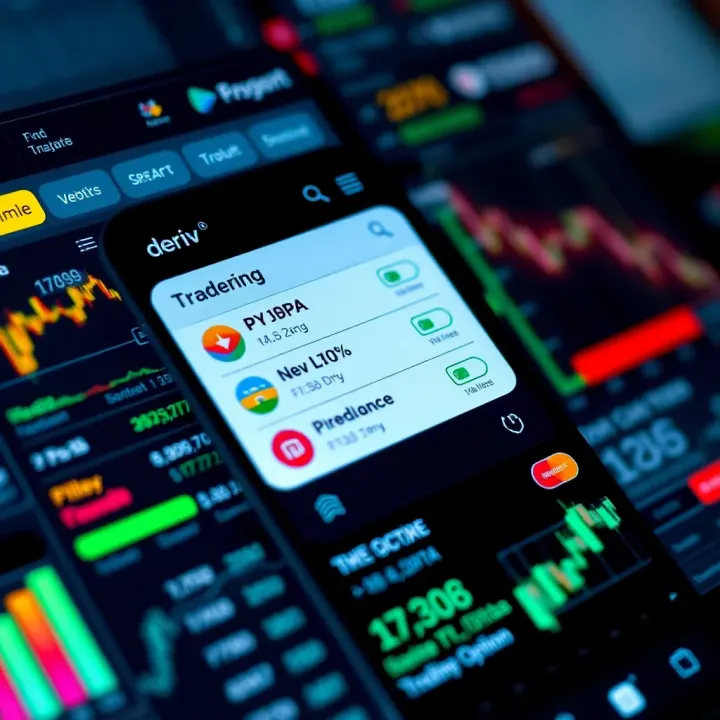
Explore the Deriv trading app 📈 tailored for Kenyan traders🇰🇪! Learn setup, trading types, secure deposits, and smart tips to boost your trading success.

Master Deriv TradingView for smarter trades in Kenya! Learn setup, charting tools, and market strategies to boost your trading confidence 📈🇰🇪.
Based on 9 reviews