
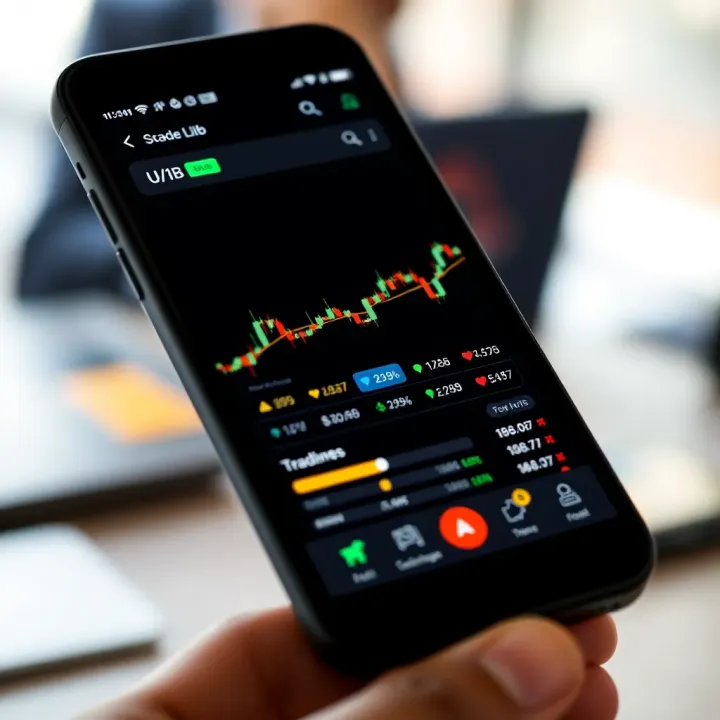
Best Trading Apps for Kenyans: A Practical Guide
📱 Looking for the best trading app in Kenya? Discover top choices, key features, and safe trading tips to boost your mobile trading experience today!
Edited By
Charlotte Green
Trading apps have reshaped how many Kenyans invest in financial markets, bringing opportunities that were once limited to brokers and institutions right to their mobile devices. Today, with just a smartphone and an internet connection, you can trade shares listed on the Nairobi Securities Exchange (NSE), foreign exchange (forex), or commodities like gold and oil.
The convenience of trading apps goes beyond mere accessibility — they equip investors with real-time market data, news updates, and analytical tools to make informed decisions. For example, apps like EGM Securities and Absa Trade provide tailored experiences for Kenyan traders, integrating local payment methods like M-Pesa for swift deposits and withdrawals.

Mobile trading is no longer a luxury but an essential tool for investors who want speed and flexibility. However, not all apps offer the same features or security levels.
When choosing a trading app, consider aspects such as regulatory approval by the Capital Markets Authority (CMA), user interface simplicity, customer support responsiveness, and trading fees. Some apps specialise in forex trading with advanced charting tools, while others focus on stocks or commodities.
For instance, Zedx and Trove offer access to both local and international markets, where you can diversify your portfolio from Equities on NSE to foreign stocks in the US or China. Beginners might prefer apps with educational content and simulated trading options to practise without risking real money.
Besides benefits, trading apps come with risks including cybersecurity threats and market volatility. Users should always enable two-factor authentication, keep software updated, and avoid sharing sensitive information. Also, understanding leverage and margin trading is critical to prevent unexpected losses.
In summary, trading apps have democratised investing in Kenya by making it easier and faster. Your choice of app should fit your investment goals, knowledge level, and risk tolerance. With the right tools and precautions, you can tap into Kenya's growing digital economy and seize new trading opportunities right from your mobile.
This guide will help you navigate the trading app options, weigh risks, and sharpen your approach to investing in Kenya's evolving markets.
Trading apps have reshaped investing by putting markets right into the palm of your hand. For Kenyan investors, understanding these apps isn’t just about convenience; it’s about unlocking direct access to stocks, forex, commodities, and cryptocurrencies without needing a physical broker or office. Knowing how these apps work helps you decide which platform suits your trading style and how to manage risk better.
Trading apps are smartphone or tablet software that lets you buy and sell financial instruments directly. Their main purpose is to simplify market participation, giving you live prices, order placements, and account management all on one interface. For example, with an app like EGE Capital or Kenya's own Peacock Capital, you can trade NSE shares from your living room.
These apps typically connect your account to brokers or market exchanges through internet networks, translating your trades into orders in real time. This means faster execution and less paperwork compared to traditional methods.
Most trading apps in Kenya offer access to multiple markets. Stock trading apps focus on shares of companies listed on the Nairobi Securities Exchange (NSE) or other African markets. Forex trading apps let you trade currency pairs such as USD/KES, while commodity apps handle products like gold or oil. Cryptocurrency apps enable trading of digital currencies like Bitcoin or Ethereum, which are gaining popularity despite regulatory uncertainty.
This variety lets investors diversify easily. For instance, while a trader might buy Safaricom shares through a stock app, they can simultaneously speculate on USD/KES movements via a forex platform without switching devices or accounts.
These apps act as a bridge between ordinary investors and the complex world of financial markets. They tap into central exchanges, broker APIs, and sometimes peer-to-peer systems. This connectivity provides up-to-date prices, trade confirmations, and market news, essential for timely decisions.
Without these apps, you’d rely on brokers phoning in orders or having to visit offices, which slows down trading and inflates costs. Using a trading app in Kenya today means you're plugged straight into the heartbeat of market activity.
Apps dedicated to stock trading usually cover NSE-listed companies and smaller regional exchanges. They provide features like portfolio tracking, dividend updates, and access to annual reports. Safaricom’s M-Trade, for example, enables Kenyans to buy shares easily with integrated M-Pesa payment options.
These apps suit investors focused on building wealth through equity ownership. They also promote financial inclusion by lowering entry barriers — investing in shares no longer requires a lot of cash or broker visits.
Forex trading apps allow users to profit (or lose) from currency value changes. Through platforms like FXPesa or XM, Kenyan traders can speculate on pairs involving the shilling against major global currencies. Commodity apps on these platforms let users trade gold, silver, crude oil, and agricultural products.
Such apps often include educational materials and demo accounts, helping users familiarise themselves with the volatile forex market. Since forex trading is high risk, understanding app tools like stop-loss orders becomes vital.
With the rise of cryptocurrencies in Kenya, apps like Binance, Paxful, and BitPesa have become widely used. They offer ways to buy, sell, or hold digital coins directly on smartphones.
Crypto apps are especially popular among younger investors attracted by their 24/7 availability and high volatility. However, given regulatory uncertainties, users must choose well-established platforms to avoid scams and ensure quicker cashouts.
Trading apps bring markets closer, but choosing the right one means knowing the differences between stocks, forex, and crypto platforms — and trusting their connection to real financial markets.
Understanding these basics empowers you to navigate Kenya’s growing digital investment scene confidently and safely.
Trading apps have become a major boost for Kenyan investors by making the markets more approachable and manageable. With mobile technology widely available, investors no longer need to queue at brokers' offices or follow the Nairobi Securities Exchange (NSE) only through newspapers and radio. These apps put the power to trade, monitor, and analyse investments right on your mobile phone.
Trading anytime from mobile phones enables investors to make decisions on the spot, whether during a quick matatu ride or while having nyama choma with friends. This flexibility is vital in volatile markets where prices may swing quickly. For example, a forex trader in Kisumu can react to a currency dip instantly without waiting to get home or to an internet café.

Overcoming location barriers outside Nairobi has opened opportunities for investors in counties like Mombasa, Eldoret, or Kisii, who previously faced limited access to stockbrokers or market information. Trading apps bridge this gap by providing the same market data and order execution capabilities whether you are at a sherehe or a small village. This decentralisation is critical as Kenya’s economic activity spreads beyond the capital.
Lower commission rates on trading apps appeal to new and small-scale investors who may struggle with high brokerage fees in traditional setups. For instance, some local apps now charge commissions as low as 0.1% per trade, allowing users to trade frequently without eroding their capital.
Reduced administrative costs stem from the elimination of paperwork and face-to-face meetings. This lowers overhead not just for the brokers but also benefits traders by cutting out hidden costs, delays, and paperwork errors. Paying via common platforms like M-Pesa also makes deposits and withdrawals smoother and often cheaper compared to bank transfers.
Live price updates keep investors informed of market movements with seconds-long delays instead of traditional daily summaries. This immediacy is crucial when trading forex or commodities like tea and coffee, where timely information can mean the difference between profit and loss.
Technical analysis features embedded in these apps help users spot trends, patterns, and potential entry or exit points. Charts showing moving averages, RSI (Relative Strength Index), and volume data give Kenyan forex and stock traders an edge that used to require expensive software or subscriptions.
Market news and alerts integrated into the apps bring relevant updates straight to your phone. These include announcements from the Central Bank of Kenya, company earnings reports, and political developments that impact markets. For the busy investor, these alerts help stay ahead without constantly checking multiple sources.
With trading apps, Kenyan investors get access to tools and data previously reserved for professionals, enhancing their ability to make informed, timely decisions.
Through convenience, lower costs, and timely information, trading apps have reshaped how Kenyans approach investing and trading.
Using trading apps offers great opportunities, but it also carries real risks. For Kenyan investors, understanding these challenges is key to protecting your money and making smarter decisions. Trading on unpredictable markets, facing technological faults, and spotting scams all require caution and awareness.
Markets like stocks, forex, and cryptocurrencies can change prices fast and without warning. For example, a company's share price listed on the Nairobi Securities Exchange (NSE) might fall sharply after unexpected news or poor earnings reports. This price volatility means your investments can gain or lose value quickly.
This wild movement affects traders because it’s harder to predict outcomes, making investment decisions riskier. You might see a stock price jump one moment and crash the next. Kenyan investors need to stay alert and use tools such as stop-loss orders to limit possible losses.
With trading apps, it’s easy to make quick buy and sell orders. While this helps capture gains, it also exposes users to rapid losses, especially when markets move against expectations. A forex trader, for instance, might invest heavily in the US Dollar against the Kenyan Shilling but lose large sums if the shilling unexpectedly strengthens.
This speed is a double-edged sword: while you can act fast, emotional reactions often lead to poor choices and big losses. Beginners should start with small amounts or use demo accounts before risking serious cash.
Trading apps rely heavily on stable internet and software reliability. In Kenya, network outages or app crashes during crucial trading moments can prevent timely trades, resulting in missed opportunities or losses. For example, if an app goes down during volatile forex sessions, you might fail to close a losing position, risking more funds.
Investors should choose reputable platforms with good uptime history and consider having backup plans like desktop versions or secondary apps. It's also wise not to rely solely on one app.
Online trading involves sharing personal and financial data, which makes some apps targets for hackers. There have been cases worldwide where traders lost money when cybercriminals accessed accounts through weak passwords or phishing scams.
Kenyan users should always enable two-factor authentication (2FA), use strong passwords, and be suspicious of unsolicited messages asking for login details. Secure platforms will also encrypt data and offer clear privacy policies.
One common trap is fake apps pretending to offer trading services. These platforms may appear professional but aim to steal cash or personal data. For example, some scam apps promise big returns on crypto investments but vanish once users deposit money.
Always verify that a trading app is licensed by the Capital Markets Authority (CMA) Kenya. Reading reviews from fellow investors and checking trusted sources can help avoid falling into these traps.
This scam involves artificially inflating the price of a low-value stock or crypto by spreading false hype through chats or social media. Unsuspecting traders buy in expecting quick profits, but scammers sell their shares at inflated prices, causing the price to collapse.
In Kenya, such schemes have appeared in some penny stocks or emerging cryptocurrencies. Investors should be wary of sudden hype lacking solid fundamentals and avoid blindly following online tips without thorough research.
Trading apps simplify market access but bring risks that demand care. Staying informed about market swings, securing your app use, and spotting scams go a long way in protecting your investments.
By understanding these risks and challenges, you equip yourself better for the Kenyan trading scene. Keep learning, stay cautious, and trade wisely.
Choosing the right trading app in Kenya can make a significant difference to your investing experience and returns. With so many options available, knowing what to look for helps you avoid common pitfalls like hidden fees, poor interface design, or unreliable security. Whether you are trading stocks, forex, or cryptocurrencies, a good app should align with your specific needs and give you confidence in managing your investments.
A simple, intuitive interface is essential for efficient trading. You don’t want to waste time hunting for buttons or deciphering complex menus while the market moves fast. For instance, apps like EABL Nyota offer clear charts and straightforward order placement, which help both beginner and seasoned traders act quickly. Easy navigation reduces errors and lowers the learning curve, especially if you are new to online trading.
The more options an app provides, the better to diversify your portfolio. Some apps focus solely on NSE stocks, while others include forex pairs, commodities, or crypto assets. For example, platforms like Absa Trader Kenya allow users to buy shares, trade foreign exchange, and even access Treasury bonds. Having such variety on one app saves you from juggling multiple platforms and gives more opportunities to hedge risks.
Given how popular M-Pesa is in Kenya, it’s practical that your trading app supports it for deposits and withdrawals. M-Pesa helps speed up transactions and lowers barriers, especially for investors outside major cities who might not have easy bank access. Moreover, apps integrated with M-Pesa, such as Peacock Stockbrokers’ app, ensure your money moves through trusted channels, giving peace of mind against fraud.
A legitimate trading app should be licensed by the Capital Markets Authority (CMA) in Kenya. This license confirms the app meets minimum standards on transparency, security, and fair trading practices. Investing through a CMA-approved platform helps protect you from scams and unethical behaviour. Always check CMA’s public register for authorised brokers and platforms before committing funds.
Taking time to read user reviews and expert evaluations offers insights beyond an app’s website claims. Reviews on platforms like Google Play or App Store can reveal common issues such as slow withdrawals or app crashes during peak hours. Likewise, financial blogs or forums where Kenyan investors share experiences provide candid opinions. Prioritise apps with consistently positive feedback and responsive customer support.
Apps backed by Safaricom tend to integrate smoothly with M-Pesa and offer strong offline support due to Safaricom’s network reach. For instance, apps like Safaricom’s own trading app assure quick deposits and withdrawals. On the other hand, independent apps such as Pivot Securities or Sterling Trader may provide specialised tools or lower commission rates. Comparing these options helps you choose between convenience and cost-efficiency.
Costs can eat into your profits if you don’t pay attention to commissions, withdrawal fees, and minimum withdrawal amounts. Some apps charge a flat fee per trade, while others deduct a small percentage. For example, some independent apps offer zero commission on forex trades but a small fee on withdrawal. Additionally, ensure the app’s withdrawal process is straightforward and quick, ideally supporting instant transfers via M-Pesa or bank accounts.
Selecting a trading app involves balancing user experience, financial instrument variety, security, and costs. A well-chosen app not only boosts your trading efficiency but also safeguards your investments in Kenya’s dynamic market.
Using trading apps responsibly is vital to protecting your investments and growing your skills. While these apps offer easy access to markets, trading without a clear plan or enough knowledge can lead to losses quickly. This section guides you on practical, safe habits to develop as you start or continue your trading journey.
Practising with demo accounts allows you to get a feel for the app and market behaviour without risking real money. Many trading apps offer this feature so you can try buying and selling stocks, forex, or cryptocurrencies in a simulated environment. For example, if you’re new to forex trading on an app like Olymp Trade Kenya, start by using its demo mode to understand how currency pairs move and how to execute trades.
This hands-on learning builds confidence and reduces mistakes when real funds are involved. Skipping this stage may cause new traders to make costly errors fueled by unfamiliarity with app features or market rules.
Building experience before large investments means risking only small amounts initially. Begin with a modest capital allocation, say KSh 1,000 or KSh 5,000, to test your strategies and emotions in live conditions. Gradually increase your stakes as you learn how to manage risks, read charts, and respond to market changes. Experienced Kenyan traders often emphasise patience, noting that rushing to trade large amounts without groundwork can lead to losses that discourage newcomers.
Regularly following market trends helps you make data-driven decisions instead of guessing. Keeping an eye on news sources like Business Daily Kenya and market updates on NSE can alert you to events affecting prices—whether political developments or economic reports. For instance, Kenya’s inflation rates or CBK (Central Bank of Kenya) policy shifts can influence stock and forex markets.
Informed traders avoid panicking over short-term swings and spot entry or exit points more confidently. Setting aside 10–15 minutes daily to check market trends can make a big difference.
Using stop-loss and limit orders is a practical way to control losses and lock in profits automatically. Stop-loss orders close your trade once a set loss threshold is reached, protecting you from unexpected swings. Limit orders allow you to set the price at which you want to buy or sell, preventing trades at unfavourable prices.
For example, if you buy shares of Safaricom at KSh 30, placing a stop-loss at KSh 27 limits your loss to KSh 3 per share. These tools remove emotional interference and help you stick to your trading plan.
Protecting login credentials is the first line of defence against fraud. Never share passwords or PINs, and use two-factor authentication wherever possible. If your trading app supports biometrics like fingerprint or face recognition, enable them to add a security layer. Many Kenyans use M-Pesa secured by SIM PINs and keep their device locked to reduce risks.
Always log out after trading sessions, especially on shared or public devices, to avoid unauthorised access.
Confirming payment channels such as Lipa Na M-Pesa ensures your deposits and withdrawals go through safe, trusted methods. Lipa Na M-Pesa is widely accepted among Kenyan trading apps for its speed and security. Before funding your account or withdrawing profits, verify the correct paybill or till number provided by the app. Beware of scammers pretending to be platforms asking for payments outside official channels.
By confirming payment details and using official Safaricom channels, you reduce the chances of losing funds to fraudsters.
Taking a cautious, informed approach to trading apps not only protects your money but also builds your skills and confidence over time. Start small, stay updated, use safety tools, and always prioritise secure transactions to navigate Kenya’s online trading scene successfully.
📱 Looking for the best trading app in Kenya? Discover top choices, key features, and safe trading tips to boost your mobile trading experience today!

Explore copy trading in Kenya 🌍: learn how it works, pros & cons, top platforms, regulations, and tips to match your investment goals 🚀📊.
📈 Find the best trading app in Kenya with our practical guide! Learn about user-friendly features, security, fees, and top picks for every investor.

Explore deriv trading in Kenya 📈: Learn types, strategies, risks & how to start safely with trusted platforms like Deriv. Ideal for beginners & pros!
Based on 6 reviews