
Understanding Derivative Trading in Kenya
📈 Learn how derivative trading works in Kenya—covering types, benefits, risks, and local rules. Expand your investment tools today! 🇰🇪
Edited By
Henry Wilson
Free margin is one of those trading terms that often confuses even experienced forex traders. Simply put, free margin is the amount of money you have in your trading account that is available to open new positions or withstand losses on existing ones. It's the spare cash left after your current trades are accounted for.
To understand free margin, you first need to get the basics right. Your account's equity represents the total value including your initial deposit plus or minus any profits or losses from open trades. The used margin is the amount tied up as collateral for your open positions. Subtracting the used margin from your equity gives the free margin.
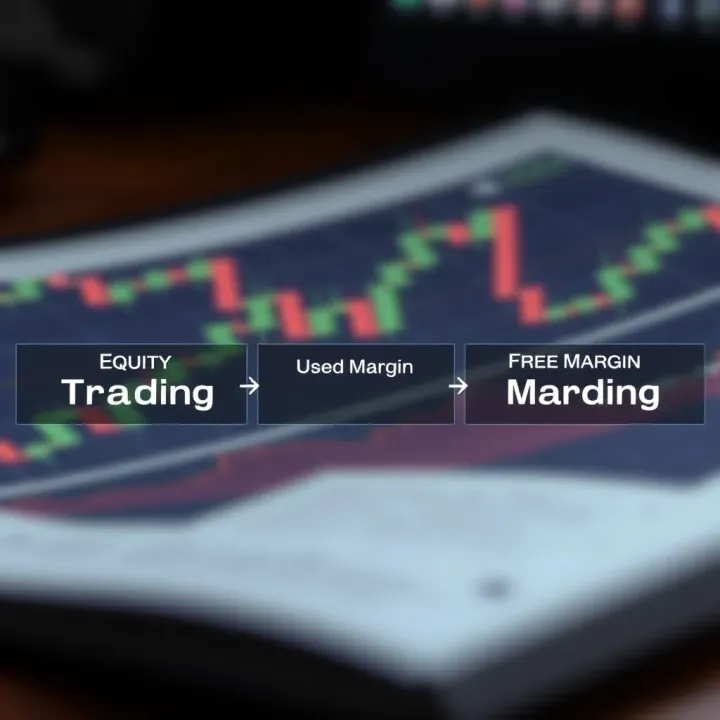
In practical terms, free margin acts like your safety net in trading, allowing room for manoeuvre when markets move against you.
For example, imagine you have KSh 100,000 in your forex account. You open trades requiring a margin of KSh 40,000. If your equity remains at KSh 100,000, then your free margin is KSh 60,000. However, if the market moves and your equity drops to KSh 80,000 due to losses on open positions, your free margin will reduce to KSh 40,000 (80,000 equity minus 40,000 used margin).
Free margin is crucial because it tells you how much room you have before facing a margin call—a warning from your broker that your funds have fallen below the required level to keep your trades alive. When free margin nears zero, the broker may close your positions automatically to prevent further losses.
Kenyan forex traders should monitor free margin closely to avoid unexpected liquidations, especially when using leverage. Using platforms like MetaTrader with real-time free margin indicators helps you keep track efficiently.
Understanding free margin helps traders:
Manage risk better by knowing how much capital is buffer for market swings
Decide when to open new trades based on available funds
Avoid margin calls and forced stop-outs
In short, free margin is your trading cushion. Keeping an eye on it gives you confidence to trade smart and stay in the game longer. Next, we'll look into calculating free margin precisely and how it fits into your overall risk management strategy.
Free margin plays a vital role in forex trading as it determines how much you can safely open additional trades without risking a margin call. If you think of your trading account as a reservoir, the free margin is the amount of water left after accounting for what is already locked in current open positions. Traders who understand this balance stand a better chance of managing risk and keeping their accounts healthy.
At its core, free margin refers to the funds available in your trading account that aren’t tied up in maintaining current trades. It’s the difference between your equity (total account value including unrealised profits or losses) and the margin you've already used to hold open positions. For example, if your equity is KSh 100,000 and your used margin is KSh 40,000, your free margin is KSh 60,000.
This figure matters because it sets the limit for how much more you can trade. When free margin drops close to zero, your broker may issue a margin call, which might force you to close some positions at a loss.
The difference between free margin and other forex terms like margin and equity is important. While margin refers to the amount set aside to open a trade, equity includes your account balance plus or minus any open trade profits or losses. Free margin, therefore, accounts for those existing commitments and residual funds ready for new trades or to absorb losses.
Equity, used margin, and free margin are tightly linked. Equity is your total funds including open position gains or losses. Used margin is the cash your broker keeps as collateral for open positions. Free margin is what's left after subtracting used margin from equity, showing what you have free to trade or buffer against market swings.
Keeping track of these values helps you avoid surprise margin calls and better control your trading exposure.
For instance, suppose your account balance is KSh 150,000. You open a trade requiring KSh 30,000 as margin. Your equity remains KSh 150,000 if the market hasn't moved. Thus, your free margin stands at KSh 120,000 (150,000 equity minus 30,000 used margin).
If a price change causes an unrealised loss of KSh 20,000, your equity falls to KSh 130,000, and your free margin reduces to KSh 100,000. This example shows how open trades directly impact your free margin, influencing how much more you can risk or invest.
Understanding these relationships ensures you manage your forex account prudently and respond appropriately to market changes.
Understanding how to calculate free margin is essential for every forex trader. Free margin tells you the amount of money in your trading account that’s available to open new positions or keep existing ones running during market fluctuations. If you miscalculate or overlook free margin, you risk sudden margin calls or forced liquidation, especially when the market swings against your trades.
Free margin is calculated using a simple formula:
Free Margin = Equity - Used MarginHere, equity represents your current account balance plus or minus any floating profits or losses from open trades. Used margin is the portion of your funds that have already been set aside to maintain your open positions.
Knowing this formula helps you understand exactly how much cash you really have left to trade. For instance, if your equity is KSh 50,000 and the used margin is KSh 10,000, your free margin equals KSh 40,000. This means you have KSh 40,000 available to either open new trades or absorb losses from your current trades.
Example calculations help ground this idea. Suppose you deposited KSh 100,000 and opened a position that requires a margin of KSh 20,000. If your current floating loss on this trade is KSh 5,000, your equity will be KSh 95,000 (KSh 100,000 - KSh 5,000), used margin remains at KSh 20,000, so free margin will be KSh 75,000 (KSh 95,000 - KSh 20,000). You can see how profits or losses directly affect your free margin.
Most trading platforms display the free margin figure in real time, so you don't have to do manual calculations constantly. Platforms like MetaTrader 4 (MT4) and MetaTrader 5 (MT5) give you clear sections showing equity, used margin, and free margin on your dashboard. This transparency is helpful to Kenyan traders monitoring fast-moving markets from Nairobi or Mombasa.
Mobile apps also play a big role, especially with Kenya’s growing mobile-first financial ecosystem. Popular apps like MT4, MT5, and proprietary apps from brokers like Exness Kenya or HotForex Kenya allow traders to check their free margin directly on their smartphones. These tools often send alerts when free margin gets dangerously low, which helps you react before a margin call happens.
Regularly monitoring your free margin using these platforms and mobile apps not only helps maintain healthy trading accounts but also builds discipline in managing your portfolios effectively.
Understanding how to calculate free margin and using the right tools to monitor it will vastly improve your trading decisions and risk management in the Kenyan forex market.
Free margin plays a key role in how traders manage risks when dealing with forex. It represents the funds available to open new positions or keep existing trades active without hitting the margin call threshold. Essentially, free margin acts as a buffer that helps traders avoid forced closures by the broker, giving them space to manoeuvre through market fluctuations.
When the free margin dips too low, it signals that the trader's account doesn’t have enough available funds to carry on with open positions safely. For example, if a trader’s account equity is KSh 50,000, and their used margin is KSh 49,500, their free margin is only KSh 500. This small cushion means that even slight adverse price movements could exhaust the free margin, prompting the broker to issue a margin call. In practice, this warns the trader they must add funds or close some trades to avoid automatic liquidation.
If free margin continues to plunge and the trader fails to act, the broker may start closing trades to protect the account from falling into a negative balance. This liquidation can cause losses greater than the trader anticipated, wiping out profits and even capital. For instance, during high market volatility, if a trader doesn't monitor their free margin, the broker's automatic stop-out rule could activate, selling positions at unfavourable prices. This outcome not only affects the current trades but also damages the trader’s long-term capital and confidence.
Most experienced traders target maintaining free margin at around 30% or more of their total equity. This ratio offers enough room to weather occasional market swings without triggering margin calls prematurely. For instance, if you have KSh 100,000 in equity, keeping at least KSh 30,000 free margin helps absorb unexpected moves while preserving your positions. It’s a practical guideline rather than an absolute rule, but it supports stable trading and risk control.
Balancing your open trades to maintain healthy free margin starts with avoiding overleveraging. Opening multiple large positions can eat up your margin fast, leaving little free margin for new opportunities or market changes. It is better to:
Monitor margin usage regularly and close losing trades early
Use stop-loss orders to limit potential losses
Allocate reasonable trade sizes aligned with your account equity
Keep some free margin in reserve before opening new positions
By doing so, you stay flexible and reduce the risk of sudden margin calls or forced trade closures. Maintaining this balance lets you stay in the market longer and makes it easier to manage your overall risk effectively.
Managing free margin carefully is not just about avoiding margin calls—it’s about sustaining your trading journey. Keeping a healthy margin cushion gives you control and peace of mind, especially in Kenya’s often volatile forex market.
Navigating free margin effectively can make a huge difference for Kenyan forex traders, especially given the local market's unique features. Understanding how to monitor and manage your free margin helps you avoid margin calls while maximising trading opportunities within the amount of funds you have available.
Many forex brokers offering services in Kenya integrate Safaricom M-Pesa as a seamless way to deposit and withdraw funds. This enables traders to top up their accounts instantly without the need for lengthy bank transfers or third-party payment processors. Given M-Pesa’s ubiquity in Kenya, this method lowers barriers for forex traders by simplifying the funding process and allowing quick reaction to market moves.
For example, if you spot a trading opportunity early in the morning, you can fund your forex account via M-Pesa before market volatility sets in. This immediacy supports healthier free margin levels, preventing forced closure of trades due to insufficient funds.
Keeping close tabs on your free margin during active trading hours is crucial. Many local platforms provide real-time dashboards showing your equity, used margin, and free margin. Pairing this data with alerts—either in-app or via SMS—helps you stay updated on margin status without constantly staring at the screen.
Track your free margin especially during volatile hours, such as the release of US economic data or local events affecting the Kenyan shilling. Regularly reviewing your free margin allows you to close or reduce exposure before liquidations happen. For instance, using mobile apps like MetaTrader or JForex with push notifications can effectively warn you when free margin dips below safe thresholds.
Volatility tends to spike significantly around economic announcements such as Central Bank of Kenya (CBK) rate decisions or the US non-farm payrolls report. Traders should proactively adjust their open positions before these events to preserve free margin.
Lowering trade size or closing riskier trades temporarily can reduce margin requirements and cushion your account from sudden market swings. For example, if the CBK unexpectedly raises rates, the Kenyan shilling might jump, impacting your open forex positions. Preparing your free margin in advance means you avoid urgent margin calls when prices change abruptly.
Stop-loss orders are essential tools for guarding your free margin. By setting a stop-loss, you limit potential losses on a trade, helping to maintain enough free margin to keep other positions running safely.
Consider placing stop-loss orders just outside noise levels typical of the currency pair you trade. This prevents unnecessary early exits while still protecting your account. Suppose you trade USD/KES; placing a strategic stop-loss at a resistance level ensures that if the price breaks sharply against your trade, your free margin isn’t eroded by larger unexpected losses.
Safeguarding free margin means watching your account balance and margins during market highs and lows. Use tools suited to Kenyan market dynamics, like M-Pesa funding and mobile alerts, to stay ahead.
By applying these practical tips, Kenyan traders can better manage free margin and reduce risks in Africa’s fast-growing forex space.
📈 Learn how derivative trading works in Kenya—covering types, benefits, risks, and local rules. Expand your investment tools today! 🇰🇪
Discover how demo accounts work and why they matter for Kenyan traders 🧑💻. Learn benefits, limits, and tips to safely move from practice to real trades 📈.
📊 Learn to read candlestick charts confidently! Understand key types, patterns, and trend signals to improve your trading decisions in Kenya’s markets.
Explore binary trading in Kenya 💹, learn how it works, legal tips, risks involved, and find the best platforms to start trading confidently today.
Based on 12 reviews