

Understanding Bots: Types, Uses, and Impact
🤖 Discover the types of bots, how they work, and their impact on business and daily life in Kenya. Explore uses, risks, and ethical questions surrounding bots.
Edited By
Amelia Hughes
Derivatives are financial tools whose value depends on an underlying asset, index, or rate. In simple terms, they’re contracts that derive their worth from something else — like a share price, currency exchange rate, or commodity price. Derivatives play a big role in modern trading and risk management, both locally here in Kenya and internationally.
Understanding derivatives helps you grasp how investors and businesses protect themselves against market swings or speculate for profit. Take a maize farmer in western Kenya, for example. They could use derivatives linked to maize prices to lock in a selling price before harvest to avoid losses from price drops. Meanwhile, banks might use currency derivatives to manage risks related to foreign exchange when dealing with dollars or euros.
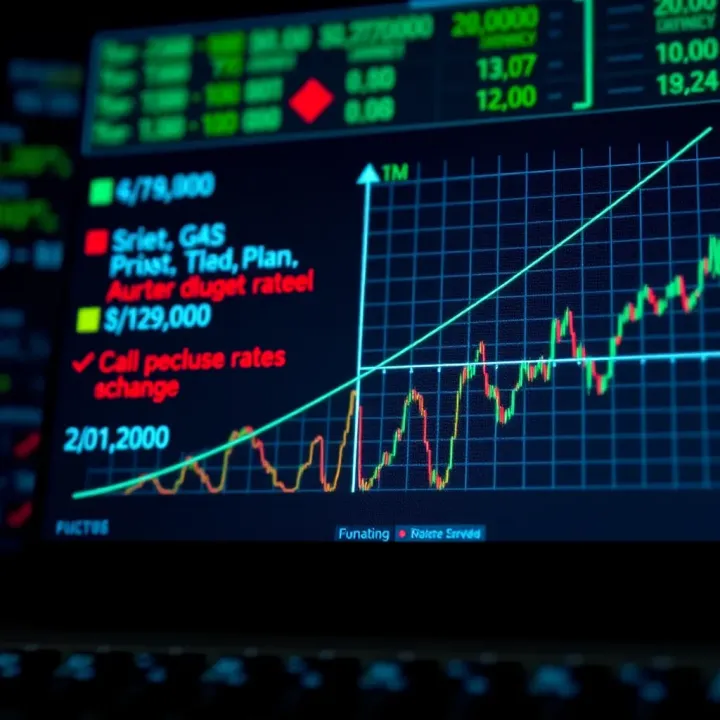
In finance, derivatives mostly come in four common types:
Futures: Agreements to buy or sell an asset at a future date at a set price. These are standardised and traded on exchanges.
Options: Contracts giving the buyer the right, but not the obligation, to buy or sell at a specified price before expiry.
Swaps: Private agreements to exchange cash flows or financial instruments, commonly interest rate swaps.
Forwards: Similar to futures but non-standardised and traded over-the-counter (OTC).
Derivatives aren’t just for big institutions. Savvy investors and forex traders use options and futures to hedge against price changes or to speculate. For example, a forex broker in Nairobi might use currency options to manage exposure during volatile times.
Derivatives can help manage risk effectively but also carry significant complexity and legal considerations. It’s important to understand contract terms and regulatory requirements, such as those set by the Capital Markets Authority (CMA) in Kenya.
Besides finance, derivatives appear in mathematics too — where they represent rates of change or slopes of curves. But in this article, we focus mainly on financial derivatives, their types, uses across trading and risk management, and what you need to know as a Kenyan investor or trader.
This practical knowledge will give you a clear edge whether you’re navigating the NSE, managing a portfolio, or involved in forex trading.
Understanding what derivatives are and how they function is fundamental for anyone involved in trading, investment, or financial analysis. Derivatives offer a way to manage risk by allowing market participants to fix prices or hedge against uncertainties. For Kenyan traders dealing with commodities like tea or maize, or forex brokers handling currency fluctuations, derivatives provide practical tools to stabilise profits and avoid unexpected losses.
The word 'derivative' comes from the idea that its value is "derived" from something else—called the underlying asset. This could be stocks, bonds, currencies, or commodities. In finance, this means the derivative itself doesn't have intrinsic value but depends on the performance of another asset. This connection makes derivatives useful for tracking changes without owning the asset directly.
At its heart, a derivative is a contract between parties that settles based on the future value of an underlying asset. For example, a coffee farmer in Kericho might use a derivative contract to lock in a selling price ahead of harvest, reducing exposure to price drops. Investors and businesses rely on derivatives mainly to shift risks, speculate on price movements, or secure future costs.
Unlike owning a physical asset like gold or shares of Safaricom, owning a derivative means holding a contract linked to that asset. This distinction matters because it affects ownership rights and risks. While an investor with shares may receive dividends, the derivative holder gains or loses based on price shifts, without holding the actual shares. This separation enables more flexible strategies but also introduces complexity and potential risks.
In mathematics, a derivative measures how a quantity changes in relation to another. For instance, if you want to know how fast your boda boda is moving, the derivative tells you the speed at any specific moment. This concept helps model real-world processes where things don't change steadily but accelerate or slow down.
Derived from calculus, derivatives show the rate at which one variable changes compared to another—in finance, often price changes over time. Understanding these rates is crucial for pricing financial derivatives, managing risk, or deciding when to buy or sell. It also underpins the strategies traders use to assess market trends and predict movements.
Consider Nairobi’s electricity usage: if daily consumption rises from 100 to 120 megawatts in a day, the derivative indicates how quickly demand grows. Similarly, farmers tracking crop yields against rainfall can use derivatives to forecast productivity changes. In finance, a portfolio manager might analyse how stock prices change daily to adjust holdings accordingly, using derivatives to manage potential losses.
Derivatives connect the abstract maths of change with practical contract agreements, enabling better decision-making in financial markets.
By grasping these basics, traders, investors, and analysts can better understand the mechanisms of derivatives and apply them effectively within Kenya’s diverse market environment.
Financial derivatives play a significant role in Kenya’s markets by allowing investors and businesses to manage risk, speculate, or lock in prices. Understanding the main types — forwards, futures, options, and swaps — helps market participants make informed decisions customised to their needs.
Forwards and futures contracts both let parties agree today on the future delivery of an asset at a set price. However, a forward contract is a private agreement between two parties, usually customised and traded over the counter (OTC). In contrast, a futures contract is standardised and traded on formal exchanges, offering greater liquidity and reduced counterparty risk due to clearinghouses.
In Kenya, forwards are commonly used by agriculture exporters to secure prices for tea or coffee ahead of harvest, helping avoid losses if market prices fall. Futures markets, although less developed locally compared to global markets, offer opportunities for financial traders through products like maize or oil contracts, often accessed via regional or international platforms.
Options give the buyer the right, but not the obligation, to buy or sell an asset at a predetermined price before or on a specific date. A call option allows buying the asset, while a put option permits selling it. This flexibility lets investors hedge against price movements or speculate with limited risk.
Within Kenyan financial planning, options are useful for investors looking to protect portfolios against currency fluctuations or stock volatility. For example, an investor holding shares in Safaricom might buy put options to guard against sudden price drops. Options also suit farmers wanting price protection for commodities without committing to sell immediately.
Interest rate swaps involve exchanging fixed-rate interest payments for floating rates (or vice versa). This tool helps companies manage exposure to changing interest rates on loans or bonds. For instance, a Kenyan business with a floating-rate loan from a bank might swap payments to lock in a fixed rate, reducing uncertainty.
Currency swaps involve exchanging principal and interest in different currencies. This is important for firms operating across borders in the East African Community or those importing goods paid in USD or Euro. By swapping currencies, they can mitigate exchange rate risks and better plan cash flow.
Understanding these derivatives equips traders, investors, and businesses with ways to manage risks and capitalise on opportunities in Kenya’s evolving financial environment. Each type has its place depending on the strategy, market, and asset involved.
Derivatives are vital tools for managing risk in financial markets and real-world trading alike. They offer ways to protect against unfavourable price changes, particularly in sectors with volatile asset values like agriculture and foreign exchange. Using derivatives strategically helps businesses and investors stabilise their income and reduce uncertainty.
Farmers and traders often use derivatives such as futures contracts to hedge against price swings. For example, a tea farmer can enter a futures agreement to sell their harvest at a fixed price months before the crop is ready. This arrangement guards against the risk of tea prices falling by the time of sale, securing income predictability. Likewise, traders dealing in maize might use options contracts to protect themselves from sudden price drops while keeping the chance to benefit from price increases.
In the Kenyan context, commodities like tea and maize have seasonal price volatility influenced by weather patterns and demand changes. Small-scale farmers in regions like Kericho or Bungoma find futures contracts useful to lock in prices with buyers ahead of time, ensuring their return covers production costs. Traders on the other hand, may use options to speculate within reasonable risk bounds, deciding whether to exercise their contract based on market trends.
Speculative trading in derivatives can offer substantial profits if market movements are accurately anticipated. However, this activity involves significant risk since the opposite outcome can lead to heavy losses. Speculators contribute liquidity and can help markets discover prices, but uncontrolled speculation may amplify market swings and lead to financial instability.
Regulators in Kenya, particularly the Capital Markets Authority (CMA), oversee speculative activities to protect investors and the wider market. They enforce licensing for dealers and require transparency and compliance with trading rules. Educational efforts aim to inform traders about risks and discourage reckless betting on price movements without proper hedging strategies.
Speculation in derivatives comes with both the potential for gain and the danger of loss, making regulation and informed decision-making essential for market health.
By understanding how derivatives serve as both protective tools and speculative instruments, traders and investors in Kenya can better navigate financial risks and opportunities.
Derivatives trading in Kenya is governed by a clear legal framework that aims to safeguard investors and ensure market stability. Understanding this framework is vital for anyone involved in derivatives, as it dictates who can trade, how the trading should be conducted, and the protections in place against malpractice. The legal structure also helps prevent market abuses that could affect the broader economy.
The Capital Markets Authority (CMA) is Kenya’s main regulator for derivatives trading. Its role involves overseeing market operations and making sure firms comply with set rules designed to protect investors and maintain fair, transparent markets. The CMA issues guidelines on how derivatives products should be offered, the disclosure requirements, and the reporting of transactions.
For traders and firms, CMA’s regulations mean that only licensed entities with the right expertise can offer derivatives services. This reduces the risk of dealing with illegitimate operators who might exploit less informed clients.
Licensing is a strict process requiring firms to prove their financial soundness, technical capacity, and adherence to ethical standards. Compliance requirements include regular reporting, maintaining client funds separately, and following strict operational procedures. Dealers must also have systems in place to manage risks linked to derivatives trading, such as margin calls and position limits. This framework ensures that the market functions smoothly and that investors have recourse in case of disputes.
Investor education is a key part of consumer protection in derivatives markets. The CMA and other stakeholders offer training and informational materials so investors clearly understand the risks involved. For example, individual investors might learn how futures contracts work or what options trading implies, helping them make better decisions and avoid common pitfalls.
Beyond education, practical measures have been set to avoid fraud and misuse. These include enforcing transparency in trade prices, requiring clear contract terms, and monitoring unusual trading activities. In Kenya, there have been instances where unscrupulous agents misled farmers on derivatives related to agricultural commodities. Thanks to tighter rules and active CMA involvement, such cases are now less frequent.
Being aware of your rights as an investor and the regulatory protections in place can prevent losses and ensure safe participation in derivatives markets.
In sum, the legal and regulatory framework strengthens confidence among traders and investors. It balances the opportunities derivatives offer with the important need to manage the inherent risks in such markets.
Derivatives aren’t just confined to financial markets; their concepts stretch into everyday life and practical decisions. Understanding how derivatives apply in everyday contexts helps deepen appreciation of their role beyond trading, particularly for professionals who analyse data or manage contracts.
Applying derivatives for optimisation involves using calculus tools to find the best outcome under given conditions. For example, a farmer deciding how much fertiliser to apply could use derivatives to determine the point where crop yield is at its peak before costs outweigh benefits. This process helps maximise profits by balancing inputs and outputs efficiently.
In business operations, derivatives help in optimising resources such as labour, materials, or production time. Calculating the rate at which costs or revenues change guides firms to adjust strategies for maximum gain with minimal waste.
Examples such as speed, rates, and growth analysis show up everywhere—from vehicle movement to population studies. Consider a boda boda rider monitoring the rate of fuel consumption over time to plan optimal rest and refuel stops. Derivatives give insights into how fast speeds increase or decrease, enabling smoother rides and better time management.
In health and economics, growth rates like interest on investment or tumour development can be examined with derivatives. These rates inform decisions such as when to reinvest profits or seek medical intervention. The practical relevance can’t be overstated; they serve as tools to interpret changing realities and optimise responses.
Adjusting payments based on indexes is common in rental agreements or supply contracts. For instance, a business leasing an office space in Nairobi may have rent payments linked to inflation indexes. Using derivatives, adjustments reflect the changing purchasing power of money, ensuring fairness and maintaining value over time.
This linkage helps both parties manage risk arising from economic fluctuations. For suppliers, payments might adjust with raw material prices, protecting margins without renegotiating contracts constantly.
Utility in service contracts and inflation adjustments shows up in agreements where service fees are periodically reviewed. In Kenya, utility companies sometimes tie charges to inflation or other economic indicators to maintain sustainable operations.
Derivative-based clauses allow contracts to adapt to economic shifts smoothly. Rather than fixed sums that lose value during inflation, these adjustments ensure continuous viability. For businesses and consumers alike, such practices guard against unexpected financial strain while encouraging stable service provision.
In everyday terms, derivatives help us understand how things change with time—be it speeds, prices, or contract values—and adapt accordingly to benefit from or protect against those changes.
All in all, the principles behind derivatives extend far into everyday decisions, helping both individuals and businesses make informed, adaptable choices in an ever-changing environment.
🤖 Discover the types of bots, how they work, and their impact on business and daily life in Kenya. Explore uses, risks, and ethical questions surrounding bots.

📘 Understand how to derive logarithmic functions, from natural logs to bases, with practical examples and real-world uses in finance and growth models in Kenya.

Explore the meaning and uses of 'deri' 🌍. Understand its cultural significance and practical applications in daily life across different contexts.
Discover DBot 🤖, a versatile automation tool that helps streamline workflows and integrates seamlessly with various apps. Ideal for businesses and individuals in Kenya.
Based on 11 reviews