
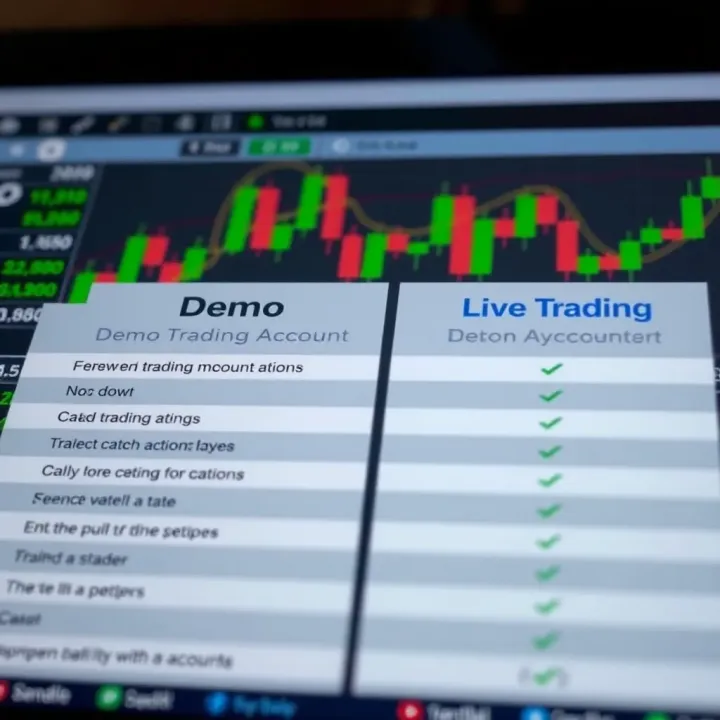
Understanding Demo Trading Accounts in Kenya
📊 Learn how demo trading accounts help Kenyan traders practice risk-free before going live! Get tips, benefits, and key insights for success in trading.
Edited By
Isabella Clarke
Trading demo accounts are virtual platforms where you can practise buying and selling financial instruments like forex, stocks, or commodities without risking real money. For Kenyan traders, these accounts offer a good chance to familiarise with the market mechanics and test strategies before stepping into live trading with actual funds.
A demo account mimics the real trading environment by providing access to live market data, charts, and trading tools, but all winnings or losses are virtual. This means you can hone your skills without the fear of losing your hard-earned money—an especially useful feature for beginners or those keen to try new strategies.

Using a demo account lets you experiment freely. Think of it as a driving school before hitting the busy matatu routes—mistakes won't cost you but teach valuable lessons.
When you open a demo account with a broker, you receive virtual funds—typically equal to a significant amount (like KSh 1 million)—to trade. Orders you place execute just as they would in a live account, with price fluctuations happening in real-time. You can observe how your chosen asset prices move, try out different trade sizes, and understand concepts like spreads, leverage, and margin.
Keep in mind, while the demo accounts show real market data, they may not capture emotional pressure or slippage and execution differences encountered in live markets.
Risk-Free Learning: Practice without risking KSh saves you from early losses.
Strategy Testing: Try out technical analysis or fundamental approaches before going live.
Platform Familiarisation: Get comfortable with trading software, charts, and order placement.
Confidence Building: Gain practical experience that prepares you for live trading decisions.
Imagine you want to trade forex between the US dollar and Kenyan shilling (USD/KES). In a demo account, you can simulate buying USD with virtual KSh to see how your decisions might perform as exchange rates fluctuate. This helps you understand timing and market behaviour firsthand.
Demo accounts serve as a vital stepping stone for anyone serious about trading in Kenyan financial markets. By starting here, you avoid costly beginner mistakes and develop a trading approach that suits your style and risk appetite.
Trading demo accounts serve as the stepping stone for Kenyans venturing into the world of trading. They provide a platform where traders can practise without risking real money. This allows one to build skills, test strategies, and understand market behaviour in a controlled environment before committing actual funds.
A trading demo account is essentially a simulated trading environment provided by brokers. Unlike real accounts, demo accounts use virtual money, giving users the chance to experience trading without financial losses. For example, a trader in Nairobi might open a demo account with a broker like IG or FXPesa to explore forex or commodities trading, practising buying and selling in real time yet with no real financial exposure.
Virtual funds in demo trading mimic real money, allowing traders to place orders and manage positions as they would in live trading. The advantage for Kenyan traders is the ability to get familiar with how much risk they are taking without risking their own KSh. Suppose a trader uses KSh 1 million in virtual funds to practise before investing the same amount from their savings; such practice helps build confidence and refines decision-making skills.
Demo accounts replicate real market conditions, including price fluctuations, spreads, and trade execution speeds, often with up-to-date market data. That said, some brokers may delay prices slightly or miss sudden spreads seen in live markets. Still, demo accounts offer a realistic experience, reflecting Nairobi Securities Exchange (NSE) hours or forex market times. This helps traders adjust strategies based on actual market dynamics, like reacting to economic news or market sentiment.
Using a demo account before live trading helps Kenyans avoid costly beginner mistakes. It is like practising driving in an empty car park before hitting the busy roads.
Understanding how demo accounts operate is the first step to becoming a skilled trader. It creates a safe space where trial and error is part of the learning process without financial pressure.
Getting started with a trading demo account involves more than just signing up—it requires wise choices and proper setup to ensure you gain real value. For Kenyan traders, understanding these practical steps helps build confidence before putting real KSh on the line.

The first step is picking a broker that offers a reliable demo account. Not all brokers serve Kenyan clients or provide demo environments with realistic features. Look for brokers licensed by the Capital Markets Authority (CMA) or those with a solid reputation in Kenya’s financial market. Safaricom-backed platforms or international brokers with easy local deposits via M-Pesa often provide convenient demo access.
Make sure the demo account mirrors live conditions, offering access to the same trading instruments you plan to use. For example, if you want to trade forex pairs like USD/KES or commodities such as coffee futures, confirm the broker’s demo platform supports these. This practical approach lets you test strategies that apply directly to your interests.
Registering is usually straightforward: provide your name, email, and phone number. Kenyan traders should provide valid contacts because brokers typically require SMS or email verification. Unlike live accounts, demo accounts don’t usually need full KRA PIN numbers or ID uploads, but some platforms might ask for minimal verification to prevent abuse.
For instance, on platforms like IG Markets or HotForex, demo sign-up may be instant, while others might send a confirmation code to your mobile. This step safeguards your account and ensures you get access to support and updates.
Once registered, you’ll download the broker’s trading platform—commonly MetaTrader 4 (MT4), MetaTrader 5 (MT5), or a web-based platform. Kenyan traders should test both desktop and mobile versions to see what fits their lifestyle; many prefer mobile for trading during matatu commutes or while at the kiosk.
The demo account comes equipped with essential trading tools such as real-time price feeds, interactive charts, and technical indicators. Experiment with these tools to get familiar with entry and exit points, stop-loss orders, and take-profit levels.
Setting up your demo account carefully ensures you’re not just simulating trades but preparing yourself for real market challenges. This foundation is vital to trading success.
By following these practical steps, Kenyan traders can approach live trading with a solid understanding and well-practised strategies, reducing costly mistakes when real money is involved.
Trading demo accounts offer several crucial features that help Kenyan traders learn without risking real money. These features replicate many elements of live trading, giving users a close-to-real experience of the financial markets.
One major advantage of demo accounts is access to real-time market data. This means the prices you see reflect the actual movements on global exchanges, such as the Nairobi Securities Exchange (NSE) or forex rates influenced by international markets. For example, if Safaricom shares gain 1% during the day, your demo account will show this price change instantly. This feature helps traders practice making decisions based on up-to-date market information, sharpening their timing and reactions before entering live trades.
A good demo platform supports multiple order types, such as market orders, limit orders, stop-loss, and take-profit instructions. These are the tools traders use to control when and how their trades are executed. Demo accounts simulate order execution as it would happen in live trading, including possible delays or slippage. For instance, placing a stop-loss on a forex pair like USD/KES during volatile market hours will allow you to see how real execution works under pressure. This prepares you for managing risks effectively.
Most trading demo accounts come with a range of technical analysis tools useful in breaking down price movements. Kenyan traders can experiment with indicators like Moving Averages, Relative Strength Index (RSI), and Bollinger Bands to identify trends or overbought/oversold conditions. Practising drawing support and resistance levels on the charts helps you understand market behaviour better. For example, during the heavy rains when agricultural companies’ stocks might fluctuate, these tools enable you to spot entry or exit points without risking actual cash.
Using these demo account features effectively helps build essential skills in a risk-free setting. It is wise to treat demo trading seriously, employing real strategies and risk management to truly benefit from these tools.
In sum, access to live data, realistic order execution, and technical analysis capabilities together make demo accounts indispensable for both beginners and seasoned Kenyan traders looking to test new ideas without burning KSh.
Using a demo trading account offers several practical benefits that are especially valuable for Kenyan traders starting out or refining their strategies. This risk-free environment lets you test trading approaches without risking your KSh, building a solid foundation before moving to real-money trading.
One main advantage of demo accounts is the chance to test strategies without any financial loss. For example, a new forex trader in Nairobi can experiment with buying and selling the USD/KES pair during different market hours to see how their strategy performs under various conditions. Since demo accounts use virtual funds, you won’t lose any actual money, allowing you to learn from mistakes and adjust your approach freely. This hands-on testing is hard to replicate with theory alone, and it prevents costly errors once you move to live trading.
A demo account also helps build confidence and a disciplined trading mindset. Many traders lose money because they rush into live trading without practice or fall victim to emotional decisions. Practising on a demo platform familiarises you with making timely decisions based on real market price movements. Over time, you can develop a routine—for instance, setting entry and exit points and sticking to them—that mirrors professional trading habits. This practice builds self-control, critical in managing risk when actual money is involved.
Getting comfortable with a broker’s trading platform is vital. Kenyan traders often encounter different interfaces from brokers like FXPesa, HotForex, or IG Markets. Demo accounts give you the opportunity to explore these platforms’ features, such as charting tools, order types, and account settings, without pressure. Knowing how to quickly execute trades, navigate options, and use technical indicators can make a huge difference in live trading efficiency and decision-making.
Practising with a demo account is like learning to drive a matatu in off-peak traffic—once you’re confident behind the wheel, handling rush hour becomes less stressful.
Overall, demo accounts serve as an essential stepping stone. They not only shield you from early losses but also help establish good habits, reduce anxiety, and improve your ability to react to market changes. For Kenyan traders, this means a better chance to succeed in the competitive world of trading with confidence and skill.
Trading demo accounts are useful tools, but they come with some important limits that every Kenyan trader should know. Understanding these constraints helps you prepare better for live trading and avoid surprises when real money is at stake.
The biggest challenge with demo accounts is the emotional gap between practising and actual trading. Using virtual money removes the pressure and fear of losses, which often leads traders to take risks they wouldn’t normally consider with real cash. For example, a trader using a demo account might place large trades carelessly, but in live trading, that same trader may hesitate due to the fear of losing KSh. This emotional disconnect means demo results may not fully reflect live trading behaviour.
Demo platforms try to mimic real market conditions, but they sometimes lag or offer slightly different prices compared to live markets. During volatile times—like after major economic reports or unexpected events—demo accounts may not update prices as quickly, which can affect order execution. Kenyan traders should be aware that slippage, spreads widening, or order delays can occur more often in live markets, something demo accounts may not always show. This difference can cause surprises, especially when trading forex pairs like USD/KES or foreign stocks listed on the Nairobi Securities Exchange.
Another risk is putting too much trust in demo trading success. Because the environment is safe and stress-free, a strategy may look profitable on a demo account but struggle when real money and emotions come into play. This overreliance can create a false sense of confidence, leading traders to start live trading unprepared. To avoid this, always combine demo practice with thorough study and small, controlled steps when moving to live accounts.
Successful trading goes beyond mastering platform tools—it demands handling real emotions and adapting to market quirks that demo accounts can't fully replicate.
Emotional gap: Demo trades lack real financial risk, affecting decision-making.
Market differences: Demo prices and execution may not perfectly match live markets, especially during volatile sessions.
Cautious confidence: Don’t depend solely on demo success before risking real money.
By keeping these limits in mind, Kenyan traders can use demo accounts wisely as a stepping stone, rather than a final test, when preparing for the live market.
Using a demo trading account well can make a big difference in your journey as a trader. It’s not just about clicking around or placing random trades. Setting clear goals, trying different instruments, and learning from each trade sharpen your skills and prepare you for the live market, especially in Kenya’s dynamic trading environment.
Start by defining what you want to achieve with your demo account. Are you testing a new strategy or just getting comfortable with the platform? Setting realistic goals helps keep you focussed. For example, aim to make consistent profits over ten trades or limit your losses to a certain percentage of your virtual capital. Use limits similar to what you’d accept when trading for real money. If you pretend you have KSh 100,000 in virtual funds, decide beforehand you won’t risk more than 5% per trade. This approach prevents overtrading and builds discipline, crucial traits for any trader.
Don’t stick to just one market or asset; spread your practice across forex pairs, commodities like maize or gold, and equities listed on the Nairobi Securities Exchange (NSE). Each instrument behaves differently — forex tends to be more volatile during certain hours, while NSE stocks might react to local economic news or political events. By practising various instruments on your demo account, you develop a versatile trading style and understand what suits your risk appetite and schedule. For example, you might discover you’re better at short-term forex moves than holding NSE stocks long-term.
After every trading session, take time to review your trades critically. Look at what worked, what didn’t, and why. Did you hold a losing trade hoping it’d turn around? Or did you exit a winner too early? Record these observations in a journal for future reference. This habit develops your ability to spot patterns in your decision-making and avoid repeating mistakes. Many Kenyan traders overlook this step and lose valuable learning opportunities. Also, use the review to refine your strategies incrementally before moving to live trading.
Treat your demo account as a real account with real stakes. The more seriously you take the exercise, the better prepared you’ll be when you eventually trade with your KSh.
Following these tips turns your demo account from a mere practice tool into a powerful stepping stone for real trading success. Taking time to plan, experiment, and reflect makes the difference between guessing and trading with confidence.
📊 Learn how demo trading accounts help Kenyan traders practice risk-free before going live! Get tips, benefits, and key insights for success in trading.
Learn how to use demo accounts for trading in Kenya 📈. Discover benefits, avoid pitfalls, and get tips to smoothly switch to live trading with confidence.

Explore deriv trading in Kenya 📈: Learn types, strategies, risks & how to start safely with trusted platforms like Deriv. Ideal for beginners & pros!

Discover how demo accounts work and why they matter for Kenyan traders 🧑💻. Learn benefits, limits, and tips to safely move from practice to real trades 📈.
Based on 15 reviews