
Deriv Trading in Kenya: A Simple Guide
Explore deriv trading in Kenya 📈: Learn types, strategies, risks & how to start safely with trusted platforms like Deriv. Ideal for beginners & pros!
Edited By
Thomas Gray
Peer-to-peer (P2P) derivatives are financial contracts traded directly between two parties without relying on traditional intermediaries such as brokers or exchanges. This setup cuts out the middleman, allowing counterparties to negotiate terms that suit their specific needs. For example, two investors might agree on a contract based on the future price of maize or forex rates, matching their own risk appetite.
Unlike standard derivatives listed on exchanges, P2P derivatives offer greater flexibility. Traders can customise contract terms like notional amounts, maturity dates, and settlement conditions. However, this flexibility usually comes with heightened counterparty risk since there is no central clearing house to guarantee contract performance.
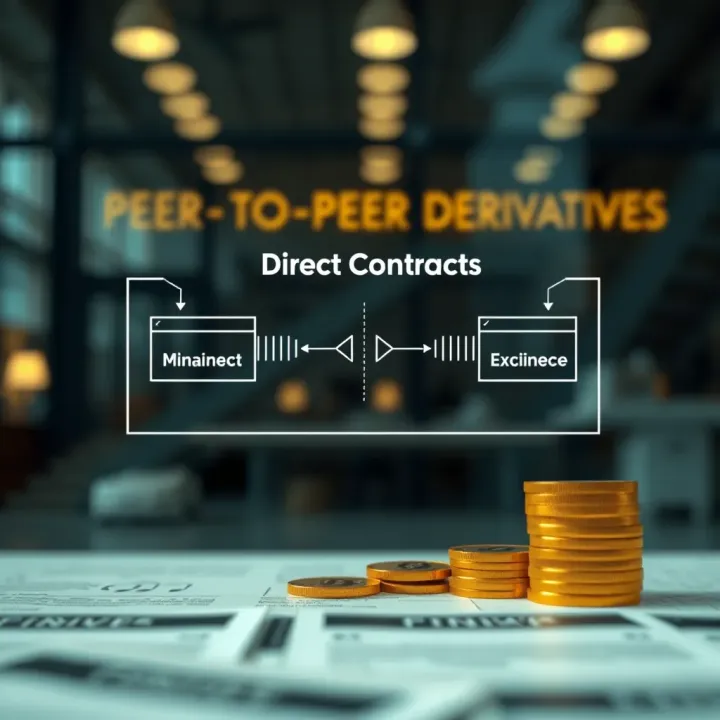
In Kenya’s growing financial markets, P2P derivatives are gaining traction among investors seeking tailored hedging solutions and speculative opportunities. They can be especially useful for forex brokers managing currency risk or portfolio managers hedging commodity exposures specific to sectors like tea and coffee production.
P2P derivatives allow direct negotiation between parties, creating bespoke contracts but requiring careful consideration of counterparty credibility.
Some key benefits include:
Customisable contracts that meet unique investment needs
Lower transaction costs by skipping intermediaries
Access to niche markets or bespoke risk exposures
On the flip side, risks involve:
Counterparty default, which can lead to losses
Limited regulation compared to exchange-traded derivatives
Challenges in pricing and valuation, especially for complex contracts
As Kenyan investors and financial professionals explore P2P derivatives, understanding the balance between flexibility and risk is critical. Ensuring proper due diligence, using standardised documentation where possible, and considering local regulatory guidelines will help navigate this evolving market.
This guide aims to clarify how P2P derivatives operate, their practical uses within Kenya's financial sector, and the regulatory environment shaping their growth.
Peer-to-peer (P2P) derivatives are financial contracts traded directly between two parties without involving intermediaries like brokers or clearing houses. This model is gaining ground because it cuts down transaction costs and gives participants more control over contract terms. In Kenya, where market access can sometimes be limited for smaller traders and investors, P2P derivatives open up practical opportunities to hedge risks or speculate directly.
Understanding P2P derivatives is key to navigating modern financial markets that are rapidly evolving through digital platforms and blockchain technologies. They shift the usual trust placed in established institutions to direct trust between counterparties, supported by technology.
Derivatives are contracts whose value depends on the price of an underlying asset, like a currency, commodity, or stock. For example, a forex trader in Nairobi might enter a derivative contract that pays out based on the future exchange rate between the Kenyan shilling and the US dollar. These contracts help participants hedge against price changes or take advantage of expected market moves without owning the actual asset.
Derivatives also provide ways to manage complex financial risk. Unlike buying or selling the underlying asset directly, derivatives can require less initial capital and allow more tailored risk exposure. This is especially useful in volatile markets common in Kenya and the broader East African region.
In conventional derivatives trading, banks or brokers act as middlemen, providing liquidity and guaranteeing trades. With P2P derivatives, parties negotiate contracts directly, often using digital platforms or smart contracts to automate execution. This removes reliance on intermediaries, which can reduce fees and speed up settlements.
For instance, instead of buying a currency option through a bank, a trader could use a P2P platform to find another individual who wants the opposite exposure. This setup can provide greater flexibility as terms are negotiated directly, but it also means participants take on more counterparty risk since no central clearing company backs the contract.
Swaps involve exchanging cash flows or returns based on an underlying asset without delivering the asset itself. In a P2P setup, two parties might agree to swap interest payments—say, one pays a fixed rate while the other pays a floating rate tied to Kenya’s Central Bank rate. Swaps help both parties manage interest rate risks without going through a bank.
A practical example is a small Kenyan lender wanting to lock in fixed returns, and a borrower who prefers variable payments, agreeing directly to exchange these cash flows through a P2P platform.
Options give one party the right, but not the obligation, to buy or sell an asset at a set price before a specified date. Through P2P trading, an investor could buy a currency option from another trader on a digital platform without involving banks or brokers. This simplifies access, especially for smaller investors in Nairobi or Mombasa who need tailored risk protection.
For example, a tea exporter might purchase a call option on the dollar to hedge against exchange rate moves when export payments are due.
Forwards and futures are agreements to buy or sell an asset at a future date for a predetermined price. P2P forwards usually involve customised contracts directly agreed upon by parties, while futures tend to be more standardised.
In Kenya’s context, a coffee farmer could enter a forward contract directly with a buyer through a P2P platform, fixing the sale price before harvest. This helps the farmer avoid market uncertainty without relying on a commodity exchange.

P2P derivatives represent a shift in how financial contracts operate by cutting out middlemen, increasing flexibility, and making derivatives more accessible to a broader set of participants.
This new approach requires careful assessment of counterparty reliability and clear contract terms, but it also offers promising opportunities for Kenyan traders and investors looking to manage risks smartly and cost-effectively.
Peer-to-peer derivatives operate differently from traditional markets because they remove middlemen, allowing direct interaction between parties. This setup offers particular advantages such as customised agreements, lower costs, and swifter execution, but also demands clear understanding of negotiation, contract terms, and risk management. Understanding how these derivatives function helps traders and investors navigate the unique dynamics involved.
Negotiation happens directly between two parties, often with the facilitation of online platforms that offer transparency and access to counterparties. Unlike conventional markets where brokers or clearinghouses mediate, here buyers and sellers discuss key terms such as price, maturity dates, and underlying assets themselves. This personalised process suits investors who want contracts adapted to specific needs rather than standardised products.
For example, a Kenyan exporter seeking to hedge forex risk with a counterparty in Nairobi can negotiate the swap terms directly without involving a bank as intermediary. This flexibility allows quicker deal closure tailored precisely to the exporter’s cashflow calendar.
Smart contracts and digital platforms play an increasing role in streamlining these negotiations. They enable parties to draft, verify, and agree on contract details through automated systems, reducing paperwork and human error. Platforms can also match counterparties with similar needs, making direct negotiation more efficient and accessible.
Smart contracts execute pre-set rules once conditions are met, providing trust without relying on traditional intermediaries. For instance, if an agreed exchange rate hits a certain threshold, the contract triggers settlement automatically. This removes delays and enhances confidence, particularly for parties in different locations or time zones.
In P2P derivatives, contract conditions are executed directly between parties, often through smart contracts that automatically monitor fulfilment requirements. This means payments, transfers, or asset exchanges happen swiftly when agreed milestones occur, reducing counterparty uncertainty.
Imagine two investors agreeing on a forward contract for maize prices. When harvest season arrives and market prices settle, the smart contract can execute payment based on predefined formulas without waiting for manual confirmation or third-party approval.
Managing counterparty risk is critical since there is no clearinghouse guaranteeing trades. Parties often rely on collateral, credit checks, or reputation systems built into platforms to minimise defaults. Additionally, fully automated systems using blockchain enable transparent record-keeping, which helps reduce disputes and enhances trust.
Still, traders should remain cautious. Without a central authority, one party could fail to meet their obligations, leaving the other exposed. Therefore, safeguards like margin requirements or pre-deposited funds act as buffers to protect both sides.
Direct negotiation and automated settlement form the backbone of P2P derivatives, creating a faster, more flexible market but with risks that require careful management.
This direct approach has particular appeal in markets like Kenya where traditional financial infrastructure might be costly or limited, allowing smaller investors or firms to participate with greater ease and tailored solutions.
Peer-to-peer derivatives offer a fresh approach to traditional financial contracts, cutting out intermediaries like brokers or clearinghouses. This shift brings clear advantages but also some notable challenges that every trader or investor in Kenya’s financial markets should know.
One big draw of P2P derivatives is cost savings. By bypassing middlemen, participants avoid brokerage fees and clearing charges usually added in traditional setups. For example, a trader hedging currency risk through a P2P platform might save thousands of shillings compared to the fees on exchanges. These savings can especially benefit small or medium-sized investors who often feel priced out by high transaction costs.
With P2P derivatives, parties negotiate contract terms directly. This often leads to bespoke agreements better suited to specific risk profiles or market views. Such control means investors can tailor contract duration, conditions, or settlement methods. For instance, a SME in Nairobi could strike an oil price swap contract that matches its import schedules rather than accepting standardised terms imposed by intermediaries.
P2P derivative platforms tend to lower entry barriers, opening opportunities previously dominated by large institutions. Smaller traders can engage in swaps or options without needing vast capital reserves or approval from big brokers. This democratization suits Kenya’s growing pool of retail investors and SMEs wanting to manage price risks or explore investment options beyond conventional savings plans.
One drawback is that P2P derivatives lack central clearing, so participants face direct counterparty risk. If the other side defaults or delays payments, you may not recover losses easily. This risk can be significant in Kenya, where legal enforcement is sometimes slow or costly. Traders thus need thorough due diligence and may require credit support arrangements or escrow services to mitigate exposure.
P2P markets can have limited liquidity, meaning finding a willing counterparty at any time is not guaranteed. Unlike major exchanges where contracts are standard and heavily traded, bespoke P2P deals can sit idle if no matching interest emerges. For example, a farmer seeking a forward contract on maize prices might struggle to find counterparts if the market is thin.
Because contracts are negotiated individually, pricing can vary widely, increasing risks of mispricing. Without standard market quotes, parties may disagree on fair value, especially for complex derivatives. This may lead to disputes requiring costly mediation or courts, which can be cumbersome. Clear documentation and use of smart contracts that automatically enforce terms can help reduce such issues.
Balancing these advantages and challenges is key for anyone considering P2P derivatives in Kenya. While they offer cost efficiency and flexibility, understanding risks like counterparty defaults and liquidity is essential for prudent trading.
The bottom line is that P2P derivatives can expand market access and control for Kenyan traders, but come with risks that demand careful assessment and sound risk management strategies.
Understanding the regulatory environment is essential to grasp the full implications of peer-to-peer (P2P) derivatives trading. Because these contracts bypass traditional intermediaries like clearinghouses, the legal framework shapes how risk is managed, how disputes are resolved, and how market integrity is maintained. In Kenya, as the financial sector embraces digital innovations, a clear grasp of applicable laws helps investors and traders operate safely and confidently.
The Capital Markets Authority (CMA) acts as Kenya’s main regulator for securities and derivatives markets. Its mandate includes protecting investors, ensuring fair trading, and maintaining orderly markets. For P2P derivatives, CMA’s role extends to overseeing platforms that facilitate these trades, making sure they comply with existing laws and guidelines.
For example, if two parties enter into a derivatives contract via an online platform, CMA expects that platform to register and adhere to operational standards. This might include transparency requirements, record-keeping, and mechanisms to handle complaints. Consequently, traders should confirm that the platform hosting their P2P deals operates within CMA’s regulatory purview to avoid falling victim to scams or non-compliance.
Kenya's regulatory framework requires that parties engaged in derivatives trading, including P2P setups, meet certain compliance steps. This might cover Know Your Customer (KYC) checks to verify identities, Anti-Money Laundering (AML) provisions to detect suspicious activities, and reporting obligations.
Traders must maintain accurate records of their contracts and transactions because regulators may audit these for oversight purposes. Failure to comply can lead to penalties not just for platforms but also for individual traders. Therefore, understanding these requirements boosts legal protection and promotes a safer trading environment.
Derivative markets worldwide follow standards and regulations designed to reduce systemic risks, protect participants, and foster transparency. These include rules from bodies like the International Organisation of Securities Commissions (IOSCO) and agreements such as the G20 reforms after the 2008 financial crisis. These guidelines stress clearing obligations, margin requirements, and reporting standards.
While Kenya’s domestic rules may differ in detail, international norms influence local policy development. This is particularly relevant where cross-border transactions or foreign investors are involved. Awareness of global regulations helps market players remain compliant and understand the broader context affecting derivative markets.
For Kenyan traders participating in P2P derivatives with international counterparties, regulatory complexity increases. Different jurisdictions might impose various rules on documentation, taxation, reporting, or dispute resolution. For instance, a P2P derivative contract involving a Kenyan investor and a counterparty in Europe may fall under European Union regulations requiring stricter reporting.
Such cross-border dealings require careful diligence. Kenyan investors should seek platforms or legal advice that clarify jurisdictional issues and ensure contracts reflect compliance with both local and foreign rules. Otherwise, enforcement challenges or unexpected tax liabilities could arise, undermining the intended benefits of P2P trading.
Regulatory clarity balances innovation with protection, helping P2P derivatives grow responsibly in Kenya while connecting with the wider global market.
Keywords: peer-to-peer derivatives, P2P derivatives, Capital Markets Authority, CMA Kenya, derivative regulation Kenya, cross-border derivatives, KYC, AML, financial regulation Kenya
Peer-to-peer (P2P) derivatives are gradually carving out a niche in Kenya’s financial markets. Their appeal lies in the ability to bypass traditional intermediaries like brokers and clearing houses, potentially lowering costs and increasing market access. Understanding this emerging trend helps traders, investors, and portfolio managers prepare for a shift in how risk management and speculative activities occur locally. The future looks promising, especially with technology playing a key role in enabling secure, transparent, and efficient P2P trading.
Use of blockchain and decentralised finance (DeFi)
Blockchain technology underpins many P2P derivatives platforms by providing a tamper-proof ledger where all trades are recorded openly yet securely. This increases trust between parties who may not know each other directly. Decentralised finance (DeFi), which operates without central authorities, allows for smart contracts to automatically execute derivative agreements once agreed conditions are met. For example, a small business in Nairobi could hedge fuel costs through a swap contract with a supplier across the country, settled transparently on a blockchain, without needing a bank or broker.
Digital platforms enabling secure P2P deals
Several Kenyan startups and fintech firms are developing platforms tailored to P2P trading of derivatives. These platforms simplify contract creation, negotiation, and settlement through user-friendly interfaces while embedding security features such as encryption and multi-factor authentication. Platforms that integrate M-Pesa for payments reduce friction, making it easier for users to deposit margin or settle profits. Such tools encourage participation by smaller investors and SMEs who traditionally find the derivatives market inaccessible.
Opportunities for hedging and investment
P2P derivatives open new doors for Kenyan investors and SMEs to manage risks tied to commodities like maize prices or foreign currency fluctuations. For example, a farmer in Uasin Gishu could enter a futures contract directly with a buyer to lock in a price before harvest, reducing exposure to volatile markets. Likewise, investors can speculate or diversify portfolios with customised options or swaps that better fit their needs without the high fees usually charged by intermediaries.
Challenges in adoption and education
Despite the potential, many Kenyan investors and SMEs face hurdles understanding how P2P derivatives work. Lack of awareness and expertise makes some hesitant to engage. Regulatory clarity is still evolving, which adds caution among market participants. To overcome this, focused education programmes by bodies like the Capital Markets Authority (CMA) and financial educators are essential. Building trust through pilot projects and transparent user experiences will also ease concerns and boost adoption.
As P2P derivatives continue to mature in Kenya, combining technology with practical education will be key to unlocking their full benefits for a diverse set of market players.
In short, embracing technology and addressing knowledge gaps can position Kenya well to benefit from a growing P2P derivatives market, offering more inclusive financial tools suited to local realities.
Explore deriv trading in Kenya 📈: Learn types, strategies, risks & how to start safely with trusted platforms like Deriv. Ideal for beginners & pros!
Explore detailed derivatives trading strategies tailored for Kenyan traders 📈. Learn risk management and key tactics with a handy PDF guide for easy learning 📘.
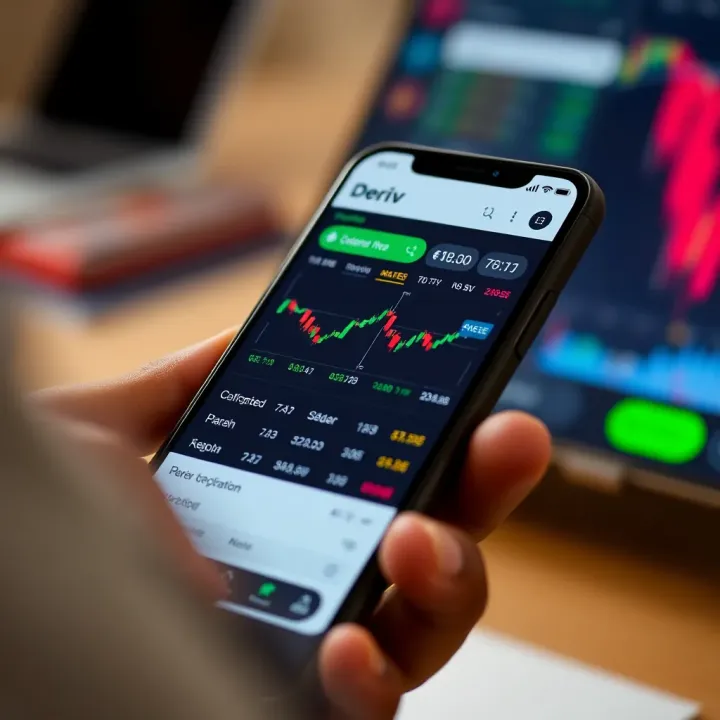
Discover how to install and navigate the Deriv APK on your phone 📱. Get security tips and features tailored for Kenyan traders 🇰🇪 to trade smarter!

Explore practical tips for Kenyan investors on cryptocurrency trading 📈 Understand key strategies, risks, and local regulations to trade confidently in Kenya 🇰🇪
Based on 14 reviews