

Asian Trading Session Hours in Kenyan Time
📊 Discover how the Asian trading session works in Kenyan time ⏰, explore key markets, and get tips to boost your forex trading strategy effectively! 🇰🇪
Edited By
James Thornton
Traders and investors in Kenya need to understand the London trading session to engage effectively with global markets. The London session is one of the most active financial market hours worldwide, influencing forex, stocks, and commodities. Its timing relative to Kenyan local time plays a big role in planning trades and investment moves.
Kenya operates on East Africa Time (EAT), which is three hours ahead of Coordinated Universal Time (UTC+3). London, on the other hand, runs on Greenwich Mean Time (GMT) or British Summer Time (BST) during daylight saving, shifting between UTC+0 and UTC+1. This time difference directly affects when the London market opens and closes from a Kenyan viewpoint.
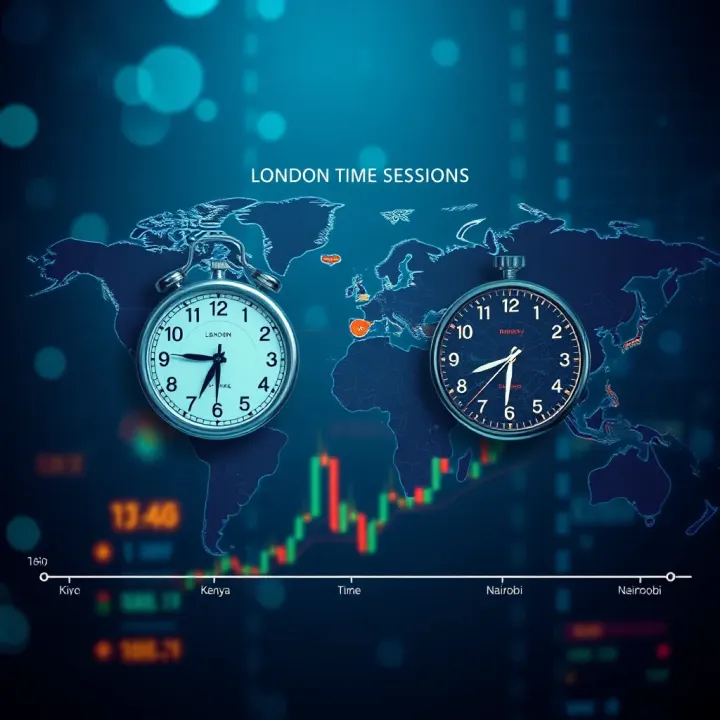
Typically, the London trading session starts around 8:00 am and ends at 4:00 pm London local time. During standard time (late October to late March), this means trading runs from 11:00 am to 7:00 pm in Kenya. When daylight saving time is in effect (late March to late October), London's clocks move an hour forward. Therefore, the trading session shifts to 12:00 pm to 8:00 pm Kenyan time.
Understanding this shift is vital for Kenyan traders to avoid missing key market movements and to schedule their activities accordingly.
The London session overlaps with other major markets, notably the New York session, creating periods of high liquidity and volatility. For Kenyan investors, these overlapping hours often present the best opportunities for entering and exiting trades with tighter spreads.
Here are some practical points to keep in mind:
Monitor daylight saving changes: Every year, the exact dates when London switches between GMT and BST can vary, so staying updated is important.
Adjust trading strategies accordingly: The one-hour difference affects the best times to trade; for example, early London session trades during standard time come at midday Kenyan time.
Use technology: Forex platforms and financial news sites often display market times adjusted for local time zones but double-check the times especially around daylight saving transition periods.
By aligning your trading schedule with the London session hours in Kenyan time, you position yourself better to capitalise on liquidity and price action periods in the global markets. This practical awareness is especially critical for forex brokers, portfolio managers, and financial analysts based in Nairobi, Mombasa, or elsewhere in Kenya.
Understanding the basic timing connection between London and Kenya is the first step towards smarter, more timely trading and investment decisions.
Understanding the London trading session is essential for Kenyan traders looking to capitalise on one of the world’s busiest financial markets. This session dominates international trading volumes, offering ample opportunities for profit and liquidity. Since Kenyan traders operate in a different time zone, knowing how London’s market hours align with Kenyan time makes it easier to plan trades, monitor market movements, and manage risks effectively.
The London trading session is one of the four major forex market sessions, representing trading activity in London, the United Kingdom’s financial hub. It traditionally runs from 8:00 am to 5:00 pm London time. During this period, the market experiences significant liquidity, as major banks, hedge funds, corporations, and individual traders actively buy and sell currencies, stocks, bonds, and commodities. For example, the GBP/USD currency pair tends to see increased volatility during this session because traders in both Europe and North America interact.
Besides forex, the London session heavily influences the pricing of European stocks and commodities like Brent crude oil and gold. Because London sits at the intersection of Asian and American trading hours, the session overlaps with both the end of the Asian session and the start of the New York session, causing peak trading activity and tighter spreads.
Kenya operates on East Africa Time (EAT), which is generally three hours ahead of the United Kingdom during the UK's standard time (Greenwich Mean Time, GMT). This means when London’s market opens at 8:00 am GMT, it is already 11:00 am in Nairobi or Mombasa.
However, the UK observes Daylight Saving Time (DST), moving clocks forward by one hour, usually from late March to late October. During this period, London trades on British Summer Time (BST), which is GMT+1. Hence, the time difference shrinks to two hours ahead of Kenya. For instance, London’s 8:00 am opening will be 10:00 am Kenya time during DST. This shift affects Kenyan traders’ schedules, especially those who monitor market openings and closings closely.
Knowing these time zone differences helps Kenyan traders avoid missing crucial trading windows or market news releases that drive price movements.
To recap:
London Standard Time (GMT): Nairobi time is GMT + 3 hours
London Summer Time (BST): Nairobi time is BST + 2 hours
This slight variation means traders must adjust their alerts, trading plans, and risk management tactics twice a year to sync with London session hours.
Having precise knowledge of the London session and its timing differences with Kenya can significantly improve a trader’s ability to engage the markets when they are most active, increasing the chances of better price execution and timely responses to market events.
Understanding the London session hours in Kenyan local time is essential for traders and investors looking to navigate global markets effectively. Since Kenya operates on East Africa Time (EAT), which is consistently UTC+3, and London shifts between Greenwich Mean Time (GMT) and British Summer Time (BST), knowing the exact trading hours helps avoid missed opportunities or unwanted risks.
The London trading session officially starts at 8 am and closes at 4 pm London time. During standard time (GMT), this means the market opens at 8 am GMT and closes at 4 pm GMT. For traders in Kenya, this corresponds to a window from 11 am to 7 pm because Kenya is three hours ahead of London during the non-daylight saving period.
This time frame is significant as the London session is the largest financial market in the world, attracting heavy trading volumes and higher market activity. Kenyan traders, particularly those dealing with forex pairs like GBP/USD, EUR/GBP, and commodities like crude oil, will find active price movements within these hours. For example, if you are a day trader based in Nairobi, you should be ready to monitor the charts from mid-morning until early evening to catch the volatility spikes.
London observes daylight saving time, known locally as British Summer Time (BST), from the last Sunday in March until the last Sunday in October. During this period, clocks go forward by one hour, shifting the time zone from GMT (UTC+0) to BST (UTC+1).
This shift changes the London trading hours to 8 am–4 pm BST, which translates to 10 am–6 pm Kenyan time. Thus, Kenyan traders need to adjust their schedules, starting their trading activities later in the morning and finishing earlier in the evening compared to the non-daylight saving months.
Ignoring this adjustment can lead to confusion, such as logging into trading platforms an hour too early or too late. Kenyan brokers and platforms often update their trading hours accordingly, but it pays to confirm these changes directly with your broker or trading platform.
Converting London trading hours to Kenya time is straightforward once you remember the key timezone difference and the impact of daylight saving. Here’s a quick summary:
Standard Time (GMT): London 8:00 am–4:00 pm = Kenya 11:00 am–7:00 pm
Daylight Saving Time (BST): London 8:00 am–4:00 pm = Kenya 10:00 am–6:00 pm
To keep track without confusion, many Kenyan traders set alarms or calendar reminders at the start and end of the London session. It also helps when planning trades, especially for short-term positions that rely on session volatility.
Kenyan traders active in the forex market should sync their day around these London session times to tap into the fresh liquidity and market movements that London sessions typically bring.
Understanding these time conversions ensures you won’t miss out on important market openings or key price shifts. Whether you trade GBP pairs, European stocks, or commodities, planning your trading day with these timings keeps you ahead.
In practice, a Kenyan forex trader might start watching the market at 10 am during BST, coinciding with the London open, and conclude trades by 6 pm. Outside daylight saving months, these hours shift to 11 am–7 pm. Accurate time alignment avoids costly timing errors, especially when trading volatile instruments.
By aligning your trading hours with the London session in Kenyan local time, you position yourself to respond swiftly to market moves, benefit from liquidity, and manage trading risks better.
The London trading session holds significant weight for Kenyan traders due to its sheer volume and global influence. As the largest financial hub in Europe, London acts as a melting pot where major institutions, hedge funds, and central banks converge to trade hefty volumes. For Kenyan traders, this session offers some of the most liquid and volatile market conditions, ideal for both day trading and swing trading.
The London session marks the start of the European day market and overlaps partly with the Asian and New York sessions. This overlap creates intense market activity with substantial trading volumes, particularly within the first few hours. For instance, the British pound (GBP) and the euro (EUR) experience heightened volatility, providing ample trading opportunities. Kenyan traders can expect tighter spreads on currency pairs like GBP/USD, EUR/USD, and USD/CHF during this time due to increased liquidity.
It’s worth noting that the London session also often sets the tone for the rest of the trading day. Market-moving events such as Bank of England (BoE) announcements or UK economic data releases often take place within this window, prompting sharp price movements. This means traders in Nairobi or Mombasa should keep a close eye during London hours if they want to catch these sudden shifts.
Several key instruments respond strongly to the London session’s dynamic. Apart from major forex pairs involving GBP and EUR, commodities like Brent crude oil and gold also see noticeable volatility due to European market participation and scheduled economic releases.
Equities listed on the London Stock Exchange (LSE) gain significant attention during this period. Kenyan investors tracking international stocks or indices such as the FTSE 100 can time their trades based on London session hours. Furthermore, institutions trading government bonds, like UK Gilts, tend to be most active in this timeframe, affecting broader fixed income markets.
For Kenyan traders, aligning trading strategies with the London session means tapping into the market when activity is at its peak and price movements are most pronounced.
Understanding the London session's rhythms helps in spotting trends and optimising trade entries or exits. Many successful Kenyan traders schedule their market monitoring and deal execution around these hours to benefit from clear signals rather than choppy price action found in quieter sessions.
By recognising which instruments move the most and when the highest volume hits, Kenyan traders can better plan risk management, prevent undue exposure, and capitalise on liquidity. Ultimately, mastering the London session hours translates to a practical edge in the competitive trading arena.
Navigating the London trading session from Kenya requires practical strategies to optimise your trades and manage the unique challenges of the time difference and market behaviour. Being aware of the session’s exact hours and how they align with Nairobi time is just the starting point. Successful engagement means timing your moves smartly, using reliable technology, and managing the risks that come with the market’s volatility.
The London session overlaps with the morning hours in Kenya, typically starting at 10 am and ending around 6 pm during UK winter and shifting slightly when daylight saving kicks in. This overlap aligns well with the Kenyan workday, but monitoring trades continuously is still key. Setting alerts for major market movements or economic announcements during London hours helps you catch opportunities quickly without needing to watch the screen all day.
Many Kenyan traders use a mix of intraday and swing trading during this period. For instance, if you spot a currency pair like GBP/USD showing strong momentum just after the London open, it might be wise to act swiftly. On the other hand, if major announcements are due like UK interest rate decisions, stepping back can minimise risk from sudden market swings.
Choosing the right trading platform makes a big difference. Most Kenyan forex and CFD traders opt for accessible platforms like MetaTrader 4 or 5, which offer robust charting tools and support MT4/MT5 Expert Advisors for automated trading. Some also turn to local brokers who provide direct M-Pesa payment integration, making deposits and withdrawals straightforward.
Mobile trading apps are crucial for those balancing work and trading. Safaricom’s strong data network in Nairobi and other towns means apps like FXTM or HotForex often run smoothly, letting you check market moves and place trades instantly even on the go. Also, desktop platforms with customizable watchlists and news feeds ensure you never miss relevant London session updates.
The London session is known for high liquidity but also sharp price swings, especially around key economic news. Kenyan traders need to manage these risks by setting stop-loss orders and avoiding over-leveraging. For example, during announcements like the UK retail sales report, volatility spikes and can wipe out unprepared positions quickly.
Besides technical measures, it’s wise to keep track of global events influencing London markets, such as European political developments or changes in oil prices. Having a risk management plan that includes position size limits and regular profit-taking helps avoid losses spiralling out of control.
Successful trading during the London session from Kenya depends on timing, technology, and solid risk management—tools and strategies that work with your daily routine and the session’s rhythms.
By applying these practical tips, Kenyan traders can enjoy the benefits of the London market while protecting their investments. You’re not just following the clock but adapting to the session dynamics in a way that makes sense locally.
Daylight saving time (DST) in the UK directly affects Kenyan traders involved in the London trading session. Since Kenya operates on East Africa Time (EAT) year-round without changing clocks, any shift in London’s time due to DST alters the time difference between the two regions. This shift impacts trading hours, scheduling, and market monitoring strategies for those trading from Kenya.
In the UK, daylight saving time begins on the last Sunday of March and ends on the last Sunday of October each year. When DST starts, clocks move forward by one hour at 1:00 am Greenwich Mean Time (GMT), effectively shifting London’s time zone from GMT (UTC+0) to British Summer Time (BST, UTC+1). Conversely, when DST ends in October, clocks go back one hour, returning to GMT.
For example, in 2024, the UK will start DST on 31 March and end it on 27 October. Kenyan traders should mark these dates clearly because the London session hours will shift relative to Kenyan local time at these points.
During the UK’s DST period, the London trading session opens and closes one hour earlier compared to Kenyan time. Normally, the London session runs from 8:00 am to 4:30 pm London time. When DST is active, this becomes 9:00 am to 5:30 pm British Summer Time, which translates to 11:00 am to 7:30 pm in Kenya. Outside DST, London time matches GMT, so the session runs from 10:00 am to 6:30 pm Kenyan time.
This one-hour shift means Kenyan traders must adjust their trading schedules twice a year to follow the London session accurately. If a trader ignores this change, they may miss key market openings or closings, impacting trading decisions and timing.
Practical tip: Set calendar alerts to adjust your trading hours when the UK toggles DST. This helps you stay aligned with peak London market activity and avoid trading during off-peak times.
Additionally, this shift can affect overnight trading strategies. For Kenyan traders dealing in forex or other global assets, understanding when major market overlaps happen is key to spotting liquidity and volatility. The DST switch alters these overlaps, for instance, the London-New York session overlap, which is one of the most active trading periods.
In essence, keeping tabs on UK daylight saving changes is essential for Kenyan traders who want to match their market hours precisely with London’s session. Staying aware helps in planning trade entries, exits, and risk management better — ultimately protecting your capital and improving your chances of success.
📊 Discover how the Asian trading session works in Kenyan time ⏰, explore key markets, and get tips to boost your forex trading strategy effectively! 🇰🇪

Explore deriv trading in Kenya 📈: Learn types, strategies, risks & how to start safely with trusted platforms like Deriv. Ideal for beginners & pros!
Explore detailed derivatives trading strategies tailored for Kenyan traders 📈. Learn risk management and key tactics with a handy PDF guide for easy learning 📘.
📈 Learn how derivative trading works in Kenya—covering types, benefits, risks, and local rules. Expand your investment tools today! 🇰🇪
Based on 11 reviews