

Top Forex Traders in Kenya: Guide & Tips
Explore top Forex traders in Kenya 🇰🇪, learn their winning strategies, get tips on safe brokers, and understand key risks in the forex market 💹📈.
Edited By
Thomas Hamilton
Forex bots are computer programs built to trade currencies automatically using set rules. These bots operate 24/7, scanning the forex market for trading opportunities without emotional influence. For Kenyan traders, understanding how these bots function can be the difference between a profitable day and a costly misstep.
Most forex bots follow technical indicators like moving averages, RSI, or price patterns to spot trades. Once a trade meets the programmed criteria, the bot executes it immediately. This speed can be a big advantage in volatile markets like forex, where prices change in seconds.

There are several types of bots commonly used in forex trading:
Trend-following bots: These look for a clear trend direction and open trades following that momentum.
Mean reversion bots: They bet on prices returning to an average, buying when prices dip too low and selling at highs.
Scalping bots: Focused on small price moves, they open and close trades quickly to grab multiple small profits.
That said, bots are not magic. They rely on historical data and fixed rules. Market conditions can change suddenly due to geopolitical events or economic data releases, which bots may not handle well without human oversight.
Kenyan traders should also consider factors like internet stability and the reliability of their trading platform when using forex bots. For example, a slow or unstable connection can cause missed trades or execution errors, impacting returns.
Using forex bots can ease the trading burden by automating routine decisions, but successful use requires understanding their logic, managing risks, and ongoing monitoring.
Before integrating a forex bot, Kenyan traders should:
Test the bot thoroughly using demo accounts provided by reputable brokers.
Understand the bot’s strategy and whether it fits their trading style and risk appetite.
Monitor live trades closely, at least initially, to adjust settings and intervene when necessary.
By approaching forex bots with clear knowledge and caution, Kenyan traders can harness their strengths—automation, speed, and discipline—while limiting exposure to unforeseen risks.
Understanding how forex bots work is essential for traders aiming to automate their currency trades with precision and speed. These bots are programmed to scan the market, analyse price movements, and execute trades automatically based on predefined criteria. For Kenyan traders, this means potential to trade beyond usual working hours and respond to fast market changes without constant manual monitoring.
Automated forex trading involves software that follows specific rules to buy or sell currencies. These rules might include technical indicators like moving averages, relative strength index (RSI), or price thresholds. For example, a bot may be set to buy the US dollar against the Kenyan shilling when the USD/KES price dips below a certain point and sell when it rises past a target. This process eliminates delays caused by human emotions or distractions, allowing trades to happen instantly based on data.
At the heart of forex bots are algorithms designed to interpret market conditions and trigger trades. Common strategies include trend-following, mean reversion, and breakout detection. These algorithms rely on mathematical formulas and historical data patterns to predict the most probable direction of currency pairs. For instance, a trend-following algorithm would identify if the EUR/USD pair is consistently moving upward and initiate buy orders accordingly. Kenyan traders should know that while these algorithms automate decisions, no bot guarantees profits since markets can behave unpredictably.
Forex bots connect directly to trading platforms via Application Programming Interfaces (APIs) or through expert advisors in software like MetaTrader 4 or 5, popular among Kenyan traders. Once linked, the bot accesses real-time market data, places orders, and manages trades according to its programming. This interaction enables traders to maintain control—you can adjust parameters or stop the bot when needed. For example, if Safaricom’s mobile money system experiences downtime, you might prefer to pause automated trades until payment confirmations resume smoothly.
Automated trading bots take the grunt work out of forex trading, but it’s vital to monitor their performance and adapt settings as market conditions change. Blindly trusting a bot without oversight can lead to unexpected losses.
In summary, forex bots operate by applying structured algorithms on trading platforms to automate currency trades swiftly and efficiently. This hands-off approach suits Kenyan traders who juggle multiple commitments but still wish to benefit from forex markets actively.
Forex bots come in various types, each designed for specific trading strategies. Understanding these types helps Kenyan traders choose bots that match their goals and market conditions. The most common forex bots are trend-following, scalping, and arbitrage bots, each with distinct advantages and limitations.

Trend-following bots ride the market's momentum, buying when prices rise and selling when they fall. These bots rely on technical indicators like moving averages to detect trends. For instance, a trend-following bot might buy the EUR/USD pair when a 50-day moving average crosses above the 200-day average, signalling an upward trend. This strategy suits traders who prefer longer-term positions rather than rapid trades. Kenyan traders can benefit from automated trend-following bots, especially considering the forex market’s fluctuations around major global economic events.
Scalping bots focus on making numerous small trades within brief time frames, aiming for consistent yet modest profits. They operate on seconds or minutes, exploiting tiny price changes. Such bots require quick execution and low spreads to be profitable, which is why they work best on platforms with tight spreads like FXTM or IC Markets, popular among Kenyan traders. For example, a scalping bot might open and close trades 20-30 times a day, each targeting a few pips. While scalping bots can accumulate gains quickly, they demand close monitoring to avoid losses during volatile periods.
Arbitrage bots look for price differences of the same currency pair across different brokers or markets and take advantage by buying low and selling high simultaneously. This requires access to multiple platforms with minimal latency. Kenyan traders dealing with brokers offering varied spreads might find arbitrage bots useful to exploit such inefficiencies. However, arbitrage opportunities are fleeting and often closed by brokers, so these bots require up-to-date software and fast internet to perform well.
Choosing the right type of forex bot depends on individual trading style, risk tolerance, and the broker’s conditions. Traders in Kenya should test bots on demo accounts first to see which aligns best with their strategy and market understanding.
In summary, knowing the types of forex bots helps traders select tools tailored to their objectives and Kenya’s trading environment. Whether following trends over days, scalp trading multiple times a session, or capitalising on price gaps, forex bots can be valuable aids when used wisely.
Forex bots offer Kenyan traders the ability to automate currency trading, saving time and effort compared to manual trading. This automation means traders can execute trades 24/7, which is especially useful since the forex market operates across multiple time zones. For example, a trader based in Nairobi can benefit from the London or New York sessions without having to stay up late or wake up at odd hours.
These bots also help reduce emotional decision-making. Kenyan traders sometimes fall prey to impulsive moves driven by fear or greed, which leads to losses. A well-programmed bot follows set strategies, eliminating emotional bias. Besides, automation can handle multiple currency pairs simultaneously, enabling diversification that a single trader might struggle to manage.
Cost-wise, many forex bots are affordable or come as part of trading platforms commonly used in Kenya, such as MetaTrader 4 or MetaTrader 5. Some even offer trial periods, allowing traders to test performance before committing real funds.
Despite advantages, forex bots aren't foolproof. Market conditions can change rapidly due to unexpected political events in Kenya or globally, which might not be instantly reflected in a bot’s preset algorithms. This can cause misjudged trades resulting in losses.
Bots also rely heavily on stable internet and platform connectivity. Kenyan traders in areas with frequent power outages or slow internet might face disruptions, causing orders to be delayed or missed. Furthermore, overdependence on bots without regular oversight can be risky; a malfunctioning bot might continue to trade blindly, accumulating losses.
Some forex bots use high-frequency or scalping strategies, which require low spreads and fast execution. These conditions might not always be available due to broker restrictions or market liquidity in Kenya. Additionally, there is the risk of scams; unreliable bot providers can offer software promising unrealistic returns without delivering.
Kenya’s forex market environment presents unique challenges and opportunities for automated trading. The country’s access to reliable broker platforms is improving, with many brokers offering tailored services for local traders, including M-Pesa integration for deposits and withdrawals. This makes entering and exiting markets easier for Kenyan traders using bots.
However, local factors such as mobile money fluctuations, inflation rates, and political stability influence forex volatility differently from global markets. Bots that do not adapt to such nuances might underperform. For instance, during the election periods, Kenyan shilling can experience unusual swings not typically seen in major currency pairs. Bots programmed only for technical signals might miss these fundamental shifts.
Finally, regulatory oversight on automated trading in Kenya is still evolving. Traders must stay informed about rules from the Capital Markets Authority (CMA) and understand compliance requirements to avoid unintended breaches when using forex bots.
Using forex bots requires more than just setting them up. Kenyan traders must understand local market dynamics, technical limitations, and regulatory updates to maximise benefits while minimising risks.
Selecting the right forex bot can significantly influence the trading outcomes for Kenyan investors. Unlike manual trading, where decisions depend on human analysis and emotions, forex bots operate on algorithms that require proper tuning and reliability. A bot that fits well within Kenya’s specific trading environment — including local market hours, internet reliability, and currency pairs traded — offers traders a better chance of consistent profits and risk management.
The first thing to check when choosing a forex bot is its strategy type. Kenyan traders should assess whether the bot uses trend-following, scalping, or arbitrage strategies and match these with their trading goals. For instance, a day trader in Nairobi who prefers quick trades may find scalping bots more useful, while a long-term forex investor might rely on trend-following bots.
Other essential features include:
Customisability: The ability to adjust risk levels, stop-loss points, and take-profit limits.
Backtesting capabilities: So you can test the bot against historical data before risking real money.
User Interface: A clear dashboard that helps monitor trades in real time, even on mobile devices common in Kenya.
Experienced traders often prefer bots that support scripting or allow custom algorithm implementation. This helps in tailoring the bot’s behaviour to the volatile African markets.
Given the risk of financial loss, reliability is paramount. Kenyan traders should opt for bots with a proven track record over several market cycles, ideally with transparent performance records.
Security is equally critical. Bots often require access to trading accounts, meaning your capital is vulnerable if security isn’t tight. Look for forex bots that use secure API connections and encrypt sensitive data to prevent hacking. Confirm that the provider follows strict privacy policies and offers robust customer support if issues arise.
Beware of bots promising unrealistic returns. In Kenya’s growing digital economy, scams unfortunately thrive, so due diligence is a must.
Forex bots must integrate smoothly with the trading platforms used in Kenya. Many traders here prefer platforms like MetaTrader 4 (MT4) and MetaTrader 5 (MT5) due to their widespread broker support and functionality.
Make sure the bot supports automated trading on these platforms. For example, bots developed in Expert Advisor (EA) format work well with MT4 and MT5. Compatibility with web-based platforms like cTrader or proprietary apps from brokers such as HF Markets or Pepperstone also matters for some users.
Having a bot that fits well with your chosen broker’s software reduces technical glitches and maximises uptime. This reliability is essential given that many Kenyan traders rely on mobile internet connections that can fluctuate.
Choosing the right forex bot is not just about features but also how well it fits your unique trading style, security expectations, and the Kenyan trading environment. Careful selection helps you avoid common pitfalls and makes automation a practical component of your forex trading strategy.
Starting with forex bots involves more than just plugging in software—it demands careful planning and testing to avoid unnecessary losses. For Kenyan traders, the key is to approach automation cautiously and understand each step thoroughly.
Before letting a forex bot trade with real money, set it up on a demo account first. Most brokers popular in Kenya, like HotForex and FXPesa, offer these risk-free environments. This phase helps you understand how the bot reacts to different market conditions without risking your KSh. Testing should span several weeks to cover various trends, including volatile periods common during events like US Federal Reserve announcements or geopolitical developments influencing the Kenyan shilling.
During setup, customise parameters such as stop-loss levels and trade sizes to suit your risk tolerance. For example, a trend-following bot might need adjustments to avoid frequent trades during sideways markets typical in forex pairs involving KSh. Take notes on the bot's performance, focusing on drawdowns and profit consistency.
Even the best bots require active monitoring. Set up alerts via email or mobile notifications so you can react if trades move against you. Kenyan traders benefit from occasional manual intervention, especially during unexpected events like sudden changes in Central Bank of Kenya (CBK) policies or flash crashes.
Keep a trading journal to record bot performance and any manual changes. This practice helps refine settings over time. Also, regularly update your bot’s software to ensure compatibility with your broker’s platform and to fix possible bugs.
Automation doesn't mean you switch off. Staying involved keeps your strategy aligned with evolving market dynamics.
Kenya’s Capital Markets Authority (CMA) oversees forex trading regulations. Although forex bots are not banned, it's vital to use them within the legal framework to avoid penalties. Always trade with brokers authorised by CMA or regulated internationally to protect your funds.
Moreover, maintain records of all trades, as this can simplify tax filings with Kenya Revenue Authority (KRA). Since forex profits count as taxable income, proper documentation is crucial. Be wary of platforms promising unrealistic profits through bots—scams remain common in Kenyan trading circles.
Knowing the local regulatory environment helps you steer clear of trouble and trade confidently with automated tools. Combining sound regulatory knowledge with careful bot management lays a strong foundation for safer forex trading in Kenya.
Explore top Forex traders in Kenya 🇰🇪, learn their winning strategies, get tips on safe brokers, and understand key risks in the forex market 💹📈.

Learn all about CFD trading in Kenya 🇰🇪: its key concepts, market options, smart strategies, risk tips, and how to start confidently today!
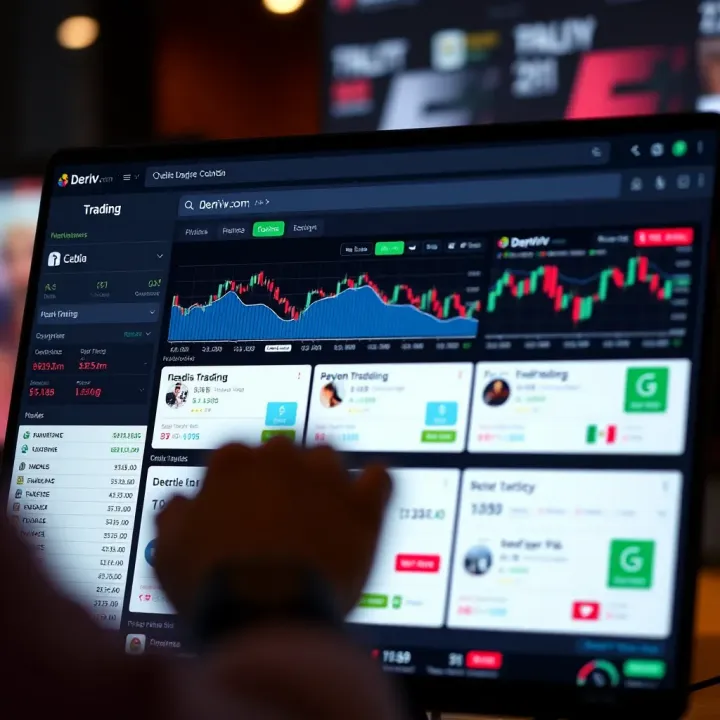
Explore Deriv.com’s features, trading options, and user experiences 🌍. Get insights tailored for Kenyan traders, including risks and tips for smart trading 📈.

Explore crypto trading in Kenya 🇰🇪 with tips on wallets, exchanges, market analysis, and managing risks. Perfect for beginners and traders alike 📊💼
Based on 12 reviews