
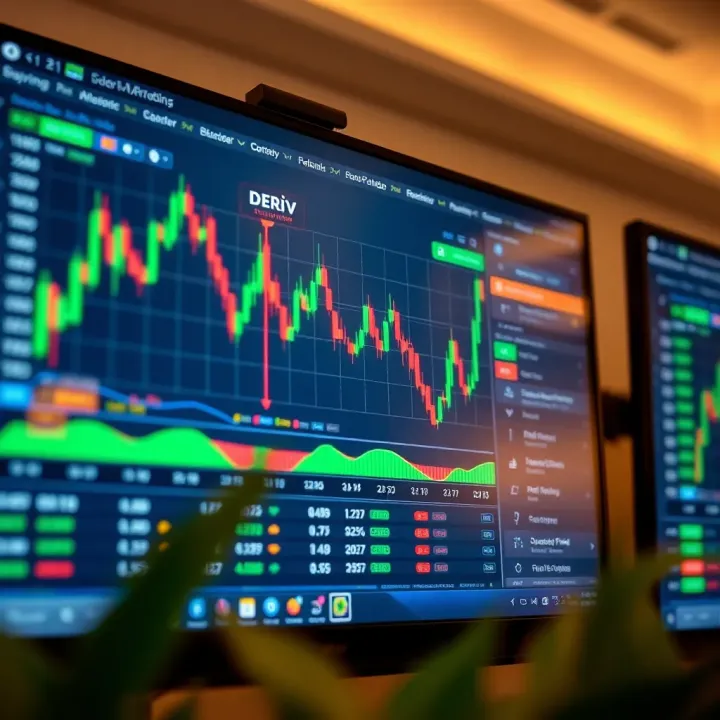
Deriv Forex Trading Guide for Kenyan Traders
Explore Deriv Forex trading in Kenya 🇰🇪 with this detailed guide. Learn key features, smart strategies, risk tips, and regulatory insights for local traders 📊💡
Edited By
Amelia Carter
Forex trading, or foreign exchange trading, is the buying and selling of currencies on a global market. Unlike the stock market, forex operates 24 hours a day across different time zones, making it the busiest financial market worldwide. For traders in Kenya and beyond, understanding how forex works can open doors to diverse investment opportunities and income streams.
Mastering forex trading requires grasping core concepts such as currency pairs, bid-ask spreads, leverage, and margin. For example, trading the USD/KES pair involves exchanging US dollars for Kenyan shillings, influenced by multiple economic factors. Having a clear idea of how these elements affect price movements is key to successful trading.

A comprehensive forex trading course in PDF format is an accessible resource that bundles these essentials into an easy-to-follow structure. The PDF course usually starts with foundational topics, then moves on to technical and fundamental analysis, strategy development, and risk management. For instance, you learn how to read candlestick charts and use indicators like the Relative Strength Index (RSI) to spot overbought or oversold conditions.
Risk management forms the backbone of sustainable trading. Effective strategies involve setting stop-loss orders to limit potential losses and managing trade size relative to one’s capital. This protects traders from unexpected market swings, which are common in volatile pairs like EUR/USD or GBP/USD. The course guides you on practical tools and methods that are applicable whether you trade via platforms like MetaTrader or local brokers.
Using a PDF course effectively means pacing yourself through the material and applying lessons in demo accounts before committing real funds. This hands-on approach gives you confidence and helps avoid common pitfalls, such as overtrading or falling for scams promising quick profits.
A good forex trading course equips you with the knowledge to trade confidently, not just the hope of quick wins.
When selecting a course, check if it includes:
Clear explanation of basic and advanced concepts
Practical examples reflecting current market conditions
Tools for both technical and fundamental analyses
Sections dedicated to Kenyan market nuances or currency pairs involving the Kenyan shilling
By investing time to study such a course, you create a solid foundation to build your trading skills, backed by proven strategies and informed decision-making. In short, the PDF guide is your map to navigating the unpredictable but rewarding forex market efficiently.
Getting a solid introduction to forex trading is essential before you jump into the market. This foundation helps you understand what you're dealing with, from the basic units like currency pairs to the market's unique global hours. For example, a trader in Nairobi needs to know how the European or New York sessions influence currency moves to plan trades effectively. Without grasping these fundamentals, even the best strategies could flop.
Forex trading always involves buying one currency and selling another at the same time—this is what we call a currency pair. For example, the USD/KES pair shows how many Kenyan shillings you need to buy one US dollar. Each pair consists of a base currency (first one) and a quote currency (second one). Understanding this helps you know what you’re actually trading and when the value goes up or down.
This knowledge is practical because price movements in currency pairs reflect both countries’ economic conditions. Say the Central Bank of Kenya raises interest rates; the KES might strengthen against the USD, affecting that pair’s exchange rate.
The forex market works as a decentralized global network where banks, brokers, governments, and individual traders buy and sell currencies. Unlike stocks, it has no central exchange, which means trading happens over-the-counter (OTC). Prices are influenced by supply and demand, economic data, political events, and market sentiment.
Understanding this matters because market operations can affect how prices move and when. For instance, news about US employment figures often causes sharp moves in USD pairs, so knowing the market reacts this way can help you anticipate volatility.
The forex market operates 24 hours a day during weekdays thanks to global time zones. It opens in Sydney, moves to Tokyo, then London, and finally New York before the cycle repeats. Each session has its characteristics; for example, London’s session tends to have high volatility due to the volume of trades.
For a trader in Kenya, this means active hours mostly overlap with London and New York sessions. Knowing when these sessions happen helps you choose the best time to trade. For instance, if you prefer calm markets, trading during quieter hours might be better, while more experienced traders might seek action when big moves happen.
Forex is the world's largest financial market, with daily turnover exceeding $6 trillion (about KSh 700 trillion). This huge liquidity means you can enter or exit trades quickly without worrying much about price gaps or delays.
Also, the forex market is accessible to individuals with relatively low capital, especially using online brokers. This accessibility enables people in Kenya and elsewhere to trade from their laptops or even phones using platforms like MetaTrader or MT5.
Currency prices can move rapidly, providing opportunities but also risks. Volatility often spikes during economic news releases like Kenya's GDP data or US Federal Reserve announcements, which can lead to unexpected losses if you’re unprepared.
The challenge lies in managing these risks effectively. Without proper risk controls like stop-loss orders, traders may face significant losses. Volatility can be both friend and foe, so understanding market behaviour is essential.

Forex trading offers the chance to profit from rising or falling currency values due to leverage, which allows controlling larger positions with a smaller deposit. For instance, with 1:50 leverage, KSh 10,000 controls a position of KSh 500,000.
But leverage cuts both ways. While profits can be amplified, losses can exceed your initial deposit if the market moves against you. This dual nature means disciplined risk management and education are vital before risking real money.
Remember, forex trading is a marathon, not a sprint. Building understanding first helps you trade smarter, not harder.
Overall, this introduction sets the stage for deeper learning and practical trading. It’s about knowing the basics and recognising forex as a dynamic market where informed decisions really count.
A solid understanding of key forex concepts is essential for anyone serious about trading. A comprehensive forex trading course PDF typically breaks down these ideas in simple, practical terms, helping traders grasp the market dynamics and avoid costly mistakes. This section highlights core elements such as terminology, tools, and trading approaches that form the backbone of forex knowledge.
Understanding terms like pips, lots, leverage, and margin is fundamental. A pip represents the smallest price move a currency pair can make, usually 0.0001 for most pairs. For instance, if USD/KES moves from 110.2500 to 110.2600, that’s one pip change. Lots are trading volumes; a standard lot equals 100,000 units of the base currency, but many brokers offer mini or micro-lots to suit smaller accounts. Leverage allows traders to control larger positions with less capital, for example, 1:100 means controlling KSh 100,000 with KSh 1,000. However, leverage amplifies both gains and losses, so understanding and managing it carefully is vital. Margin is the money you need in your account to open a position using leverage.
Forex orders guide how and when trades happen. Market orders buy or sell currencies instantly at the current price, while limit orders set a target price to buy or sell later, offering more control and price certainty. Stop orders, including stop-loss orders, close positions when prices hit a certain level, helping limit potential losses. For example, a trader may set a stop-loss to minimise losses on a volatile USD/GBP trade during Brexit news developments.
Brokers and trading platforms are your gateway to the forex market. The broker provides access to market prices and executes trades; it’s crucial to choose one regulated by bodies like CMA Kenya for security. Trading platforms like MetaTrader 4 or 5 offer charting tools, technical indicators, and order management features that simplify decision-making. In Kenya, many traders rely on platforms integrated with M-Pesa for smooth deposits and withdrawals.
Day trading involves opening and closing trades within the same day, benefiting from short-term price moves. It suits traders who monitor markets actively during Nairobi or London sessions. On the other hand, swing trading holds positions for several days or weeks to capture larger market trends, which can be easier for those balancing trading with day jobs.
Trend following is about identifying and trading in the direction of market momentum, such as buying when an uptrend is clear in EUR/USD. Breakout strategies focus on capitalising when the price moves beyond key support or resistance levels, signalling strong moves ahead. For example, a trader may act when USD/JPY breaks a long-standing resistance around 110.00.
Indicators and signals provide insights derived from price data. Popular tools include Moving Averages, RSI (Relative Strength Index), and MACD (Moving Average Convergence Divergence). For instance, RSI helps spot overbought or oversold conditions, guiding traders on potential reversals. Using these signals combined with market context improves the chances of timely trade entries and exits.
A thorough grasp of these concepts through a well-structured forex course PDF offers traders a roadmap to make informed, disciplined decisions, boosting confidence and improving trading outcomes.
Analysing the forex market is essential for anyone who wants to trade currencies with a clear edge. Without proper analysis, you might trade blindly, increasing your chances of losses. This section covers the two main approaches traders use: technical and fundamental analysis, both giving valuable insights into price movements and market direction.
Chart types and patterns: Charts are the backbone of technical analysis. They display price movements over time and help traders spot trends and potential reversals. Common charts include line charts, bar charts, and candlestick charts. In Kenya, many traders prefer candlestick charts because they show detailed price action, such as opening, closing, high, and low prices within each period, helping identify patterns like "doji" or "hammer." For example, spotting a bullish engulfing candle on a 4-hour chart for USD/KES might signal an upcoming upward move.
Common technical indicators: Indicators are mathematical calculations based on price, volume, or open interest, used to predict future market movement. Popular indicators include Moving Averages (MA), Relative Strength Index (RSI), and Moving Average Convergence Divergence (MACD). For instance, an RSI below 30 can indicate that a currency pair is oversold, potentially signalling a buying opportunity. Many Kenyan forex traders combine several indicators to confirm signals before entering trades.
Support and resistance levels: These are price points where the market tends to stop and reverse. Support is the price level where demand is strong enough to halt a decline, while resistance is the level where selling pressure stops a rise. Identifying these levels helps manage risk; traders often place stop-loss orders just below support or above resistance. For example, if EUR/USD has repeatedly bounced at 1.1000, that level acts as support, and breaking it may point to further declines.
Economic indicators and reports: Economic data such as GDP growth, inflation rates, unemployment figures, and trade balances influence currency values substantially. Kenyan traders keeping an eye on the US Non-Farm Payrolls (NFP) report can anticipate strong moves in forex pairs like USD/NGN or USD/ZAR due to the US economy's global impact. Understanding how these numbers affect currency demand allows traders to prepare for possible volatility.
Central bank policies: Decisions by central banks, including interest rate changes and monetary policy announcements, affect currency strength directly. The Central Bank of Kenya (CBK) sets policies impacting the KES, just as the US Federal Reserve influences the USD. For example, if the CBK signals a rate hike to curb inflation, the shilling could strengthen against other currencies.
Political and global events impact: Political stability, elections, trade wars, or global crises like pandemics affect forex markets. Traders tracking Kenya’s elections or regional trade agreements can anticipate currency movements based on political risk sentiment. Similarly, global events like Brexit or tensions in the Middle East often cause ripple effects across key currency pairs, requiring traders to stay informed and adjust their strategies accordingly.
Proper analysis blends technical signals with fundamental context to make smarter trading decisions. Both approaches complement each other and help traders navigate the fast-moving forex market effectively.
Managing risk and trading psychology is a vital part of forex trading that helps protect your capital and maintain consistent performance. Without a strong grip on these, even the best strategies can fail. This is especially true in the Kenyan context where market swings can be sharp, and many traders face psychological challenges unique to their environment.
Setting stop-loss and take-profit points is like drawing safety lines in your trading decisions. A stop-loss order automatically closes your position when the price moves against you by a set amount, limiting possible losses. For example, if you buy EUR/USD at 1.1000 and set a stop-loss at 1.0950, your trade closes when the price hits 1.0950, preventing further loss. On the other side, a take-profit locks in gains by closing the trade once it hits your target price. This automation removes the temptation to hold losing trades hoping for a reversal or get greedy by pushing beyond reasonable profit levels.
Position sizing and leverage use influence how much risk you take on any trade. Position sizing means determining the right amount of currency units to buy or sell based on your account size and risk tolerance. In Kenya, many traders are drawn to leverage because it amplifies returns, but it also is a double-edged sword. For instance, using 50:1 leverage means a small price move can swing your gains or losses significantly. Keeping position sizes modest and using leverage cautiously helps ensure one bad trade doesn’t wipe out your account.
Importance of a trading plan can’t be emphasised enough. A detailed trading plan guides your entry and exit criteria, risk limits, and strategy for managing trades. This plan acts like your GPS, keeping you on track regardless of market mood or external noise. In practice, many successful Kenyan traders jot down their goals, acceptable loss levels, and expected returns for each trade, reviewing their plan daily. This approach reduces impulsive decisions and guards against emotional trading.
Dealing with losses and gains means accepting that losses are part of forex and not personal failure. Traders often get shaken when a KSh 10,000 trade suddenly turns into a loss, but understanding the risk-reward balance over time helps maintain perspective. Celebrating wins is fine, but not chasing after losses or making reckless trades to "win it back" preserves your capital and confidence.
Maintaining discipline in trading is about sticking to your plan and rules even when tempted to deviate. For example, if your plan states you risk 2% per trade, resist the urge to double that after a few winning trades. Kenyan traders who discipline themselves with daily routines — like reviewing charts every morning and setting alerts — find they're less likely to succumb to market noise or fear of missing out.
Developing a trader’s mindset involves patience, resilience, and treating trading as a professional activity, not gambling. Keeping a trading journal to reflect on mistakes and successes sharpens this mindset. Think of it like a footballer watching game footage to improve. Successful traders in Nairobi’s hustler economy approach forex with a long-term view, knowing that steady growth beats occasional big wins mixed with heavy losses.
Managing risk and psychology isn’t just about avoiding losses — it’s about building the confidence and framework that help you trade profitably over the long run.
This focused approach to risk and emotions enables traders to stay grounded, improve decision-making, and ultimately, increase their chances of success in the dynamic forex market.
Using a forex trading course PDF effectively means more than just reading through the pages. It involves actively engaging with the material to build practical skills, understanding concepts deeply, and applying knowledge in real trading scenarios. For Kenyan traders especially, this approach can save time and resources, given the abundant but varying quality of learning materials available online.
When choosing a forex trading course PDF, start by verifying the source's credibility. Established financial educators or recognised forex trading experts tend to offer more reliable content. For example, a PDF from a well-known forex trainer with verifiable track records will likely include detailed explanations, real-life trade examples, and clear guidance on risk management.
Look for course materials that go beyond surface-level information. Depth means covering not only basic terms but also nuances like leverage impacts, psychological discipline in trading, and advanced chart analysis. This level of detail prepares traders better for market realities.
Forex trading in Kenya has unique aspects: M-Pesa integration for deposits, KRA regulations, and local market hours affecting trading habits. A course with Kenyan-specific examples or references to regional brokers like Exness or XM Kenya can be very helpful.
Materials should address common challenges here, such as currency pair volatility affected by East African Community (EAC) events or typical payment methods. Such local context increases the practical value and ensures the content resonates with the learner's environment.
The format of the course should suit your learning style and daily routine. PDFs offer offline access, convenient for traders who may not always have stable internet. Some PDFs also come with embedded videos or links to supplementary resources.
Ensure the PDF is mobile-friendly since many Kenyans access learning materials on smartphones. Clear layout, good font size, and interactive elements (like quizzes or progress checklists) enhance retention. Avoid overly bulky files that consume excessive data during download.
Reading theory can only take you so far. Select courses that include practical exercises or guide you on how to use demo accounts. Demo trading on platforms like MetaTrader 4 or 5 allows you to test strategies without risking real money.
Practicing chart analysis or order execution in a simulated environment helps embed lessons from the PDF. For example, executing a stop-loss strategy taught in the course on your demo account builds confidence before live trading.
Taking notes while reading sharpens focus and aids future revision. Write down key definitions, trading rules, and personal trading goals highlighted in the course. Tracking your progress section by section prevents overwhelm and keeps motivation high.
For example, you might note down how to calculate pip value or maintain a trading journal template based on course suggestions. Revisiting these notes regularly reinforces learning and supports disciplined practice.
Forex trading can feel isolating; joining a community can provide much-needed support and insights. Groups on Telegram or local forums on websites like Kenyan Wallstreet offer platforms to share experiences, ask questions, and stay updated on market trends.
Active community participation complements course learning, as you encounter varied perspectives and solutions to challenges. For instance, discussions about brokers' latest offers or local economic events help you adjust your trading approach promptly.
Using a forex trading course PDF effectively means integrating its lessons with hands-on practice, local knowledge, and community support to build sustainable trading skills.
Explore Deriv Forex trading in Kenya 🇰🇪 with this detailed guide. Learn key features, smart strategies, risk tips, and regulatory insights for local traders 📊💡
🤖 Explore how forex trading bots work, their benefits, risks, and setup tips tailored for Kenya's market. Boost your automated trading strategy today! 📈
📈 Discover the Asian forex trading hours in Kenya 🇰🇪, learn key market players, timing, and smart tips to trade forex wisely during this session.
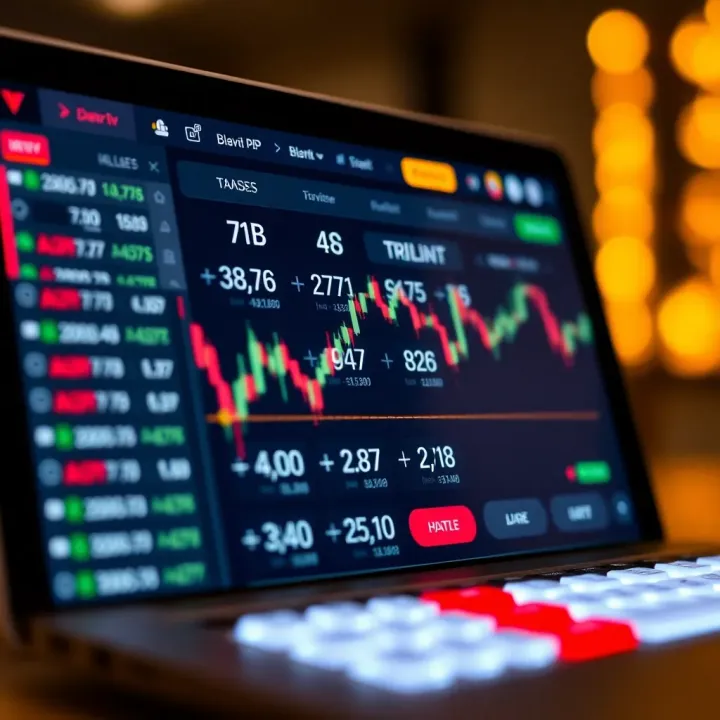
Master the Deriv Pip Calculator to calculate forex pip values with ease. Perfect for Kenyan traders seeking precise currency trading insights 📉💹.
Based on 7 reviews