

CFD Trading Explained: A Guide for Kenyan Traders
Learn all about CFD trading in Kenya 🇰🇪: its key concepts, market options, smart strategies, risk tips, and how to start confidently today!
Edited By
Amelia Watson
Understanding the euro to Kenyan Shilling (KSh) exchange rate is essential for anyone dealing in forex, import-export business, or investment involving these two currencies. The exchange rate doesn't just depend on straightforward currency conversion; it fluctuates due to a combination of economic, political, and global factors that affect market confidence and demand for either currency.
Several key elements influence the euro-KSh rate. For instance, economic indicators like inflation, interest rates, and GDP growth in the Eurozone and Kenya heavily impact it. When the European Central Bank (ECB) changes its interest rates, it can lead to a stronger or weaker euro relative to KSh, depending on investor sentiment. Meanwhile, Kenya's economic health, shown through reports by the Central Bank of Kenya (CBK) and developments in trade balances, also shapes the Shilling's strength.
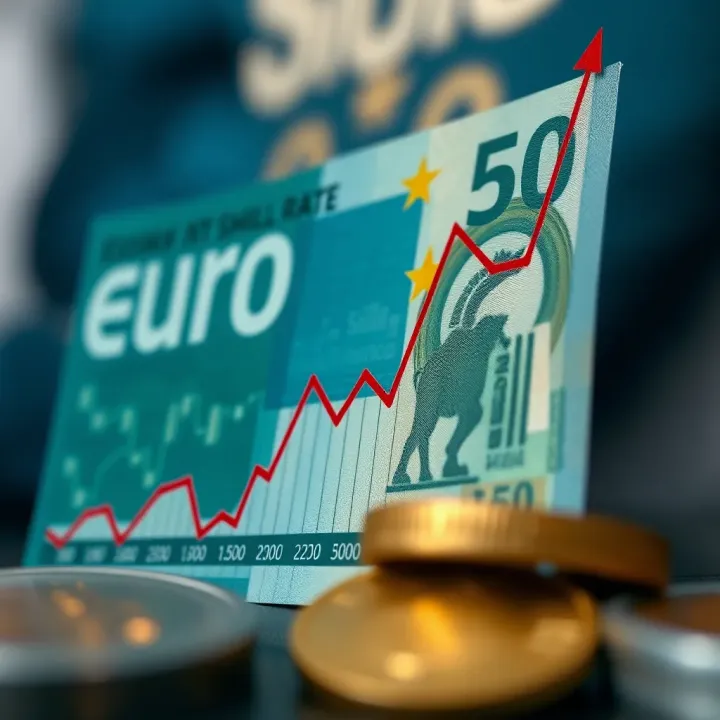
Political events, both local and international, play a big role too. Any instability or policy changes within Kenya or the European Union can cause fluctuations. For example, during election periods or EU budget discussions, uncertainty often leads to volatile rates. Traders and investors closely watch such periods to adjust their positions accordingly.
Exchange rates are a reflection of complex, ever-changing economic and political realities, which makes predicting movements challenging but necessary for sound decision-making.
Recent trends show the Kenyan Shilling has faced pressure due to rising inflation and increasing imports, while the euro's performance is tied to recovery patterns in Europe, energy prices, and geopolitical developments. These factors mean Kenyans exchanging euros must plan ahead, considering both short-term swings and longer-term trends.
For traders and portfolio managers, understanding the mechanics behind exchange rate forecasts helps in assessing risk. Prediction typically involves analysing past data, interest rate differentials, and external shocks. Using this knowledge, businesses can plan hedging strategies to protect against unfavourable moves, while individuals can decide the best times to transfer money or invest.
In brief, staying informed on economic reports from CBK, Eurosystem updates, and world events will help anyone handling euro to KSh transactions make smarter, informed choices. This article will further unpack these factors to offer practical insights for Kenyans navigating the forex space.
Knowing the current euro to Kenyan Shilling (KSh) exchange rate is vital for everyone in Kenya who deals with foreign currency, especially traders, investors, and financial analysts. This rate directly influences import and export costs, investment returns, travel expenses, and even the price of goods in local shops. For instance, a local business importing machinery from Europe will find its costs going up if the euro strengthens against the shilling. Similarly, Kenyans planning trips to Europe must understand how the rate affects their travel budgets.
In recent years, the euro to KSh exchange rate has shown noticeable fluctuations. For example, during 2022 to early 2024, the euro experienced volatility linked to European Central Bank policy changes and global economic pressures. Historically, the euro has tended to strengthen during times of global uncertainty, making it more expensive for Kenyans to buy European goods or services. On the other hand, periods of political or economic instability in Kenya often weaken the shilling, pushing the rate higher.
Recent trends also reflect seasonal influences. Around the Christmas season, for instance, demand for euros rises among Kenyans travelling to Europe or shopping online, often resulting in a slight increase in the exchange rate. Looking back, one can see that Kenya’s shilling is also quite sensitive to regional events such as election cycles or changes in trade policies within the East African Community.
Exchange rate movements ripple through Kenya’s economy in concrete ways. Businesses that rely on imported materials pay more when the euro gains against the shilling, sometimes forcing them to raise prices or reduce profit margins. A Nairobi-based manufacturer importing specialised tools from Germany might find their operating costs surge sharply if the euro rises by even 5%, impacting their competitiveness locally and regionally.
Consumers aren’t spared either. Costlier imports translate to higher prices for electronic goods, fashion, and even food items like European dairy products. For exporters, a weaker KSh against the euro can boost earnings when profits are converted back to shillings. However, they must balance this advantage against potential rises in business costs caused by euro-priced inputs.
Understanding these dynamics helps traders and portfolio managers make informed decisions, whether it’s timing forex transactions or adjusting investment strategies to manage currency risk effectively.
By keeping up with the current euro to KSh exchange rates and their underlying factors, Kenyans can better navigate currency risks, maximise opportunities, and plan for future financial needs with more certainty.
Understanding the key factors that influence the euro to Kenyan Shilling (KSh) exchange rate is essential for traders, investors, and businesses keen on managing currency risks effectively. These factors affect how much one currency is worth against the other, shaping trade decisions, investment flows, and consumer prices. Kenya’s economic health, coupled with developments in the Eurozone, contribute to constant shifts in this rate. In this section, we explore the critical economic indicators, political events, and global forces that drive these changes.
Inflation reflects how fast prices for goods and services rise over time. High inflation in Kenya usually means the shilling loses purchasing power, pushing the KSh lower against the euro. For example, when Kenya faces inflation above 7%, import costs rise, making European goods relatively expensive in local currency. This often leads to increased demand for euros to pay for imports, weakening the shilling.
Conversely, if inflation in the Eurozone accelerates without a corresponding rise in Kenya, the euro might weaken against the shilling. Traders watch inflation trends on both sides to anticipate exchange rate moves and adjust their portfolios or pricing strategies accordingly.
Central banks set interest rates to control inflation and stimulate or slow economic activity. The Central Bank of Kenya’s rate changes influence capital flow. Higher Kenyan interest rates attract foreign investors seeking better returns, which supports the shilling. But if the European Central Bank raises rates, investment might shift to euro-denominated assets, strengthening the euro.
For instance, a 1% increase in Kenya’s central bank rate can draw more foreign portfolio investment, boosting demand for KSh. Meanwhile, if the Eurozone offers higher rates simultaneously, the currency competition affects where investors place their funds, impacting the exchange rate materially.

A country’s trade balance—exports minus imports—affects currency supply and demand. Kenya’s trade deficit, common with Europe, means more euros are needed to pay for imports than euros earned from exports. This tends to weaken the shilling against the euro.
If Kenya exports more agricultural products like tea or coffee to the Eurozone, demand for the shilling rises as exporters convert euros back to KSh, potentially strengthening the local currency. Monitoring trade figures offers insight into short-term pressure on the exchange rate.
Political stability in Kenya directly affects investor confidence and currency strength. Election years often bring uncertainty, causing jitters in the forex market. For example, during the 2017 election period, the exchange rate saw heightened volatility as investors hesitated to commit funds.
Stable governance encourages investment, supporting the shilling. Conversely, unrest or disputes over elections may lead to capital flight and euro demand, weakening local currency. Traders closely watch Kenyan political calendars to manage risk.
European Union (EU) regulations and policies on trade, monetary matters, or sanctions impact the euro's value against other currencies. For instance, when the EU adjusts its fiscal rules or engages in trade negotiations, the euro might gain or lose value.
If the EU eases monetary policy or faces political tensions, the euro could weaken, benefiting the shilling in the pairing. Kenyan importers and exporters must stay informed on EU decisions, as these influence currency costs and business planning.
Global events like shifts in commodity prices, geopolitical tensions, or crises such as pandemics also sway the euro to KSh rate. Commodity exporters like Kenya are affected by oil prices, as higher fuel costs increase import bills, pressuring the shilling.
Market sentiment—how investors feel about global economic stability—drives rapid currency moves. Safe-haven shifts often benefit larger currencies like the euro, but local news or regional conflicts can quickly reverse trends. Keeping tabs on global headlines helps traders anticipate and respond to sudden forex changes.
Monitoring these key factors—economic data, political signals, and global happenings—enables sharper predictions on the euro to KSh exchange rate and smarter currency management.
Predicting the euro to Kenyan Shilling (KSh) exchange rate requires a combination of methods that reflect the complexities of currency markets. These methods are vital for traders, investors, and financial analysts who depend on accurate forecasts to make informed decisions. Understanding the strengths and limitations of each approach can guide better risk management and trading strategies.
Fundamental analysis looks at the economic, political, and financial factors that influence the euro and the Kenyan Shilling. For example, analysts track inflation rates, interest rate changes from the Central Bank of Kenya (CBK) and the European Central Bank (ECB), trade balances, and political events like Kenyan elections or shifts in EU trade policies. These indicators reveal the underlying health of both economies.
A concrete example is when Kenya's inflation spikes unexpectedly due to food price hikes during the long rains. Such an event may weaken the KSh against the euro, as inflation reduces purchasing power and influences CBK's monetary policy. Conversely, if the ECB signals tighter money policies, this could strengthen the euro. Fundamental analysis gives a strategic view but requires continuous data monitoring.
Technical analysis relies on historical exchange rate data and charts to predict future movements. Traders use patterns, trends, and key levels such as support and resistance to time their entries and exits. For instance, if historical data shows the euro typically rallies against the KSh after breaking through a resistance level at KS40, a trader might anticipate a similar move.
Techniques include moving averages, Relative Strength Index (RSI), and Fibonacci retracements. These tools don’t focus on why rates move but on the probable future price based on past behaviour. Technical analysis is practical for short-term trading decisions but should be complemented with other methods for broader context.
Financial experts and institutions regularly publish exchange rate forecasts based on a mix of fundamental and technical analyses. Banks like KCB or Equity Bank and forex brokers in Nairobi often provide these projections. While expert forecasts are useful for guidance, they come with limitations.
Models depend on assumptions about market conditions and can miss unexpected events like geopolitical crises or sudden policy shifts. For example, the outbreak of a global pandemic disrupted many currency models unexpectedly in 2020. Traders should treat forecasts as informed opinions, not guaranteed outcomes.
Understanding these methods helps Kenyan traders and investors prepare for currency volatility, adjust their portfolios, and manage risks effectively.
By combining fundamental and technical approaches with expert insights, market participants gain a well-rounded view, allowing them to anticipate changes in the euro to KSh exchange rate more accurately.
Understanding possible movements in the euro to Kenyan shilling (KSh) exchange rate helps traders, investors, and financial analysts prepare for market changes. Predicting these scenarios is not about guessing, but about analysing economic signals, political developments, and global trends that influence the currency pair. This section outlines potential upsides and downsides, guiding those who manage forex portfolios or conduct cross-border trade to position themselves wisely.
An optimistic outlook considers factors that could strengthen the euro against the Kenyan shilling. For example, if the European Central Bank (ECB) pursues tighter monetary policies—such as raising interest rates to curb inflation—it usually increases demand for the euro. With higher returns on euro-denominated assets, investors might prefer euros over other currencies, pushing its value up.
In Kenya's case, if economic growth slows or inflation rises, the Kenyan shilling might weaken, strengthening the euro-KSh rate further. Positively, improved trade relations between the Eurozone and East Africa or increased remittances from Kenyans working abroad in Europe can add euros into the Kenyan market, supporting the currency’s value.
For forex traders and portfolio managers, expecting an appreciating euro can signal opportunities to hold euro assets or negotiate better payment terms for imports priced in euros. Businesses importing machinery or raw materials from Europe could benefit by timing purchases when the euro is weaker but anticipate a higher exchange rate soon.
On the flip side, several risks could push the euro down relative to the Kenyan shilling. Political instability within the European Union or uncertainties around policies like Brexit repercussions might reduce investor confidence in the euro. For instance, new tensions in EU member states or unsolved trade disputes can trigger capital flight from the euro.
Meanwhile, if Kenya continues to show robust economic growth, maintains low inflation, or attracts foreign direct investment, the shilling might strengthen. The Central Bank of Kenya’s decisions, such as interest rate hikes to control inflation, also support the shilling’s value.
Global events like sudden shifts in commodity prices—say, coffee or tea prices important to Kenya’s export earnings—can influence the shilling. A slump in export revenues could weaken Kenya’s currency despite local policy efforts, thereby affecting the euro-KSh rate.
Forex markets are sensitive to real-world developments; even small political or economic shifts can tilt exchange rates. Those involved should keep an eye on news and data releases to respond effectively.
In summary, possible scenarios range from a euro gaining ground due to strong EU monetary policy and local Kenyan challenges, to a stronger Kenyan shilling amid solid domestic growth and EU uncertainties. Awareness of these dynamics allows traders and businesses to manage forex risk and capitalise on exchange rate moves.
Managing currency risk is crucial for both businesses and individuals dealing with euro payments or conversions. With the euro to Kenyan Shilling (KSh) exchange rate fluctuating due to various economic and political factors, having strategies to minimise losses or capitalise on favourable movements is wise. This section offers practical tips on managing these risks effectively.
Hedging allows businesses to protect themselves against adverse exchange rate changes. A simple example is a Kenyan exporter expecting payment in euros in three months. The firm can enter a forward contract with their bank to lock in the current exchange rate for future conversion. This approach eliminates uncertainty, helping with budgeting and cash flow planning. While some firms hesitate due to hedging costs, these often outweigh potential losses from volatile currency swings.
Companies can also explore currency options, which provide the right but not the obligation to buy or sell euros at a set rate. This flexibility is valuable in unstable market periods. Practical hedging needs clear assessments of exposure amounts and timelines — small businesses might consider partial hedging to balance affordability and protection.
Changing payment terms can be a simple but effective way to reduce currency risk. For instance, a Kenyan importer working with European suppliers might negotiate payments in Kenyan Shillings instead of euros, transferring the exchange risk to the supplier. Alternatively, agreeing on shorter payment periods can reduce the timeframe where currency fluctuations matter.
Another tactic is asking for invoice currency adjustment clauses, where prices are reviewed based on exchange rate movements. This approach spreads risk fairly without one party shouldering all the volatility. Businesses should communicate openly with partners about currency risks to find mutually beneficial terms.
For individual travellers or those sending money, timing conversions can influence how much Kenyan Shilling you get for your euros. Exchange rates move daily, sometimes sharply, due to global events or local economic news. Keeping an eye on rates over days or weeks before exchanging can mean saving hundreds of shillings, especially with larger sums.
That said, trying to perfectly time the market is tough. Using tools like exchange rate alerts from trusted financial services can help you spot favourable moments. For example, if you plan to travel in a month and the euro is weakening against the KSh, it might make sense to convert some money early.
Choosing trustworthy exchange services reduces risks of losing money to unfair rates or hidden fees. Banks and licensed bureaux de change in Nairobi or other towns often provide transparent rates and receipts, unlike unregulated kiosks that may offer tempting rates but pile on hidden charges.
Digital platforms linked to M-Pesa, like Safaricom's M-Pesa Global or dedicated forex services, offer convenience and often better rates too. Always compare rates from multiple sources before converting. Verifying the legitimacy of the service, checking reviews, and understanding all fees ensures you get the true value of your euros in Kenyan Shillings.
Being cautious and adopting these risk management approaches will help Kenyans protect their finances and make smarter decisions when dealing with euro currency conversions.
Learn all about CFD trading in Kenya 🇰🇪: its key concepts, market options, smart strategies, risk tips, and how to start confidently today!

Explore Deriv.com’s features, trading options, and user experiences 🌍. Get insights tailored for Kenyan traders, including risks and tips for smart trading 📈.

Explore crypto trading in Kenya 🇰🇪 with tips on wallets, exchanges, market analysis, and managing risks. Perfect for beginners and traders alike 📊💼
Explore BitOption AI for Kenyan traders 🇰🇪: detailed insights on automated crypto & binary options trading, pros, cons, and safe startup tips 📈🤖
Based on 15 reviews